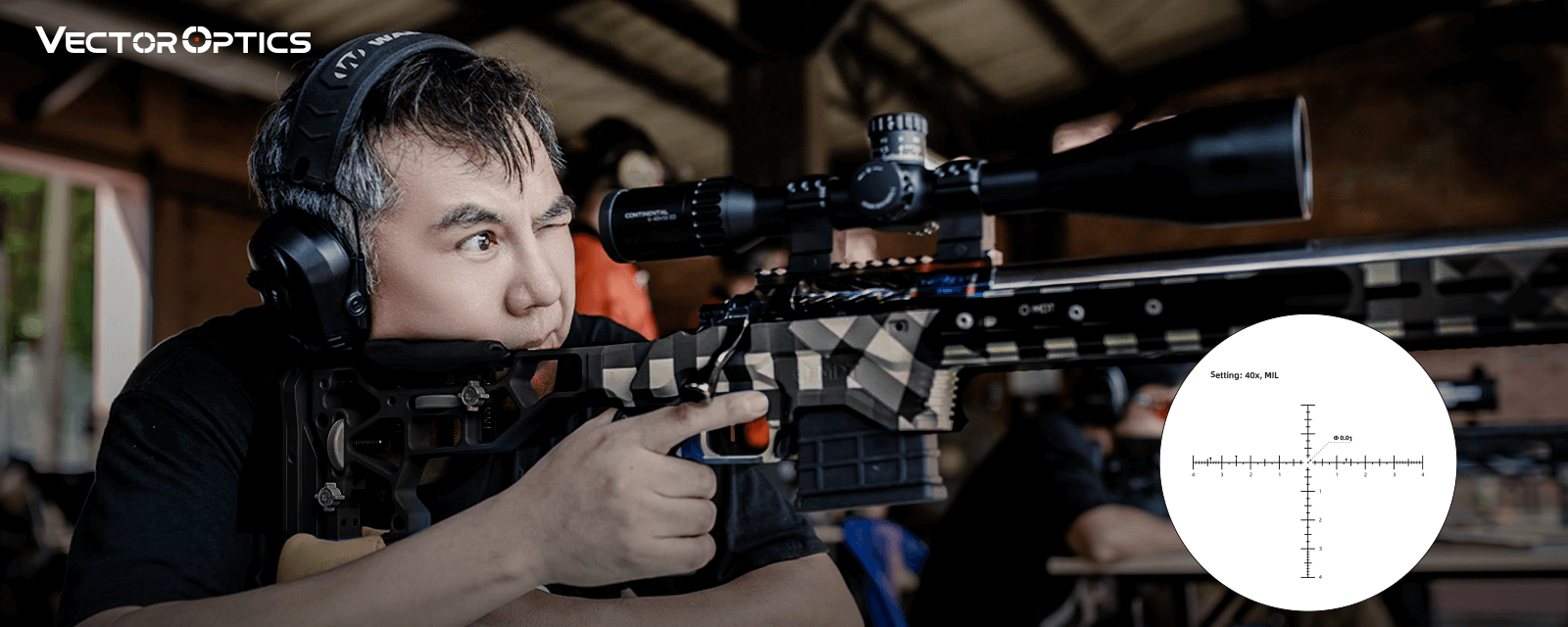
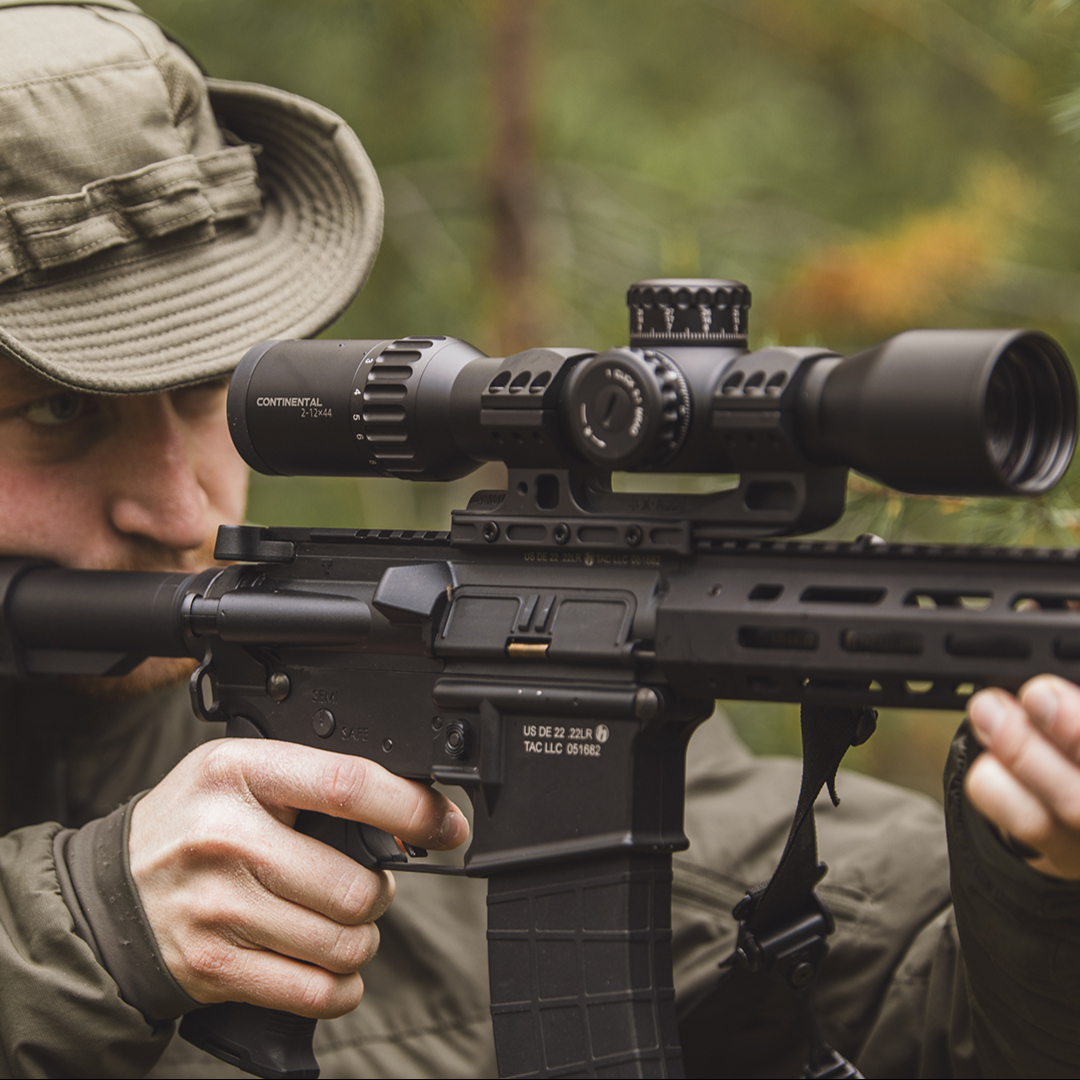
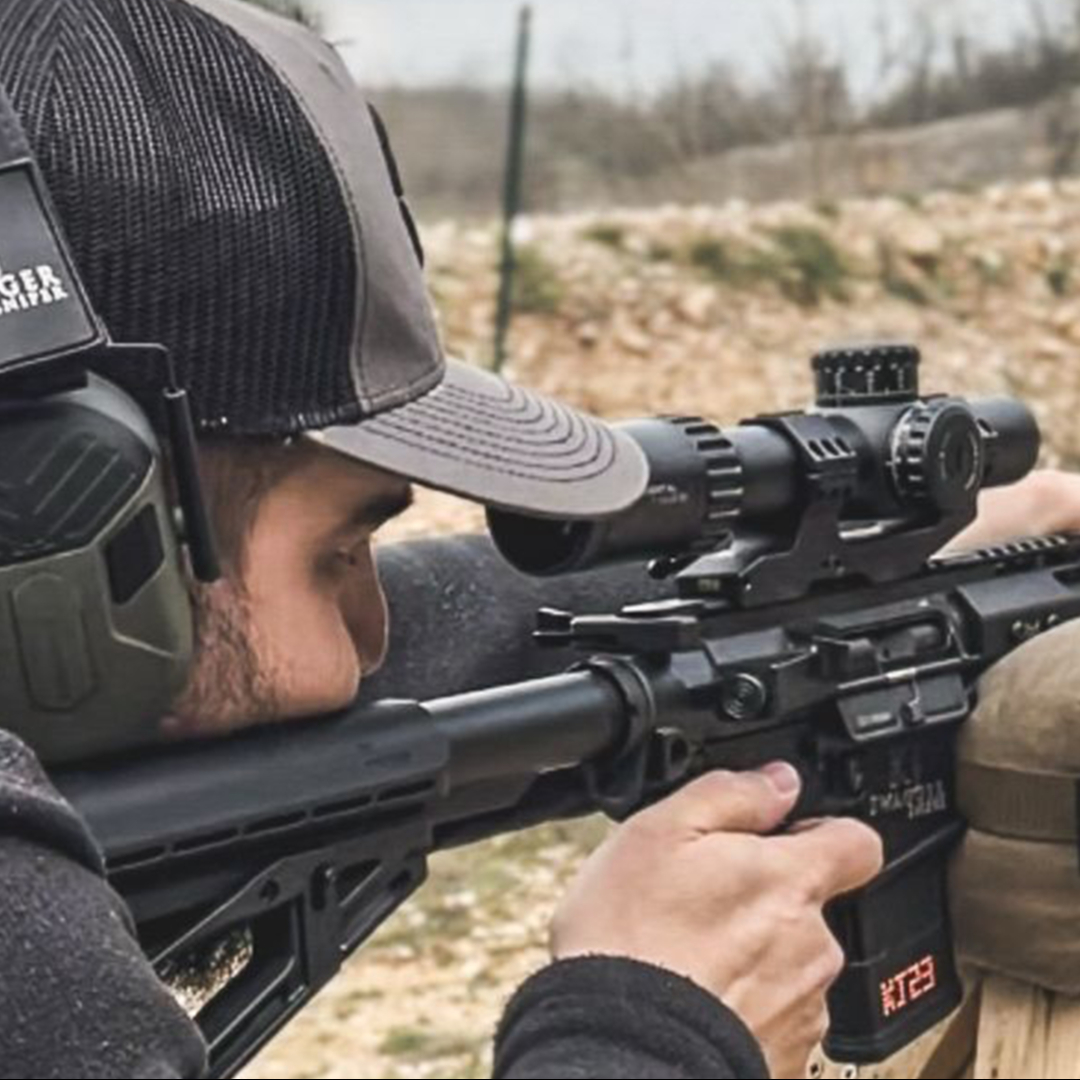
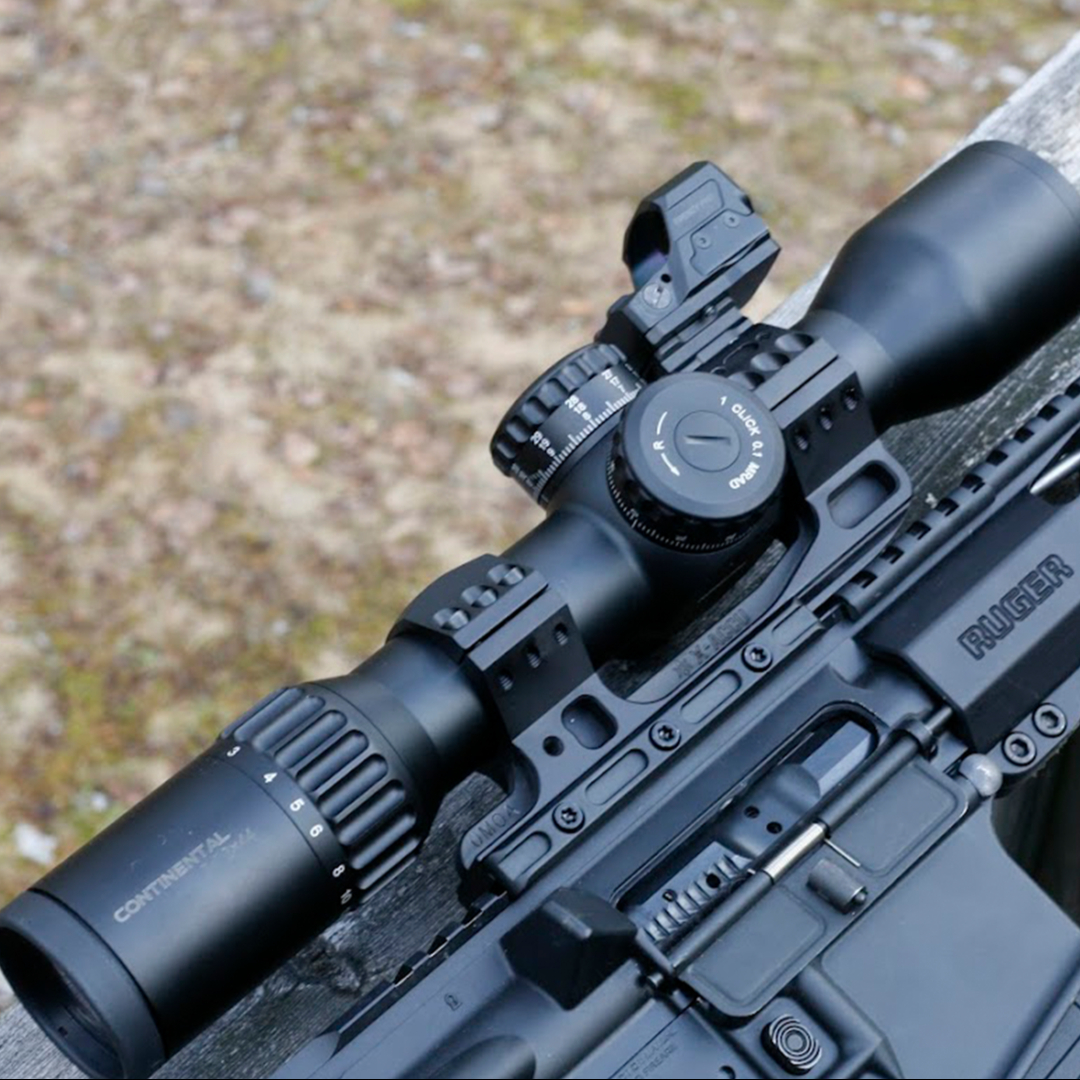
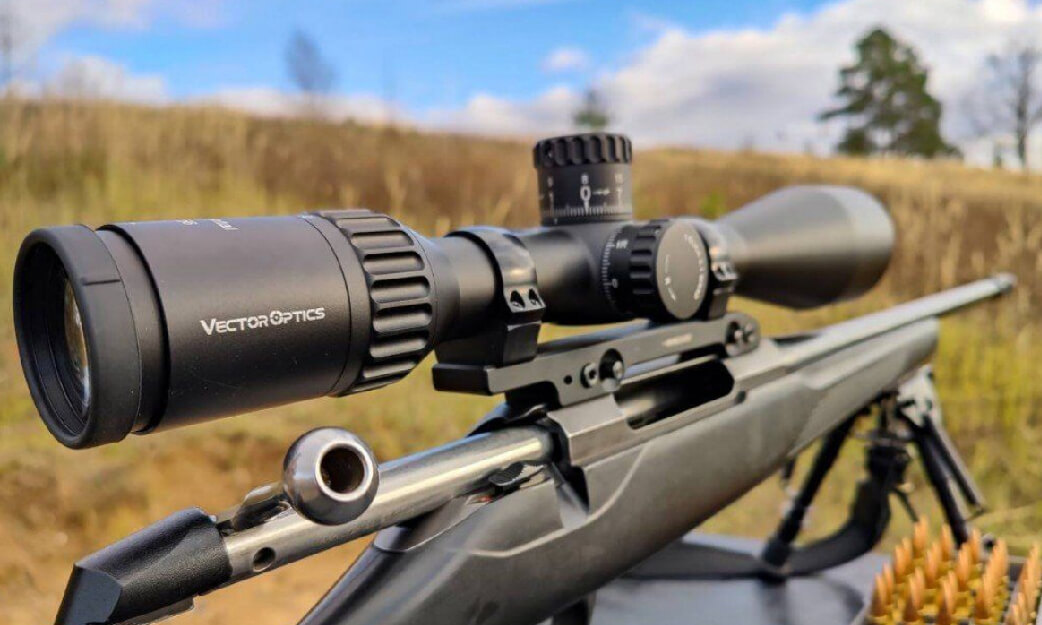
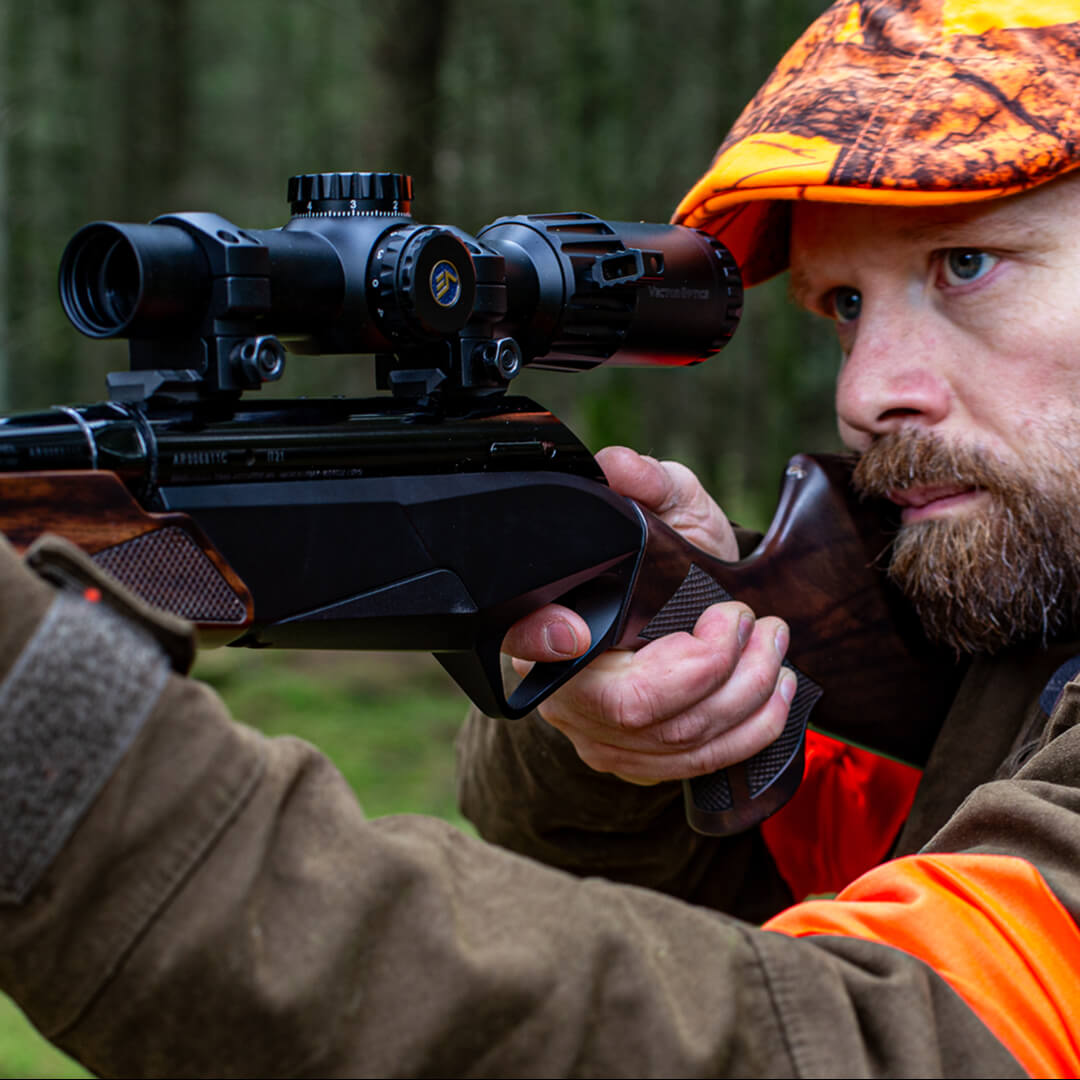
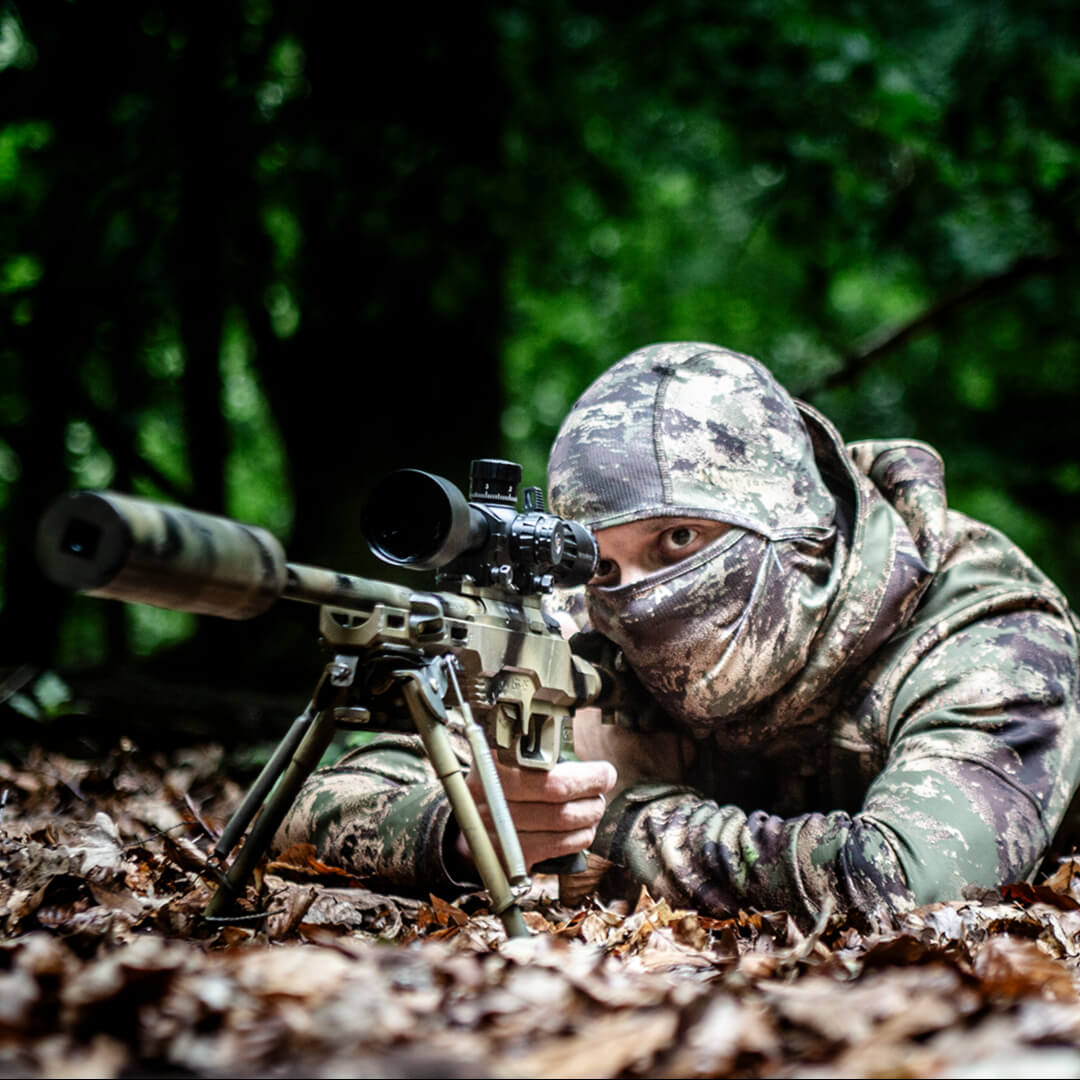
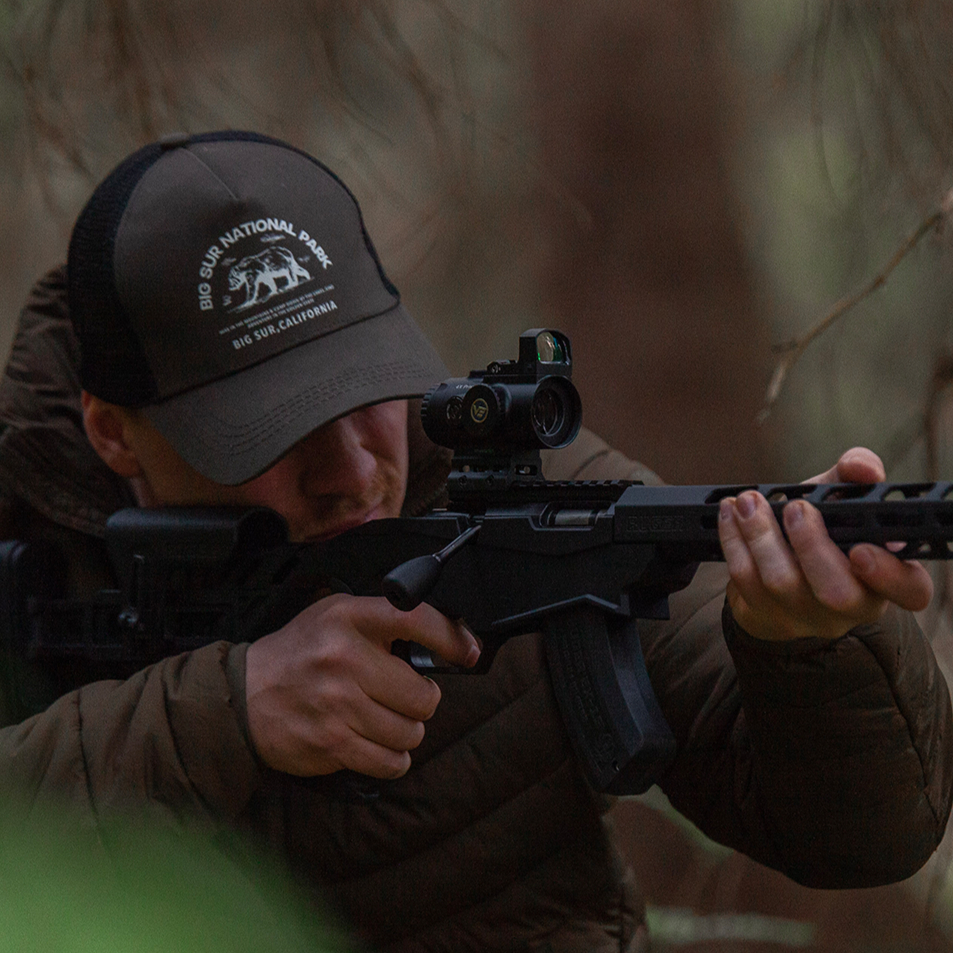
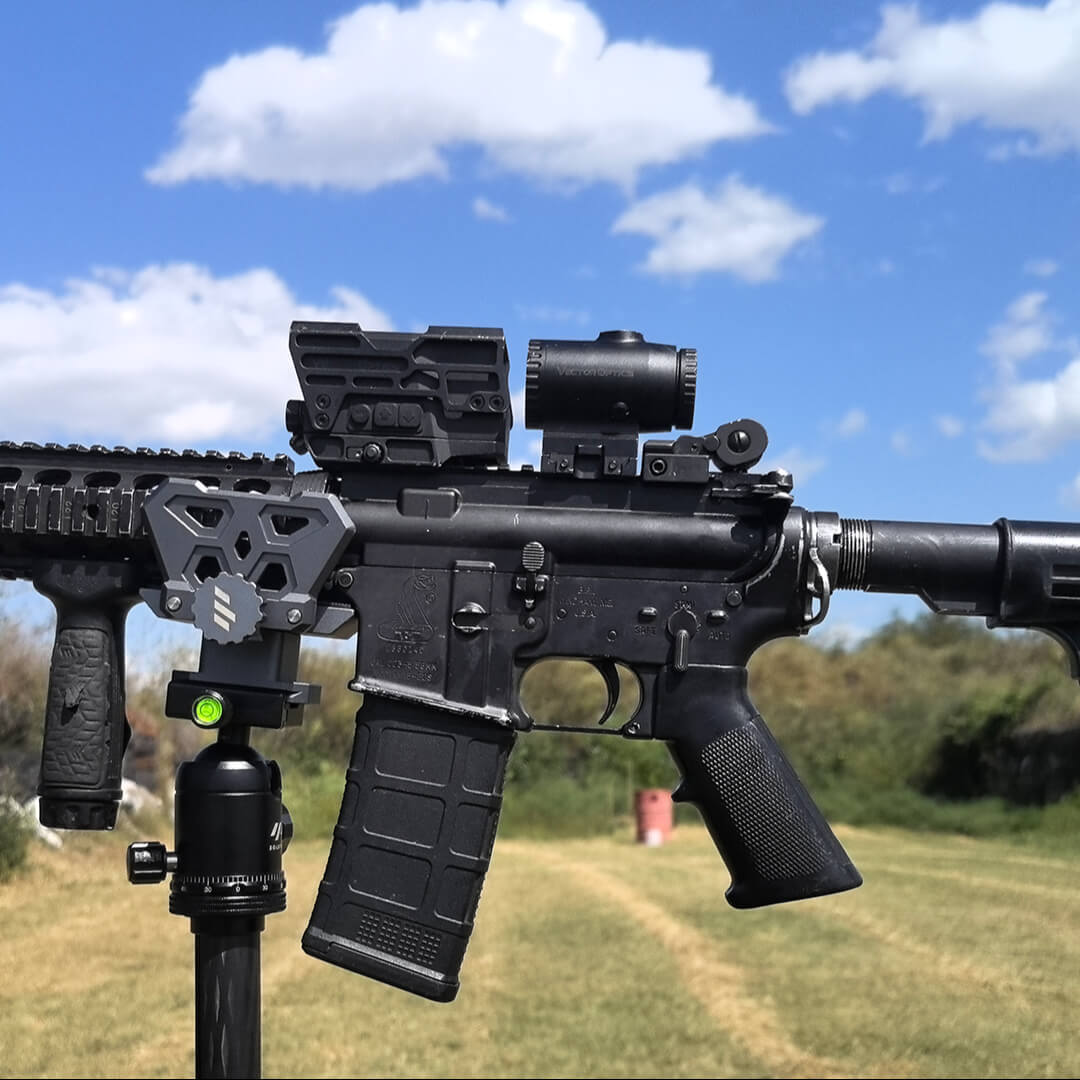
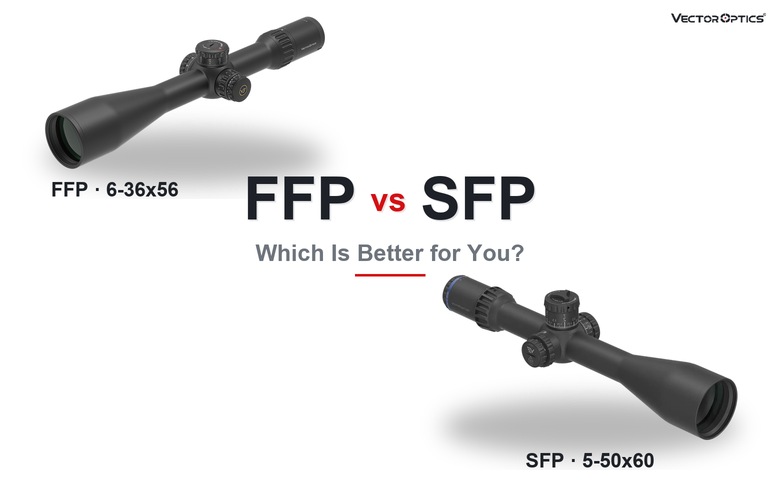
FFP and SFP describe where the reticle sits inside a riflescope and how it behaves as magnification changes. For dynamic shooting across different target distances, where you change magnification and use reticle holdovers under time pressure, FFP is the preferred choice: its holdover and windage marks retain the same angular values throughout the zoom range. SFP keeps the reticle at a constant apparent size, making it a practical option when consistent reticle visibility or fine aiming at higher magnification takes priority.
1. What Is the Difference Between FFP and SFP?
A variable scope changes magnification by moving the erector (picture-reversal) lens group inside the tube. That group's position fixes the two possible places for the reticle.
● First focal plane (FFP): the reticle sits in front of the erector, near the objective. The erector magnifies reticle and target together, so they always scale as one.
● Second focal plane (SFP): the reticle sits behind the erector, near your eye. Zoom changes the image only; the reticle keeps its physical size.
That is the whole mechanical difference. Everything else follows from it.
2. How Does the Reticle Change With Magnification?
In one line: on FFP the reticle grows and shrinks with the image; on SFP it stays put while the image changes.
● On an FFP scope, the reticle and target image enlarge or shrink together. The reticle's apparent size changes, but its coverage relative to the same target and the angular values of its markings remain constant.
● SFP changes its share of the view. At the scope's lowest power a fixed reticle looks bold, sometimes too bold on a small target. At its highest power the image has grown but the reticle has not, so it looks comparatively fine. This is why SFP subtensions are most straightforward to use at the calibrated magnification. At other powers, the actual subtension changes and must be accounted for.
3. Why Do Holdover Marks Behave Differently?
This is the main reason people buy FFP, so the arithmetic is worth a moment.
Reticle markings represent angular intervals, measured in MOA or MIL. On an FFP scope, these intervals remain constant at every magnification. On an SFP scope, their stated values apply at a specified calibration magnification; changing magnification changes the angle each interval represents.
For a 3-15x SFP scope calibrated at 15x, a 1 MOA mark represents 2.5 MOA at 6x. The two tables below show the conversion, first for a fixed reticle reading, then for a fixed target.
3.1 Same Reticle Reading, Different Actual Angles
Keep the labeled reticle reading at 3 MOA. On SFP, the actual angle represented by that span changes with magnification. On FFP, it remains 3 MOA.
| Scope / Magnification | Reading (MOA) | Calculation | Actual angle (MOA / MIL) | Span at 100 m (cm) | Span at 100 yd (in) |
| SFP at 3x | 3.00 | 15 ÷ 3 × 3 | 15.00 / 4.363 | 43.63 | 15.708 |
| SFP at 6x | 3.00 | 15 ÷ 6 × 3 | 7.50 / 2.182 | 21.82 | 7.854 |
| SFP at 10x | 3.00 | 15 ÷ 10 × 3 | 4.50 / 1.309 | 13.09 | 4.712 |
| SFP at 15x, calibrated | 3.00 | 15 ÷ 15 × 3 | 3.00 / 0.873 | 8.73 | 3.142 |
| FFP at any magnification | 3.00 | No conversion | 3.00 / 0.873 | 8.73 | 3.142 |
3.2 Same Target and Distance, Different Reticle Readings
Keep target size and distance unchanged, giving the target a constant actual angle of 3 MOA. On SFP, its reticle reading changes with magnification, but conversion returns the same actual angle. On FFP, the reading remains 3 MOA.
| Scope / Magnification | Reading (MOA) | Calculation | Actual angle (MOA / MIL) | Span at 100 m (cm) | Span at 100 yd (in) |
| SFP at 3x | 0.60 | 15 ÷ 3 × 0.60 | 3.00 / 0.873 | 8.73 | 3.142 |
| SFP at 6x | 1.20 | 15 ÷ 6 × 1.20 | 3.00 / 0.873 | 8.73 | 3.142 |
| SFP at 10x | 2.00 | 15 ÷ 10 × 2.00 | 3.00 / 0.873 | 8.73 | 3.142 |
| SFP at 15x, calibrated | 3.00 | 15 ÷ 15 × 3.00 | 3.00 / 0.873 | 8.73 | 3.142 |
| FFP at any magnification | 3.00 | No conversion | 3.00 / 0.873 | 8.73 | 3.142 |
For SFP: actual angular value = calibrated magnification ÷ current magnification × reticle reading.
Values are approximate. The final two columns show equivalent linear spans at the stated reference distances.
3.3 Why Is FFP the Preferred Choice for Dynamic, Multi-Distance Shooting?
When target distances change and time is limited, you may need to adjust magnification while continuing to use the reticle for elevation and windage compensation.
FFP keeps those references consistent throughout the zoom range, so changing magnification does not introduce an additional conversion step.
This lets you choose magnification for the field of view and target detail you need, while keeping the same angular reference system. The required correction still changes with distance and conditions, but its value on the reticle does not change simply because you zoom.
4. Which Is Easier to See at Low Power?
SFP can offer an advantage in reticle visibility at low magnification. The reticle stays the same apparent size as the target image changes, so it takes up a larger share of the sight picture at low power and a smaller share at high power. This can help keep the aiming reference visible at low power while reducing target coverage at higher magnification.
This balance can work well for general-purpose hunting scopes with maximum magnifications around 12x-16x. German #4-style reticles, for example, combine bold outer posts that draw the eye toward the center with fine central crosshairs for more precise aiming. An illuminated center dot further helps the aiming point stand out.
FFP offers a different tradeoff. The reticle scales with the target image, keeping its subtensions consistent at every magnification. At the scope's lowest power, however, a detailed FFP reticle can appear very fine and become harder to see. On a wide-range 3-18x, that makes the first few magnifications hard to work with, and it is a common complaint about FFP scopes in that class.
Modern design answers this in two ways:
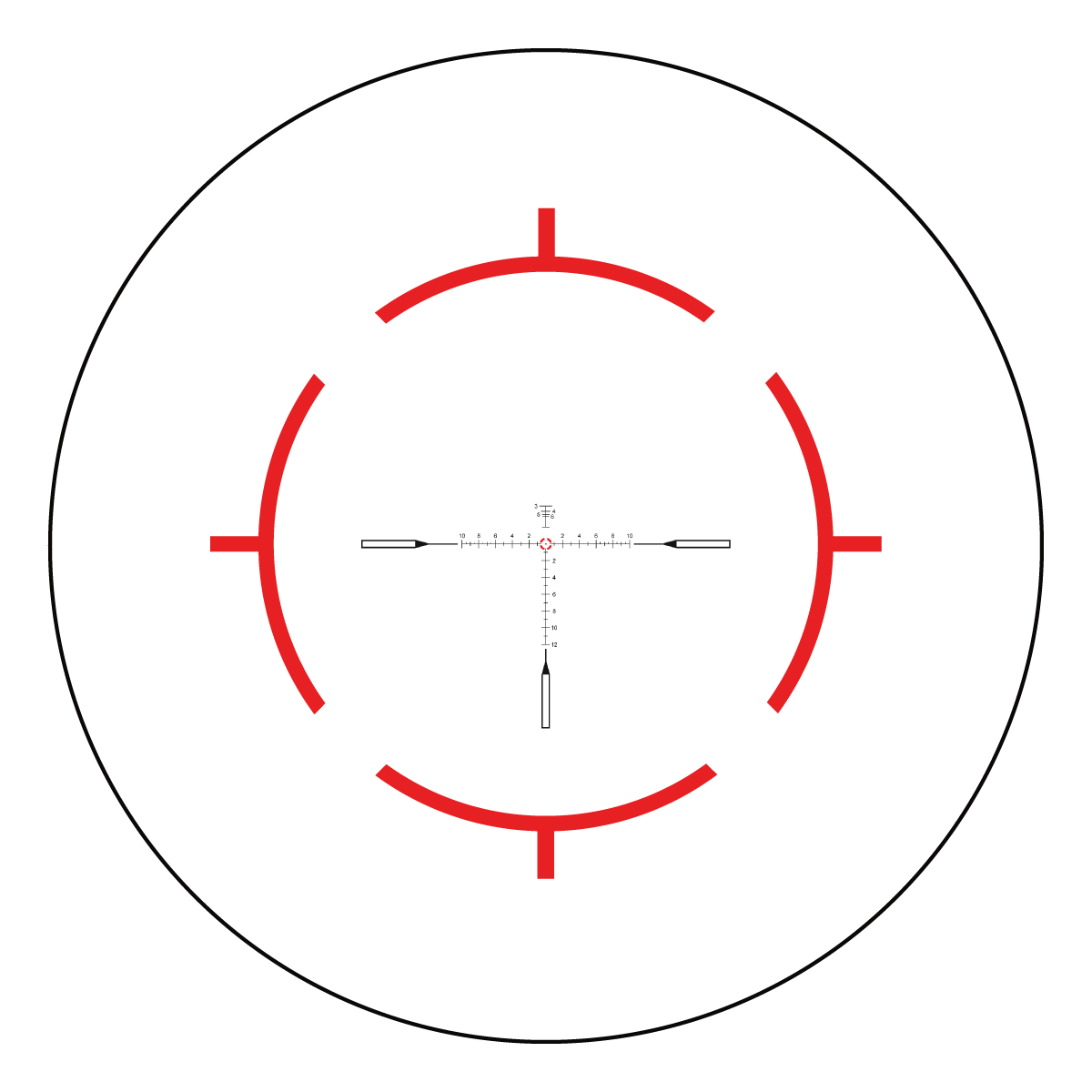
● Reticle layout: Some combine a bold outer ring for quick target acquisition at low magnification with finer central marks for precision at higher magnification. The Continental 2-12x44 RAR2 is a good example: its rapid-acquisition ring is designed for use at 2-6x and fades above 6x to reduce distraction at higher magnification.
● Illumination, which makes the center aiming point easier to see when the surrounding lines get thin. It does not keep an FFP reticle the same apparent size as magnification changes; the reticle still scales. A lit center dot helps maintain a fine reticle design while keeping the aiming point easy to locate at low magnification.
If you shoot a lot at your scope's lowest power in low light, this matters. If you work at 6x and above with holdovers, it matters far less.
5. Which Should You Choose?
Work backwards from the shot, not the spec sheet.
| Your shooting | Lean toward | Main benefit |
| PRS / IPRF precision rifle competitions | FFP | Consistent holdover and windage references at every magnification |
| Mountain and open-country hunting using variable-distance holdovers | FFP | Reticle subtensions stay consistent across the zoom range, so holdovers work at any magnification |
| Benchrest: small scoring targets at 50, 100 or 200 m | SFP | Fine aiming with minimal target coverage at high power |
| F-Class: long-range, fixed-distance target shooting | SFP | Fine reticles suited to precise aiming at high magnification |
| Woodland and stalking hunts: deer or boar, typically 100-300 m | SFP | A clear, simple aiming reference, often with a German #4-style reticle; at the 2-8x settings typical inside 300 m, the bold reticle stays visible and covers little of the target |
| Driven hunting: close-range, moving game | SFP | A bold, readily visible aiming reference at low magnification, when shots come fast and close |
| IPSC Rifle / 3-Gun: mainly low-power aiming and calibrated-power holds | SFP | Consistent apparent reticle size for quick acquisition |
| IPSC Rifle / 3-Gun: frequent holdovers at changing magnifications | FFP | Consistent angular references throughout the zoom range |
| Field Target: high-power aiming with dialed elevation corrections | SFP | Fine aiming at a selected magnification |
Two honest points to keep in mind. First, SFP is not a lesser choice. For most hunting, a bold reticle at the scope's lowest power and a lower price make SFP the more practical tool. Second, the difference looks bigger on paper than it feels in the field. If you use only two or three magnification settings and learn the exact holds at each, an SFP scope will give you most of the benefits people buy FFP for.
For precision disciplines such as PRS and IPRF, FFP's consistency is a practical reason to invest: you can select magnification for the view you need while keeping the same correction scale. The premium is most valuable when that capability is supported by reliable tracking, clear optics and a well-designed reticle.
Whatever you choose, the reticle still has to fit the job. Our How to Choose the Right Reticle for Your Application guide covers the common reticle families, and for the turret side see Mastering Rifle Scope Turrets and How Click Value & Adjustment Range Affect Accuracy.
6. Which Vector Optics Scopes Come in Each?
We build both, across several lines, and there are more models than fit in a short list. The ones below are the ones we would start you on, grouped by focal plane, with published specifications.
6.1 First Focal Plane Models
| Model | Reticle | Eye relief | Shockproof | Best suited to |
Continental 2-12x44 FFP RAR2 MPVO Rifle Scope (SCFF-86) | VET-RAR2, 11-level illuminated center dot, small open red circle, and auto-fading outer red ring | 100 mm / 4.0 in | 1000 G | Plains game and AR platform mid-range shooting, plus Field Target and Hunter Field Target, where holds need to stay true across the zoom |
Continental x6 6-36x56 FFP PRS Rifle Scope (SCFF-70) | VEC-MBR2, 0.035 MIL center dot, 0.2 MIL hashmark increments | 100 mm / 4.0 in | 1000 G | PRS and long-range precision shooting, with fine hold references for precise corrections. |
| Continental x8 1-8x28 SE RAR FFP Rifle Scope LPVO (SCFF-91) | VCO-9MOA, illuminated segmented outer ring, central holdover reticle, and auto-fading outer red ring | 100 mm / 4.0 in | 1000 G | High-end IPSC competition and tactical or law-enforcement applications, with a bold illuminated outer ring for rapid target acquisition and a central reticle for precise aiming. |
Veyron GenII 3-12x44 HD DCR FFP Rifle Scope (SCFF-89) | VVE-2 MIL, 0.08 MIL illuminated floating dot | 100 mm / 4.0 in | 750 G | Mid-to-long range work on a compact AR or PCP build, where a 30 mm tube keeps the rifle balanced, and a light reticle for small game, varmint and plains game hunting |
Veyron GenII 2-10x32 HD CTR Rifle Scope (SCFF-83) | VVE-1 MIL, 0.08 MIL illuminated floating dot | 85-90 mm | 750 G | A short 2-10x for airgun, AR and thermal clip-on setups that need mid-range magnification without the bulk, covering Field Target, varmint and small game work |
6.2 Second Focal Plane Models
| Model | Reticle | Eye relief | Shockproof | Best suited to |
Continental x8 1-8x24i Fiber Rifle Scope LPVO ED (SCOC-45) | VEC-FDR fiber optic, 11-level illumination | 95 mm / 3.8 in | 1000 G | With a true 1x view and a fiber dot that remains visible in bright sunlight, it is well suited to IPSC competition and professional law-enforcement applications. |
Continental x6 2.5-15x56i Fiber Rifle Scope (SCOM-47) | German #4 Fiber Center Dot, 6-level illumination | 100 mm / 4.0 in | 1000 G | Hunters who want a simple, highly visible center aiming point across a versatile 2.5-15x range. Bold outer posts draw the eye toward the illuminated center, while the reticle keeps the same apparent size as magnification changes. |
Tauron 5-50x60 ED SFP Rifle Scope (SCOL-69) | VCO-5 MIL, 0.05 MIL illuminated center dot | 95 mm | 1000 G | Field Target, F-Class and benchrest work, where 50x and 0.05 MIL clicks pay for themselves |
Veyron GenII 6-24x44 HD DCR SFP Rifle Scope (SCOL-74) | MPR-V8, 0.08 MIL illuminated floating dot | 100 mm / 4.0 in | 750 G | Mid-to-long range on a lightweight AR or PCP build, in a compact 277 mm body, for small game, varmint and general hunting |
Veyron GenII 4-16x44 HD DCR SFP Rifle Scope (SCOL-79) | MPR-V7 MIL, 0.08 MIL illuminated floating dot | 100 mm / 4.0 in | 750 G | A 4-16x range in a 251 mm body, for AR platforms and PCP compacts, covering small game, varmint and general hunting |
6.3 What About Fixed-Power Prism Scopes?
A fixed-power prism scope sits outside this choice: with a single set magnification there is no zoom range, so focal plane never becomes a variable. For tactical and law-enforcement use, where a compact optic that is always ready matters more than zoom range, the Paragon 4x24 Mini Prism Scope (SCPS-M04) is built for that role: a fixed 4x view, an etched reticle with an illuminated 1 MOA center dot and .223 BDC holds, all in a 67.5 mm body.
All models are nitrogen purged and built on a 30 mm or 34 mm one-piece tube. The Continental and Tauron models are IP67 rated, the Veyron GenII models IP56.
One thing comes up often: focal plane is decided by where the reticle sits, not by how it is lit. Our fiber-lit hunting LPVOs are SFP with the fiber assembly behind the erector, while our FFP precision scopes use illuminated etched-glass reticle. See our Wire vs Etched vs Fiber reticle guide for the reasoning behind both.
7. Final Thoughts
FFP and SFP are two answers to the same question, and neither is correct on its own. FFP keeps holdover and ranging marks true at every magnification, which is what you want when holding corrections across changing distances. SFP keeps a bold reticle, the same physical size at every power, in front of you, which is what you want for close-range visibility at the scope's lowest power when the shot appears suddenly.
Choose FFP when your shooting involves changing magnification, multiple target distances and rapid use of reticle holdovers. Keeping the same angular references throughout the zoom range removes the need for magnification conversion and makes FFP the preferred choice for this combination of demands.
Choose SFP when a constant apparent reticle size, fine target coverage at high magnification or use at a selected power better suits your shooting. In either case, the reticle layout and illumination must support the way you intend to use the scope.
Pick the behavior you need, not the label on the box.
FAQ
Q1. Does changing magnification on an SFP scope change my zero?
The SFP design itself does not change zero when you adjust magnification. What changes is the angle covered by each reticle mark. Some scopes may show a point-of-impact shift across the magnification range, so verify the scope's performance and check your zero at the powers you use.
Q2. Can I use SFP holdovers below the calibrated magnification?
Yes. You need to account for the change in subtension. For example, if a scope is calibrated at 16x, marks labeled 0.5 MIL apart represent 1 MIL at 8x and 2 MIL at 4x. Use the scope's manual to confirm its calibrated magnification.
Q3. Is FFP worth the extra cost if I hunt inside 400 yards?
Distance alone does not determine which focal plane is better. If you usually dial your corrections or shoot at one magnification, SFP may be a practical choice. If you rely on reticle holds at different magnifications, FFP makes those holds easier to use without conversion.
Q4. Does an FFP reticle cover more of the target at high power, or become hard to see at low power?
An FFP reticle grows and shrinks with the target image, so its subtensions remain consistent across magnifications. The lines may look thicker at high power, but they keep roughly the same proportion of the view. At low power, a detailed reticle can be harder to see. Illumination may make the center aiming point easier to find, but it does not stop the reticle from scaling. Focal plane alone does not determine low-light performance.
Q5. Should I choose FFP or SFP for an LPVO?
If you mostly use a true 1x setting and want a bold aiming point for close-range use, an SFP LPVO may suit you better. If you use the reticle for holds at different magnifications, FFP keeps its subtensions consistent. At low power, an FFP reticle may be harder to see, so consider its design and illumination.