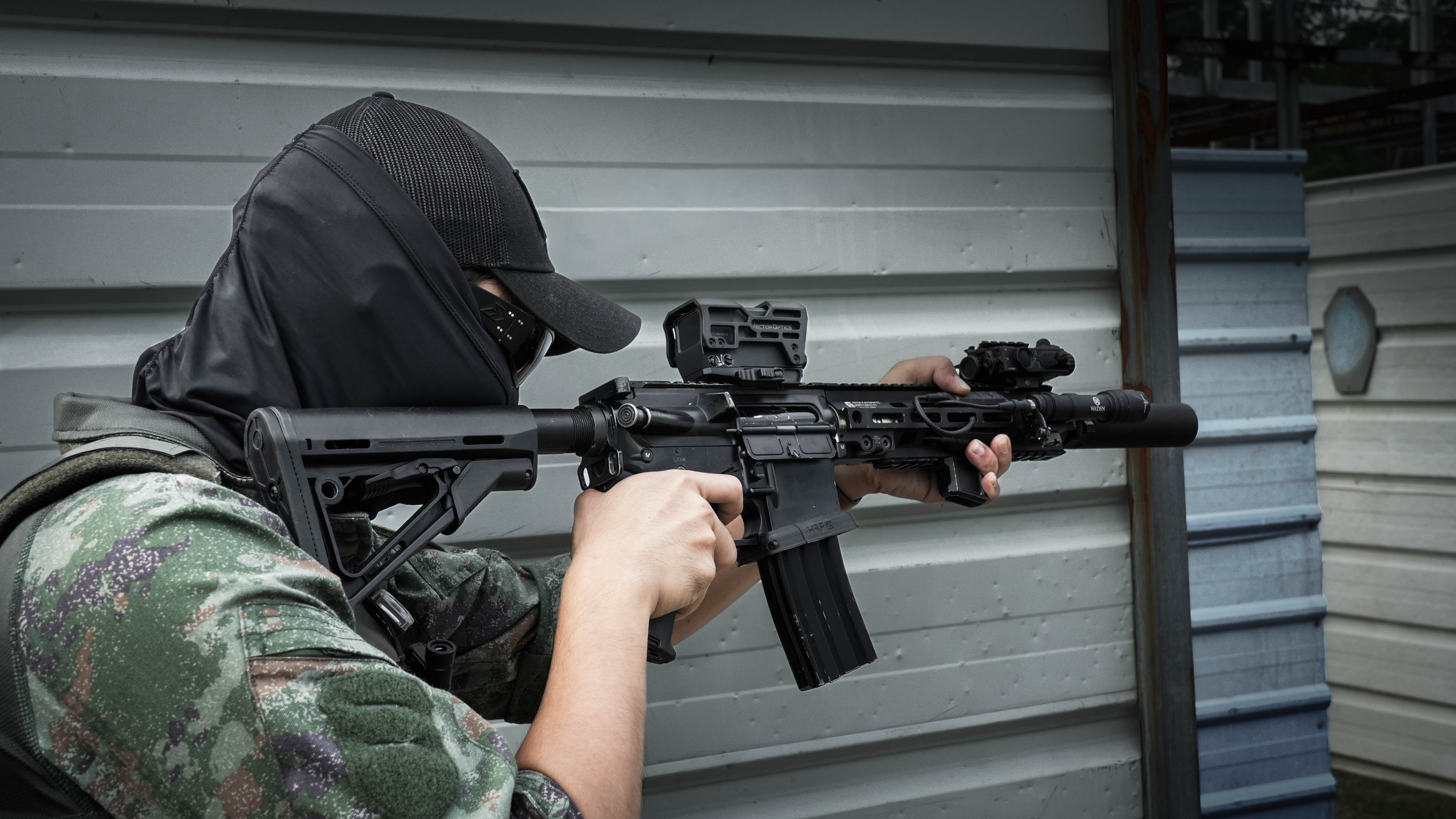
CQB stands for Close Quarters Battle. The term originates in tactical settings, but it is also used to describe close-range layouts in airsoft, wargames, and shooting training. Confined spaces and short sightlines make it especially important to find a clear sight picture without delay.
This article focuses on how those conditions affect optic selection.
1. What Does CQB Stand For?
CQB stands for Close Quarters Battle. So, what is CQB in practical terms?
1.1 What Are CQB Techniques?
Common CQB techniques include slicing the pie, stacking, dynamic entry, and room clearing, emphasizing situational awareness and fast sight acquisition, and maintaining a usable sight picture during movement.
1.2 What Are the Key Characteristics of CQB Environments?
CQB environments typically share several characteristics:
Limited Space: Restricted movement and visibility.
Rapid Target Appearance: Less time to acquire a sight picture.
Changing Light: Frequent shifts in lighting conditions.
Frequent Movement: Greater demands on equipment handling.
Changing Distances: Primarily close-range, sometimes extending to intermediate distances.
This is why Close Quarters Battle should not be defined by engagement distance alone.
These characteristics also directly influence the type of optic that works best for CQB environments.
2. How Does CQB Affect Optics Selection?
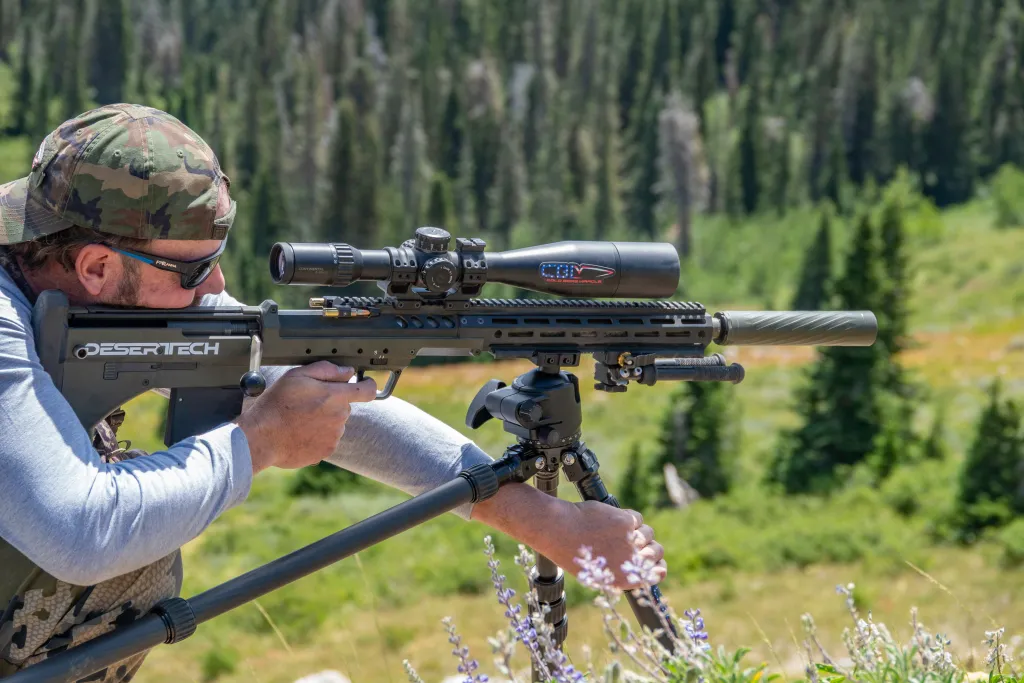
CQB environments place different demands on an optic than long-range shooting.
Limited space and rapidly appearing targets favor a wide field of view and fast sight acquisition, while frequent movement makes forgiving eye position, low weight, durability, and reliable zero retention especially important. Changing lighting conditions also make practical brightness adjustment an important consideration.
For this reason, several optical characteristics become particularly relevant:
Field of View: A wider view helps maintain visual awareness around the aiming point.
Eye Relief: Red dots provide effectively unlimited eye relief, while LPVOs and prism scopes require a more defined eye position.
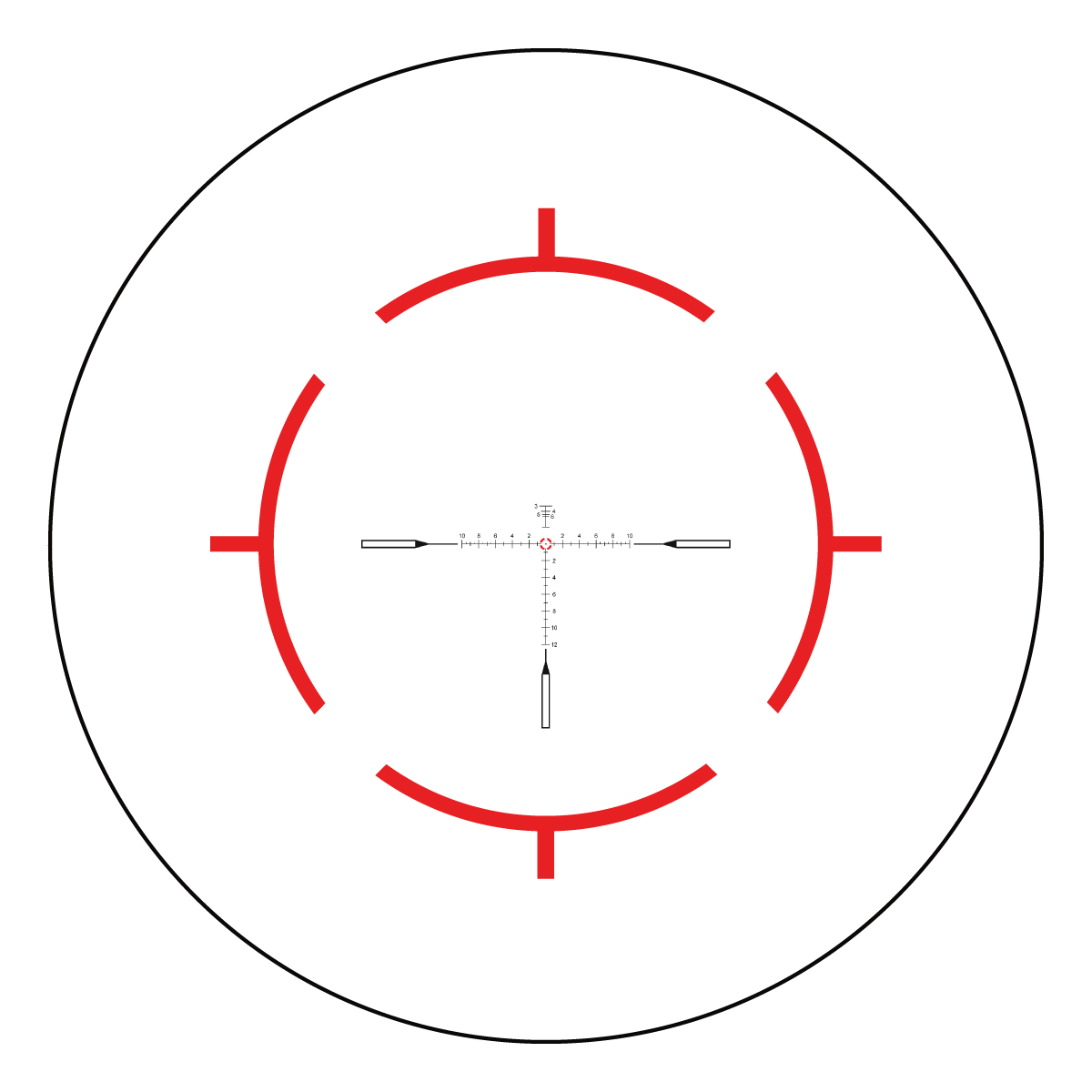
Reticle or Dot Size: Smaller dots provide a finer aiming reference, while larger dots are generally easier to pick up quickly.
Brightness: A practical range of brightness settings helps the aiming point remain visible as lighting conditions change.
Durability: The optic should withstand repeated movement and recoil while maintaining zero.
Rather than simply choosing the highest magnification available, CQB optic selection should begin with the actual shooting environment.
3. What Optics Are Used for CQB?
CQB applications generally rely on three primary optic types: red dot sights, LPVOs, and prism scopes, each offering distinct characteristics for close-range use.
| Optic Type | Magnification | Key Advantage | Limitation | Best For |
| Red Dot Sight | 1x | Fast sight acquisition, both-eyes-open aiming, and unlimited eye relief | No magnification for smaller or more distant targets | Close-range, speed-focused shooting |
| LPVO | Typically 1x to 6x / 8x / 10x | Combines close-range capability with added magnification for intermediate distances | Heavier and requires more defined eye positioning | Close-to-medium-range shooting |
| Prism Scope | Fixed low power | Compact design with an etched reticle that remains visible without illumination | Fixed magnification and less forgiving eye position than a red dot | Compact setups where an etched reticle is preferred |
For a closer look at the differences between red dot sights, LPVOs, and prism scopes, explore this guide.
4. Recommendations for CQB
Vector Optics and VictOptics offer practical optic solutions for different CQB training setups, shooting platforms, and distance requirements.
4.1 Red Dots: A Simple Primary Sight
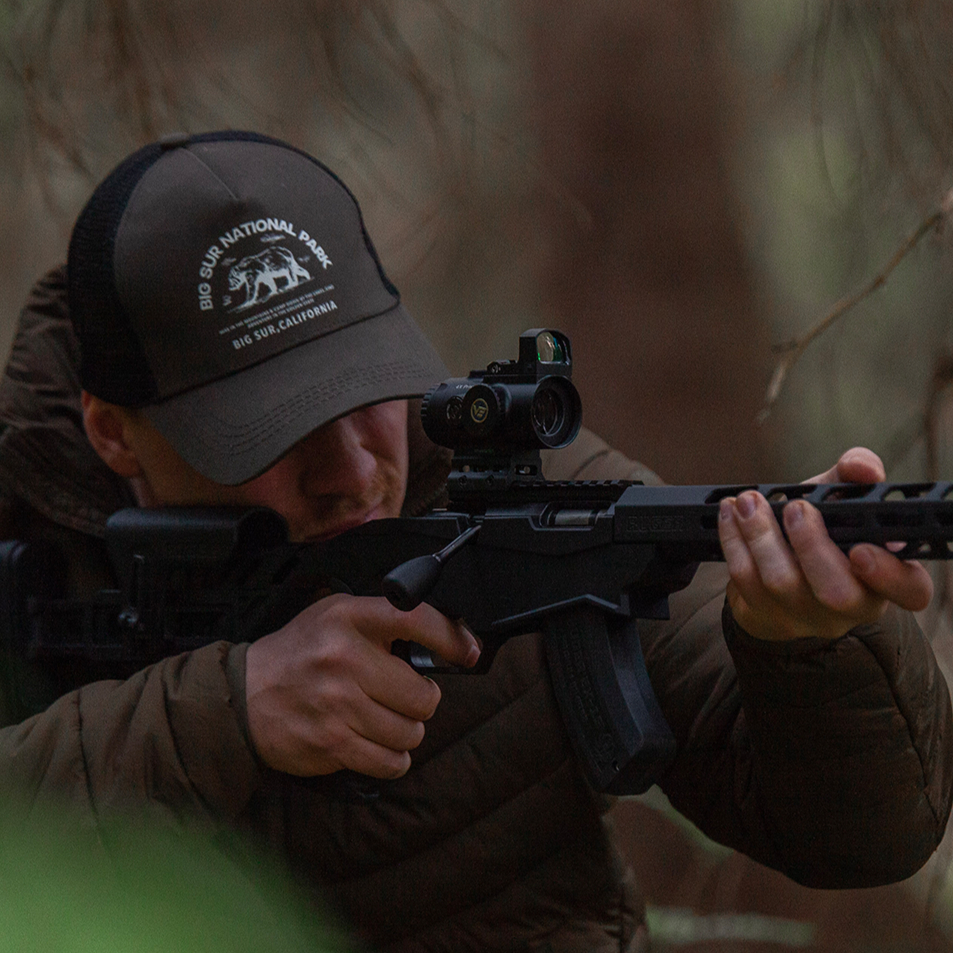
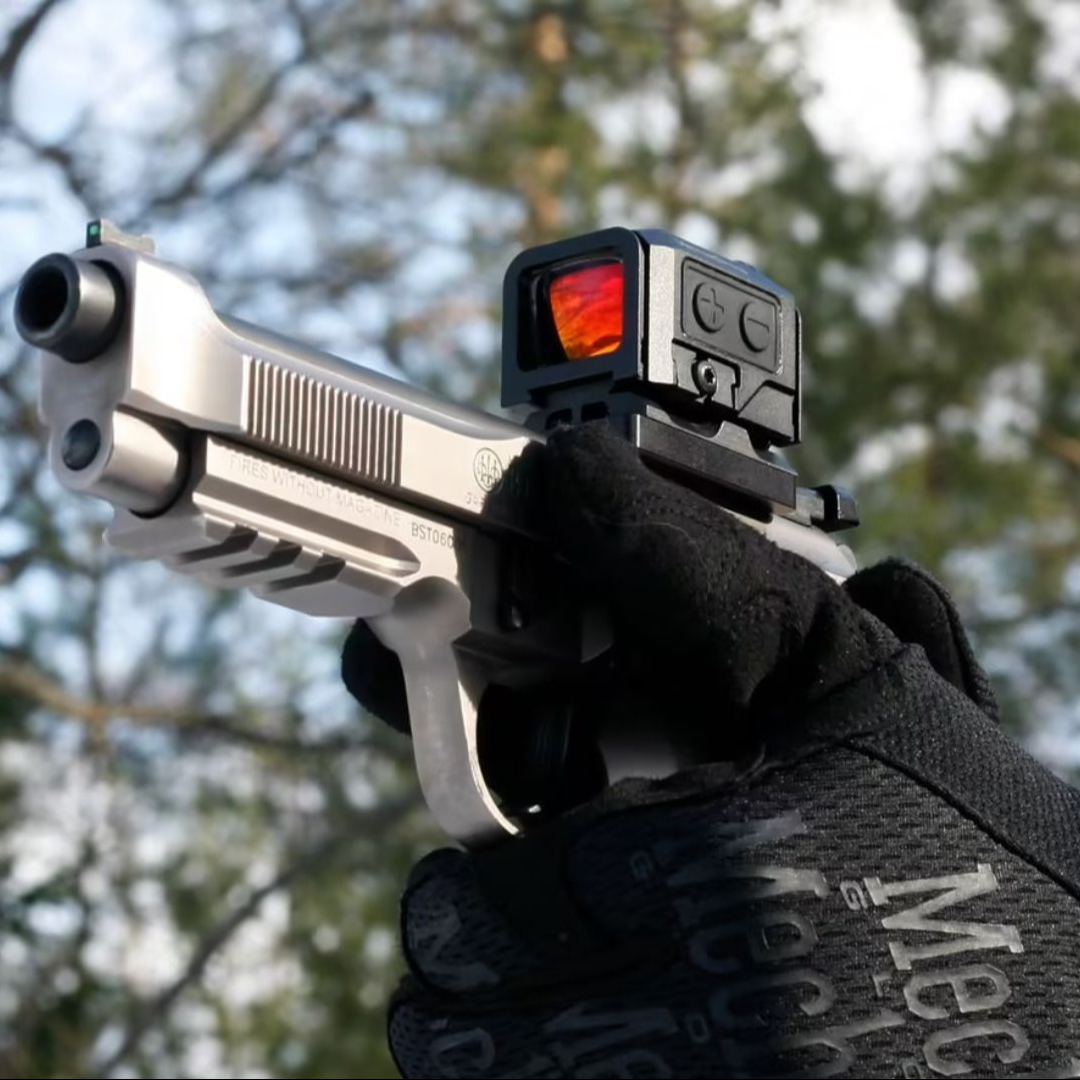
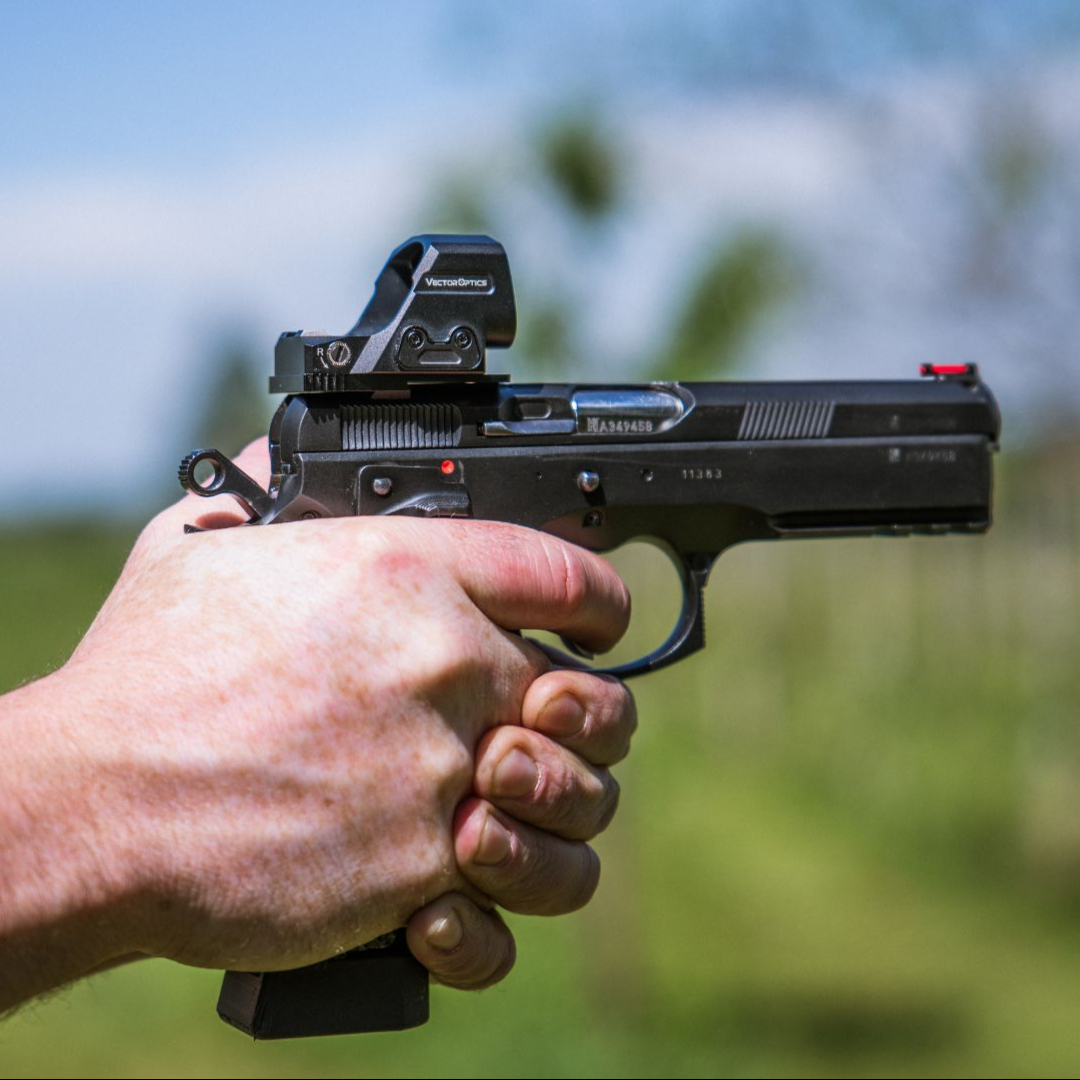
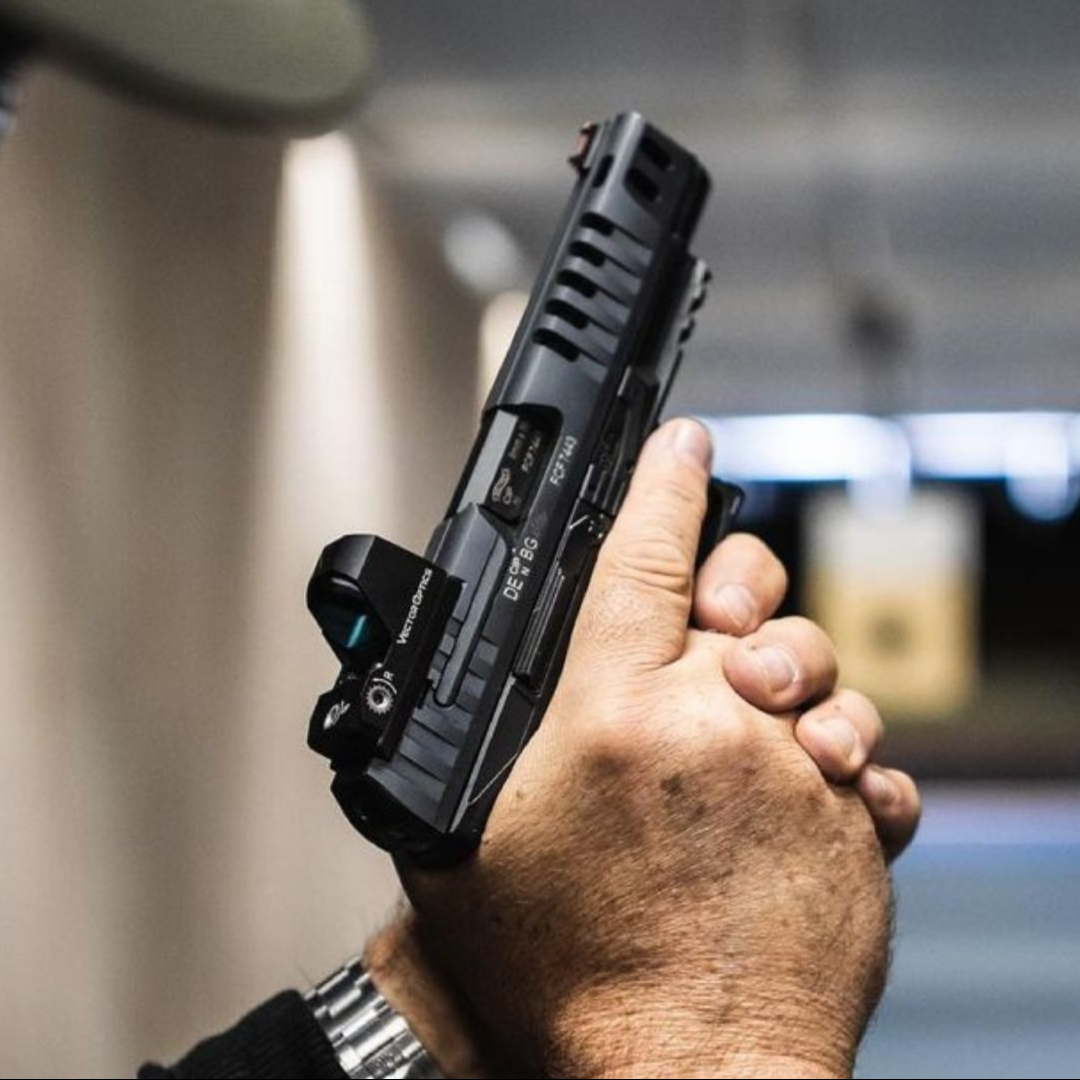
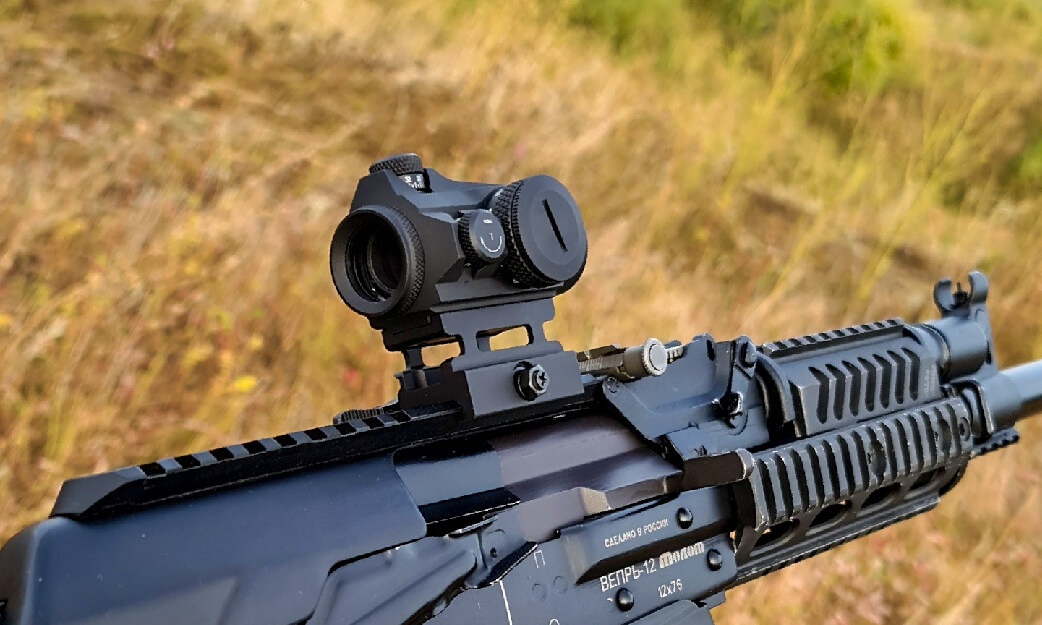
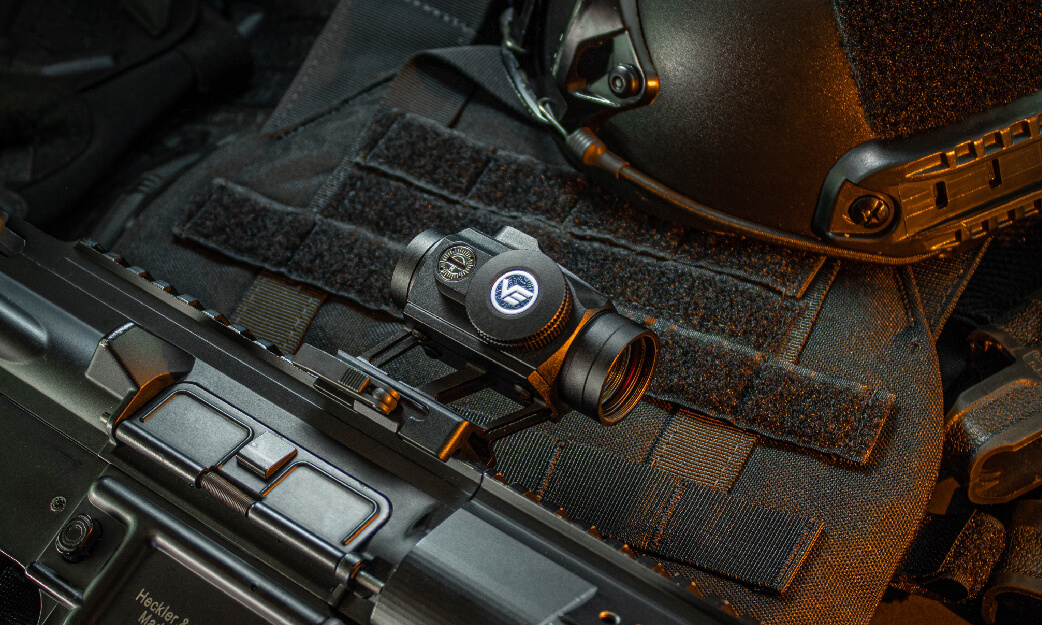
A red dot sight is a natural choice for close-range shooting, offering an unmagnified aiming reference with unlimited eye relief for a more forgiving sight picture.
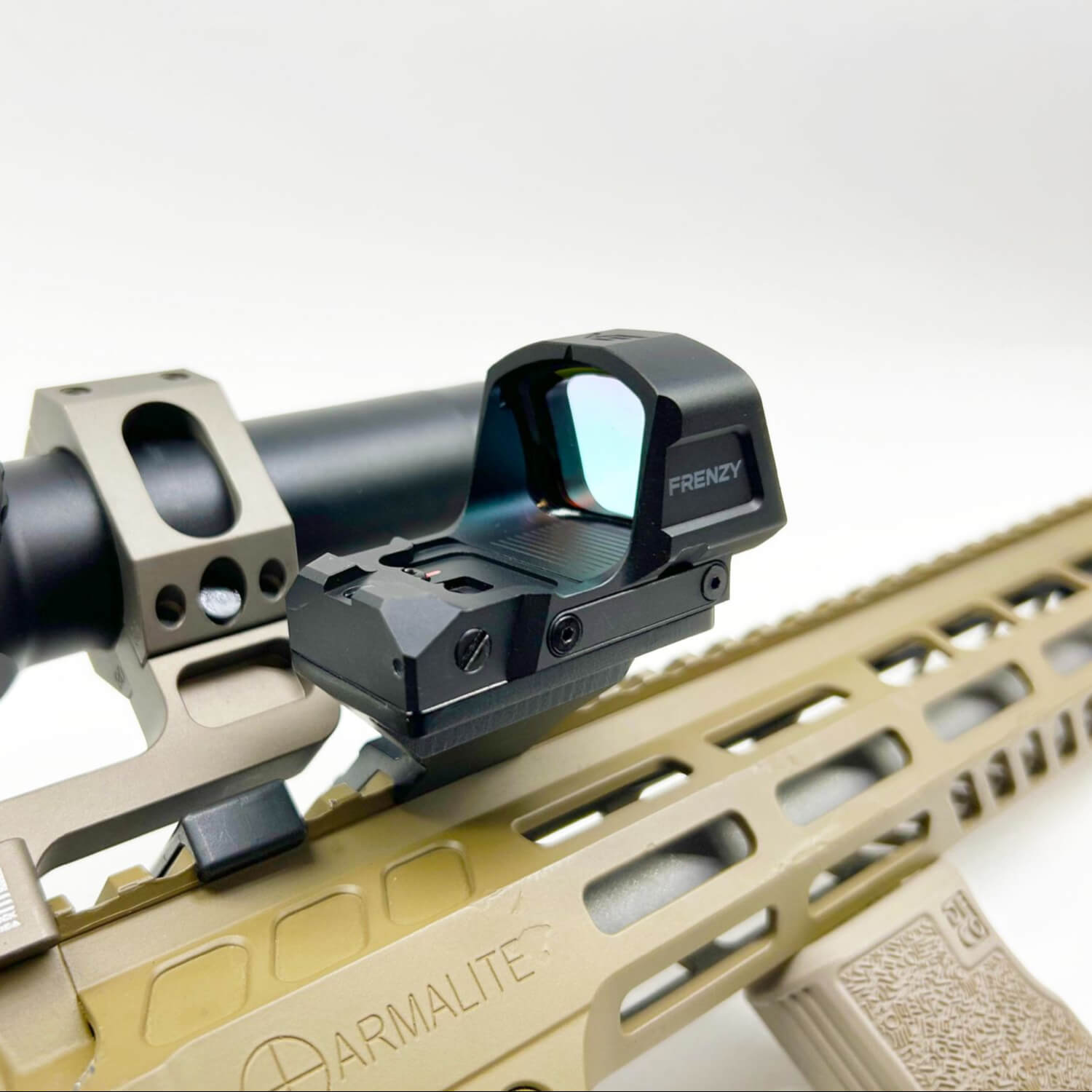
The Frenzy Plus 31x26 Multi-Reticle Red Dot Sight (SCRD-M67) features a large viewing window and selectable reticles for comfortable viewing and flexible aiming.
For occasional magnification, the Scrapper 1x29 MRT Red Dot & Paragon 3x Magnifier Kit with Integrated One-Piece Picatinny Mount (SCRMMK-02) combines a spacious 29 mm red dot with a flip-to-side 3× magnifier. This setup offers flexible 1× and 3× viewing, although the magnifier introduces its own eye relief and field-of-view limitations.
4.2 Prism Scopes: Choosing Between 1× and 3×
Unlike red dots, prism scopes feature etched reticles that remain visible without battery power in sufficient ambient light, but require a defined eye position.
A 1× prism scope provides unmagnified viewing with an etched reticle, making it suitable for close-range shooting. The Paragon 1x16 Compact Prism Scope (SCPS-M01) features a compact design and illuminated circle-dot reticle.
A 3× prism scope offers additional target detail for mixed-distance shooting. The Paragon 3x18 Prism Scope (SCPS-M03) combines fixed 3× magnification with a compact body, although its narrower field of view makes it less suitable for predominantly close-range use.
4.3 LPVOs: One Optic Across Different Distances
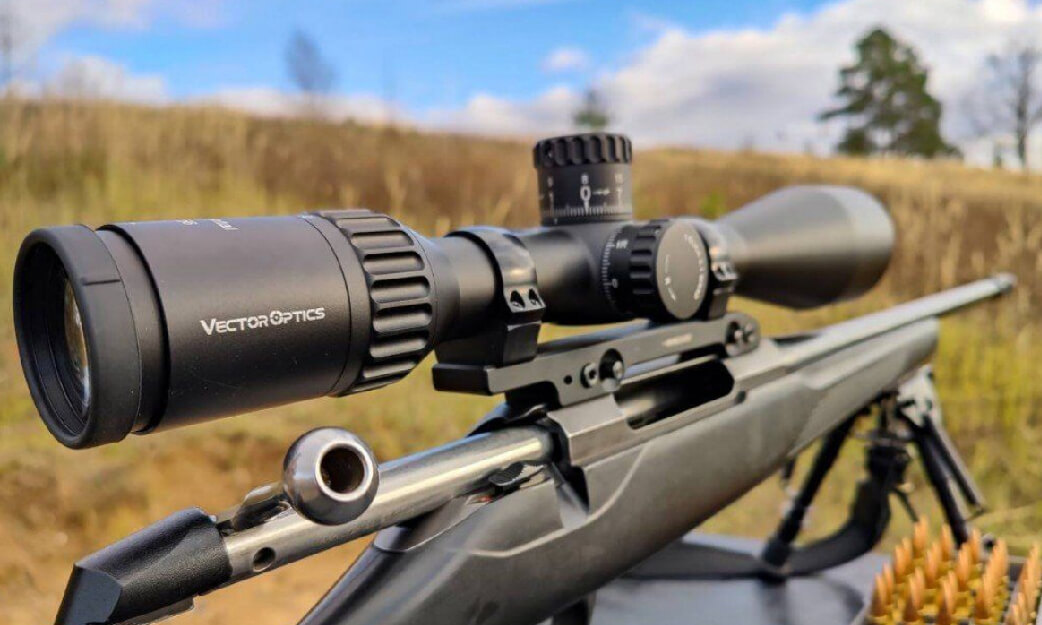
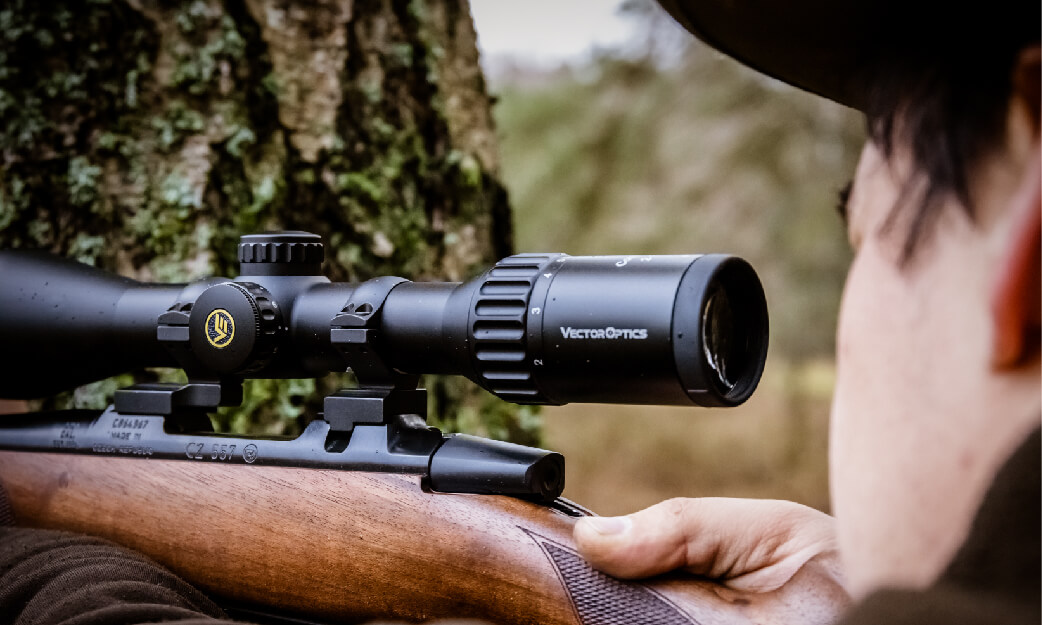
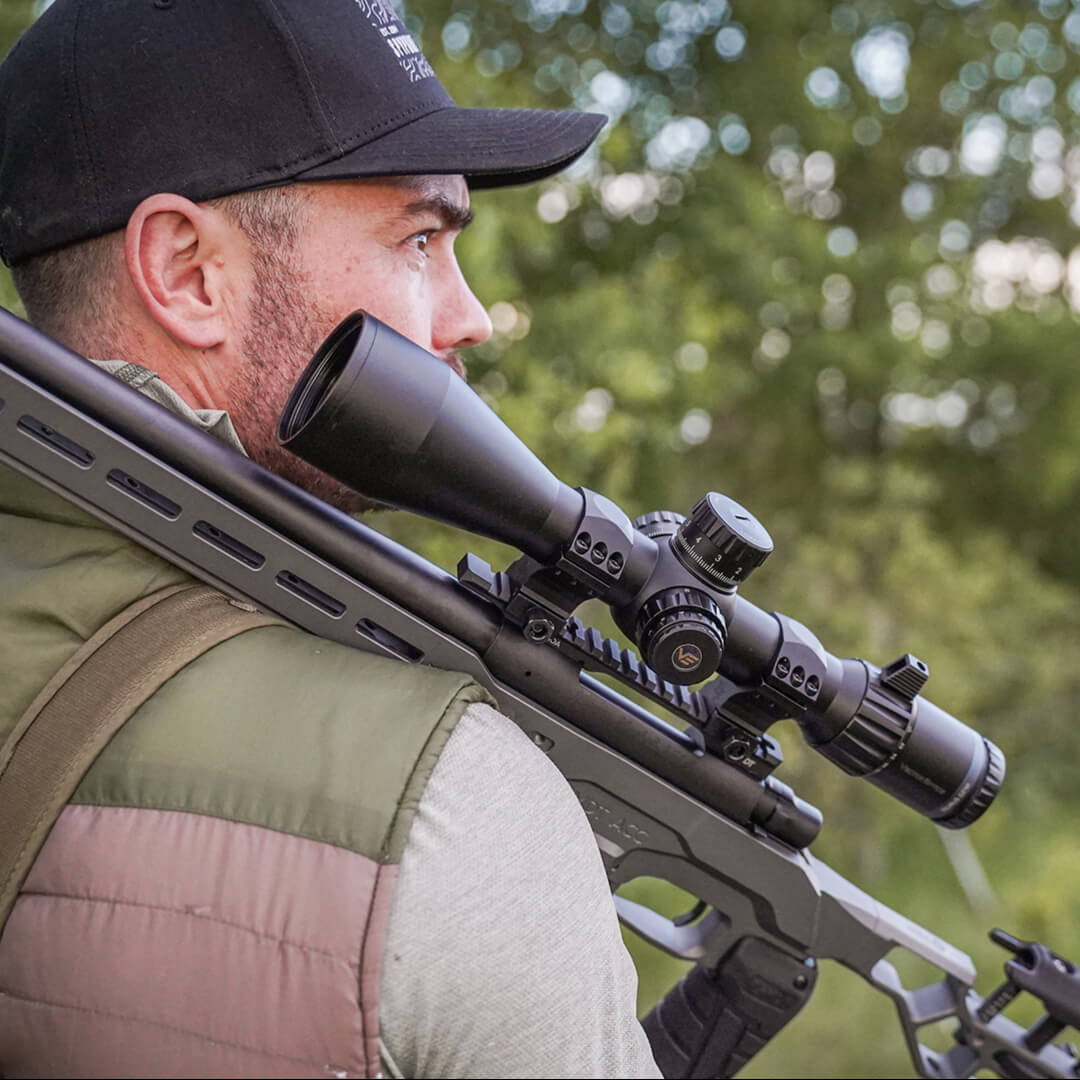
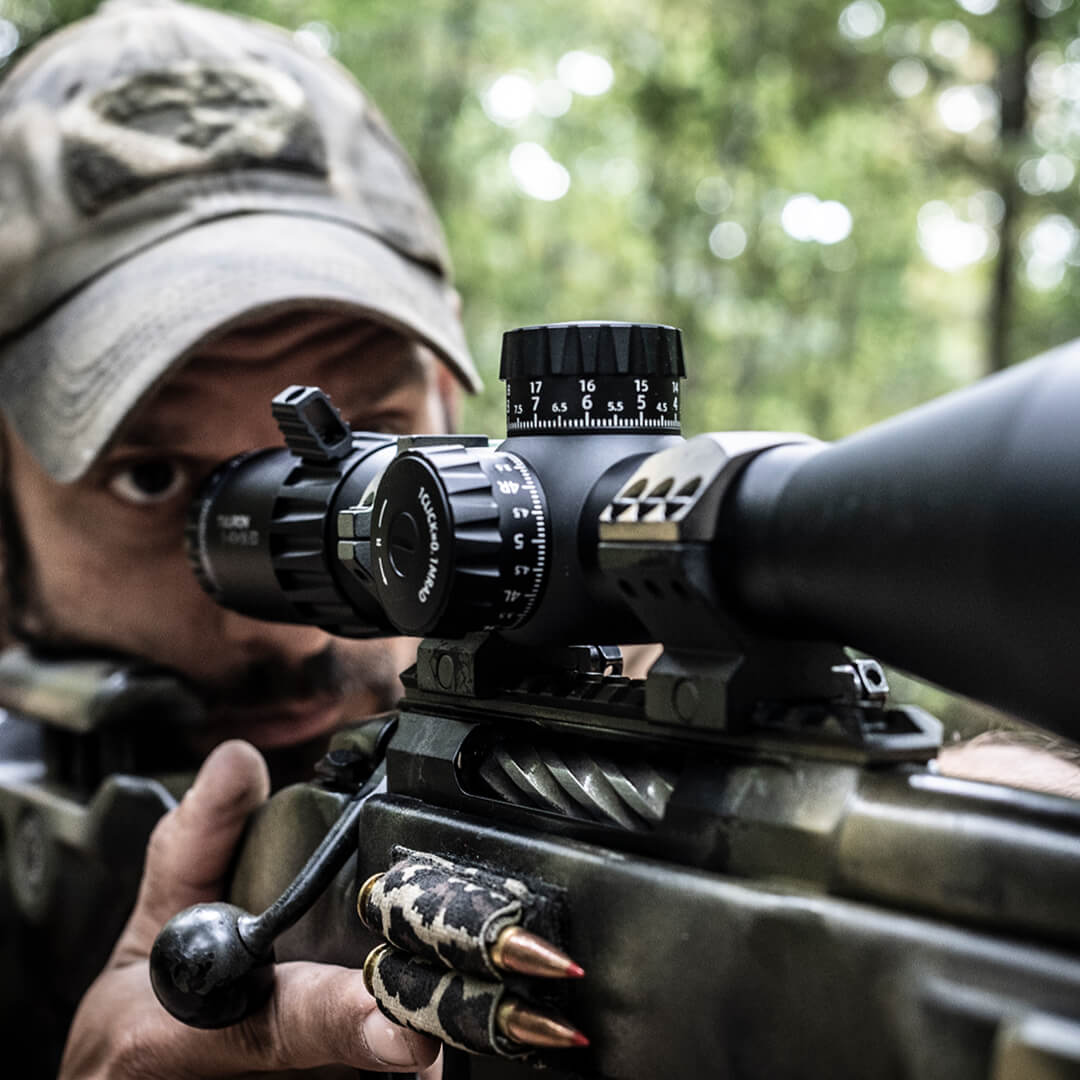
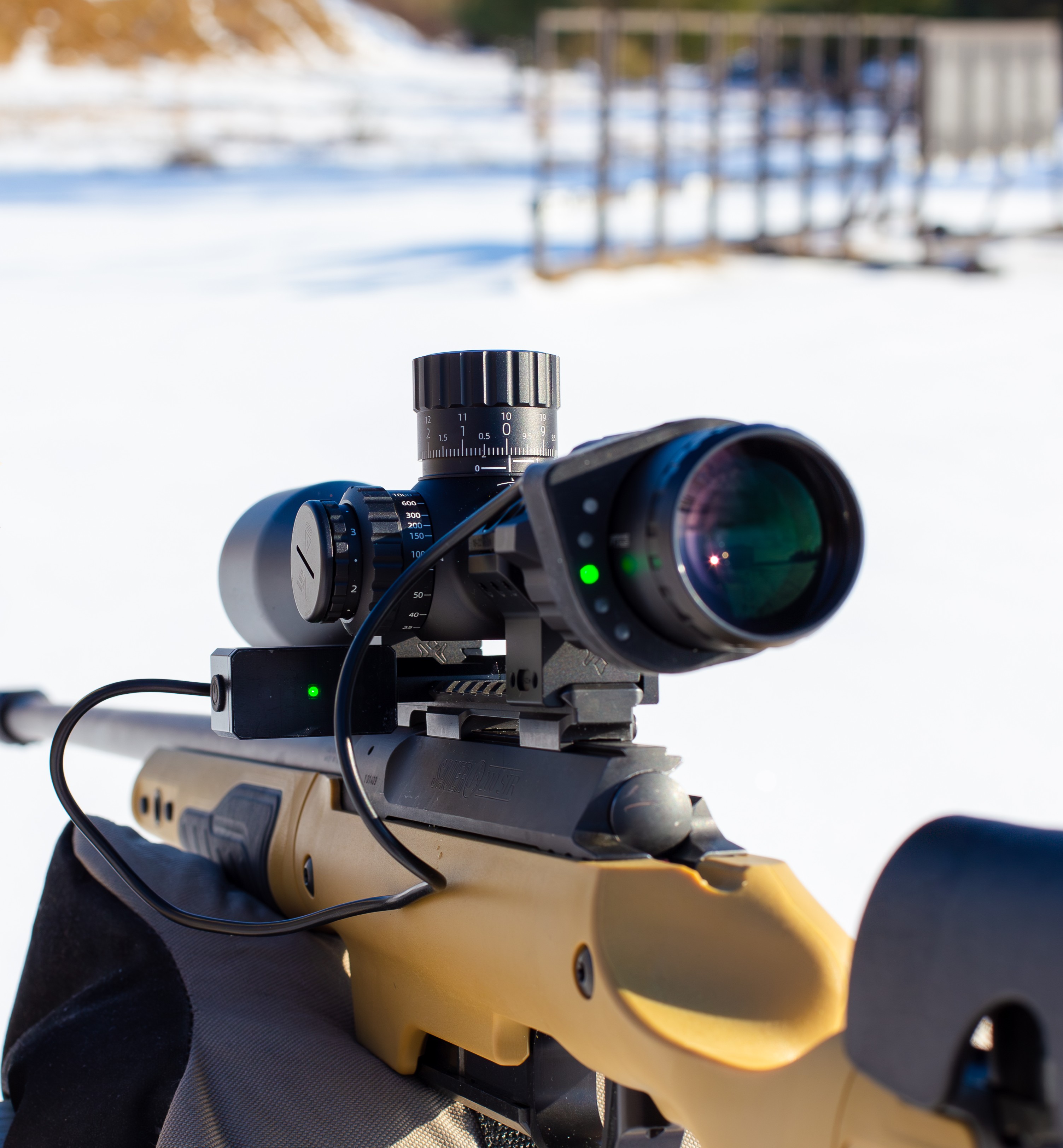
An LPVO (Low Power Variable Optic) combines low-power viewing for close-range shooting with adjustable magnification for intermediate distances. 1–6× and 1–8× LPVOs are practical starting points for versatile shooting setups.
The S6 1-6x24i Fiber LPVO SFP Rifle Scope w/ 1-Piece Extreme High Picatinny AR Mount Kit (OPSL133) features a daylight-bright fiber-optic aiming point and an included one-piece mount, making it an accessible option for airsoft, wargames, and compatible entry-level .223 AR range setups.
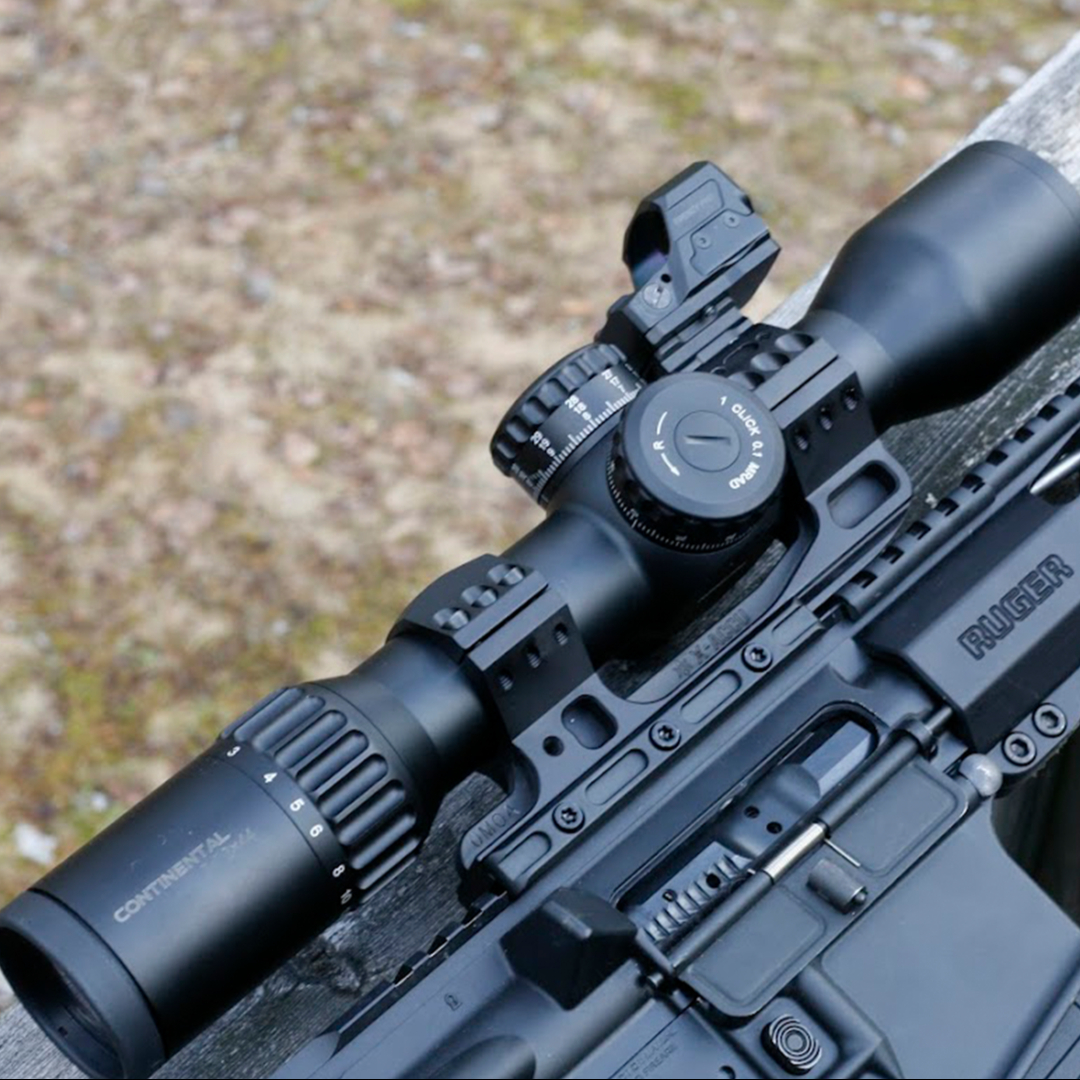
For shooters prioritizing optical performance, the Continental 1-6x24i Fiber Rifle Scope Tactical LPVO (SCOC-44) offers a bright center aiming point and wide field of view. The Continental x8 1-8x24i Fiber Rifle Scope LPVO ED (SCOC-45) adds ED glass and 8× magnification for improved target detail at longer distances.
The Continental x10 1-10x28 ED FFP Rifle Scope CTR (SCFF-47) extends versatility with 10× magnification and a first-focal-plane reticle that maintains consistent subtensions throughout the zoom range. However, its smaller reticle appearance at 1× makes low-power visibility an important consideration for close-range shooting.
4.4 A Red Dot as a Secondary Optic
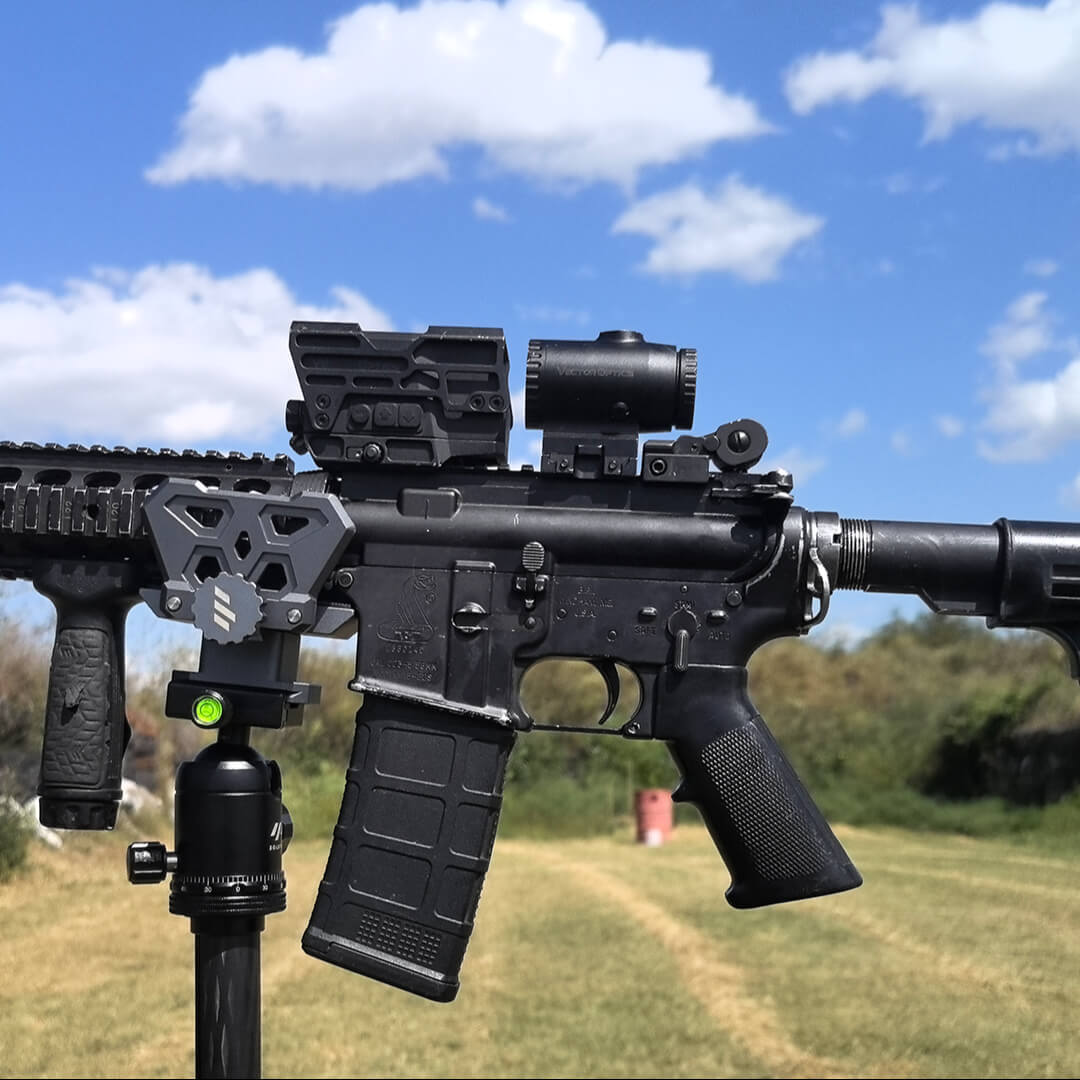
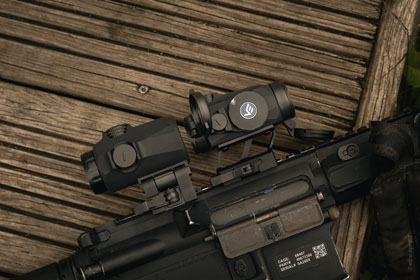
An offset red dot sight can complement an LPVO by providing a separate unmagnified aiming option. With a compatible 45° offset mount, shooters can use the LPVO as their primary optic while retaining a dedicated 1× sight.
While this setup adds weight and requires mounting space, options include the compact Frenzy FA 18x22 Enclosed Red Dot Sight (SCRD-75) with its enclosed design, or the lightweight Frenzy FLEX 24x29 MRT Red Dot Sight (SCRD-M76), weighing just 50 g / 1.76 oz with a 24×29 mm window and selectable reticles. Both require a compatible offset mount for proper installation.
4.5 Which Type Should You Consider?
There is no single best optic for every shooting style. The right choice depends on your preferred magnification, viewing comfort, and typical shooting distance.
| Your Priority | Recommended Optic |
| Simple, unmagnified viewing | Red Dot Sight |
| 1x viewing with optional 3x magnification | Red Dot Sight + Magnifier |
| Etched reticle without magnification | 1x Prism Scope |
| Compact, fixed magnification | 3x Prism Scope |
| Adjustable zoom for mixed distances | 1-6x or 1-8x LPVO |
| Extended zoom with consistent reticle subtensions | 1-10x FFP LPVO |
| Separate 1x viewing alongside a magnified optic | LPVO + Offset Red Dot |
Final Thoughts
CQB, or Close Quarters Battle, is defined not only by distance but by the combination of close range, confined space, rapid target appearance, and limited reaction time. These conditions explain why CQB optics generally prioritize fast sight acquisition, a wide and forgiving sight picture, practical illumination, low weight, and durability rather than high magnification.
Whether the setup uses a red dot, red dot + magnifier, LPVO, or prism scope, the same principle applies: Understand the scenario first, then choose the optic that matches its requirements.
FAQ
1. Does optic height matter in a CQB setup?
Yes. Optic height affects head position, cheek weld, mechanical offset, and compatibility with backup sights or other equipment.
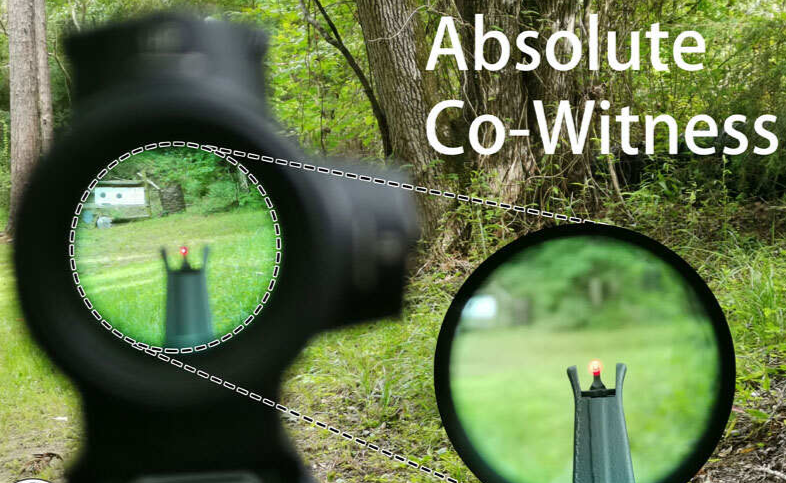
A higher mount can support a more upright head position, while a lower setup may provide a more traditional cheek weld. The appropriate height depends on the firearm, shooting position, and other equipment used with the optic. For more on cowitness, mount height, and magnifier alignment, see our complete guide.
2. How Does Parallax Affect Red Dot Accuracy in CQB?
Most red dot sights are designed to minimize parallax, but they are not completely parallax-free at every distance. During CQB training, changes in eye position may introduce slight aiming errors due to residual parallax. Choosing a red dot with minimal parallax helps maintain a consistent aiming reference during movement.
For a closer look at what causes parallax and how it affects aiming, see our guide.
3. Should I Choose a 3× Prism or a Red Dot with a 3× Magnifier?
Choose a 3× prism if you regularly want magnification and prefer one compact optic with an etched reticle. A red dot and magnifier combination offers more flexibility when you frequently switch between an unmagnified view and 3× magnification. Compare the viewing comfort and total weight of the complete setups.
4. Will a Prism Scope Still Work If Its Battery Runs Out?
Yes. Its etched reticle remains visible when there is enough ambient light. The battery powers the reticle illumination, so visibility against a dark or visually busy background may change when the illumination is off. Learn more about etched reticles and prism scope features in our prism scope guide.
5. Is a red dot better than an LPVO for CQB?
For use concentrated at close range, a red dot offers a simple unmagnified sight with flexible eye position. An LPVO becomes more useful when the same setup regularly needs magnification. The better choice depends on the distances and viewing experience you expect.
6. Do I need an offset red dot if my LPVO has a 1× setting?
Not necessarily. A suitable LPVO may meet your close-range needs at 1×. An offset red dot is worth considering when you want a separate unmagnified sight while leaving the LPVO at another magnification.