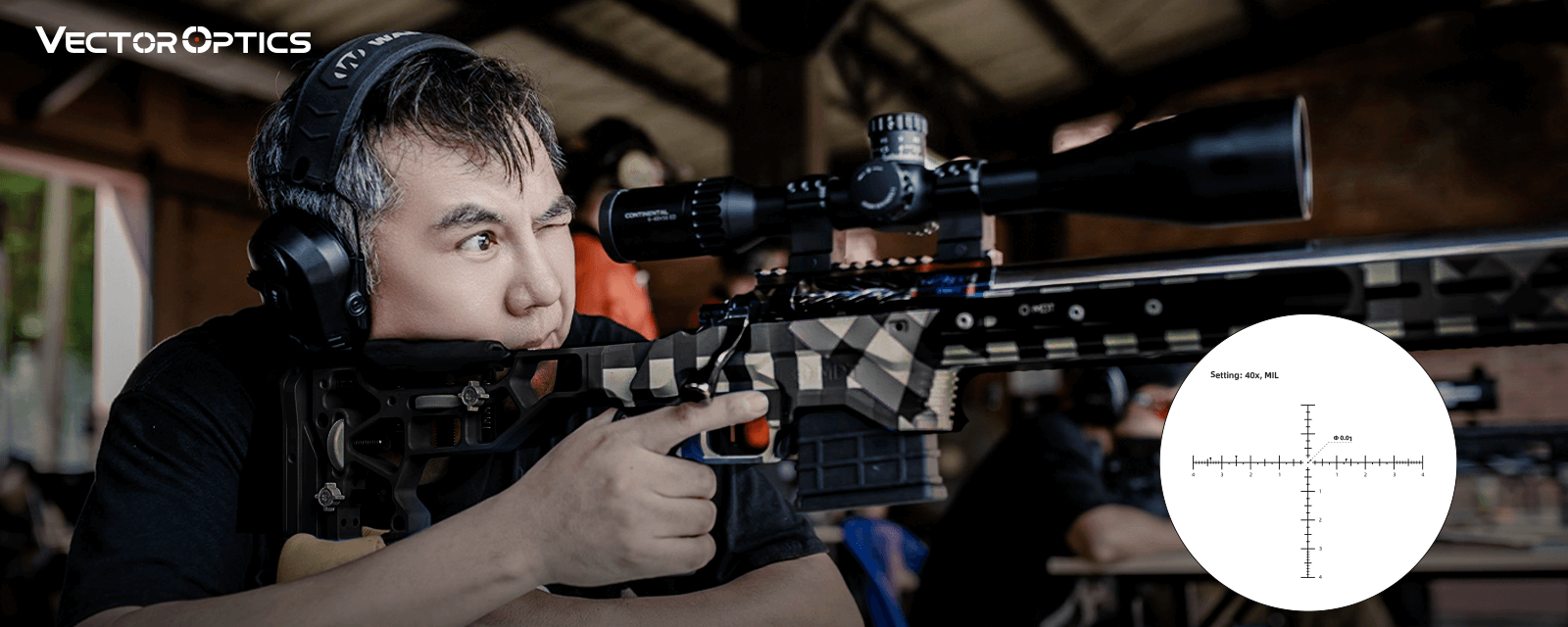
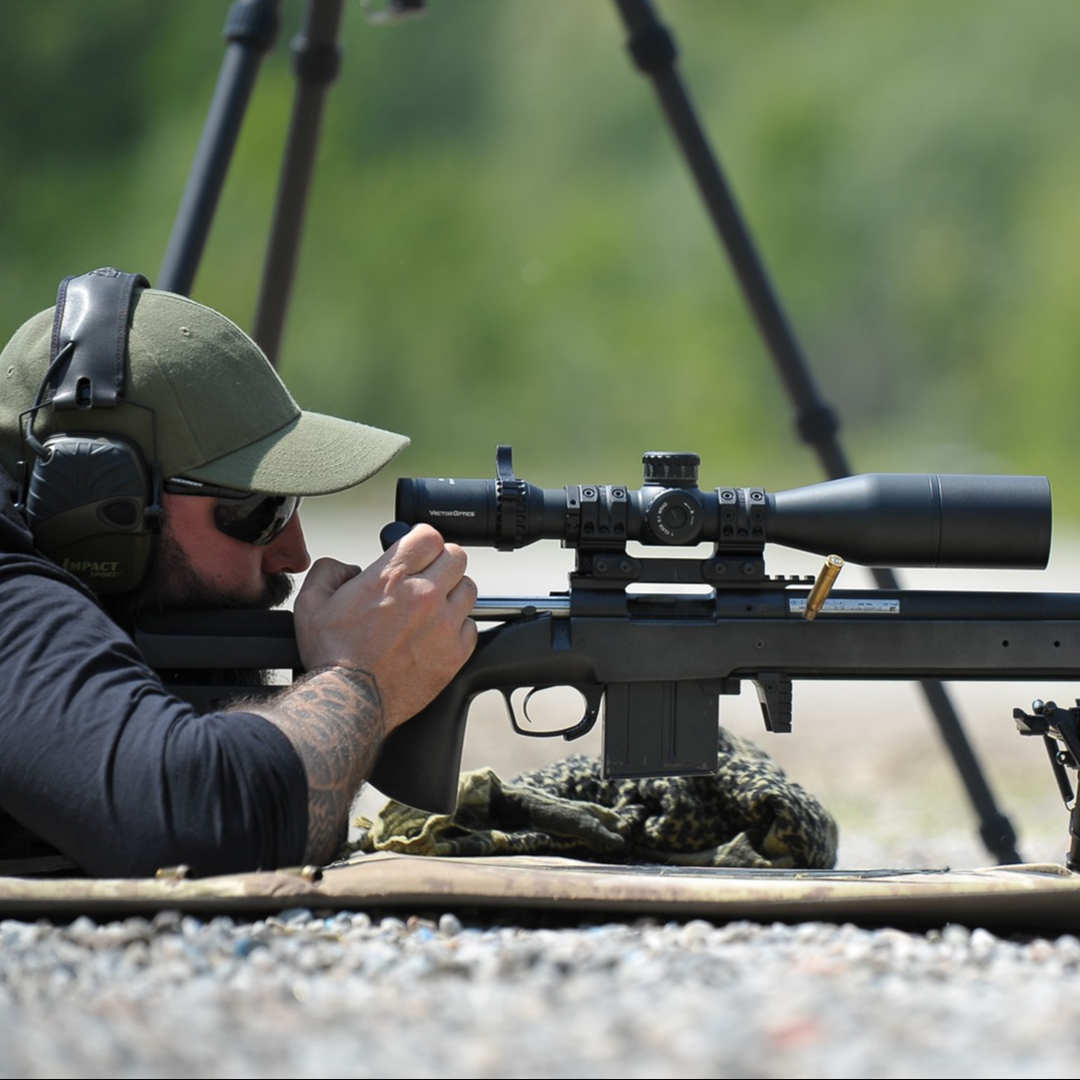
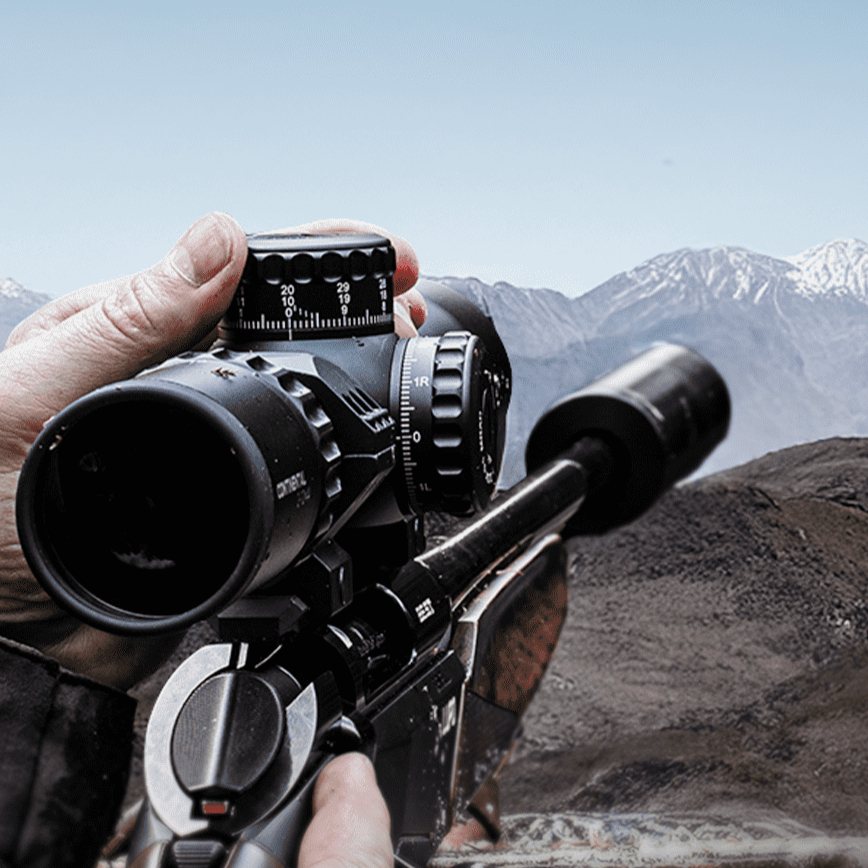
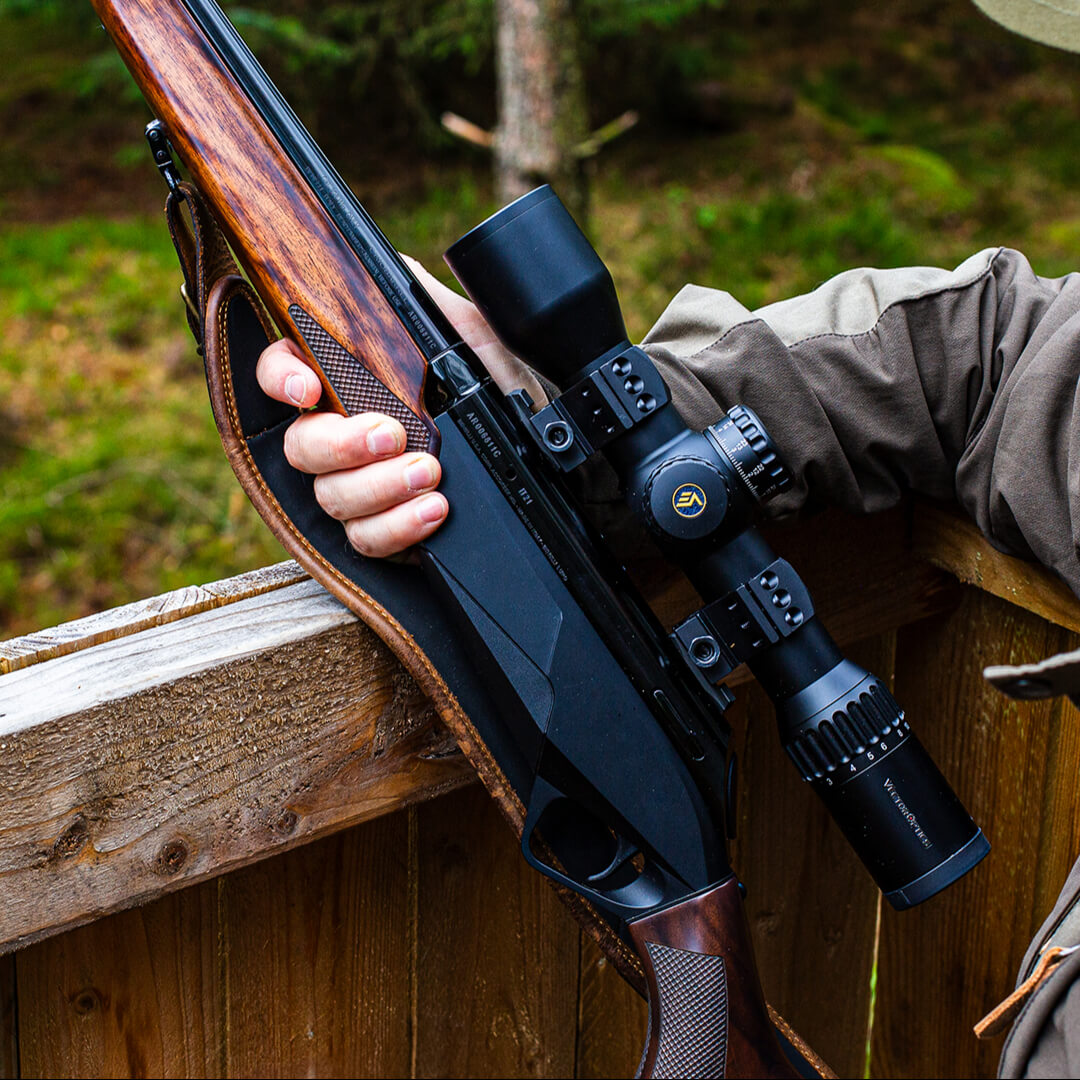
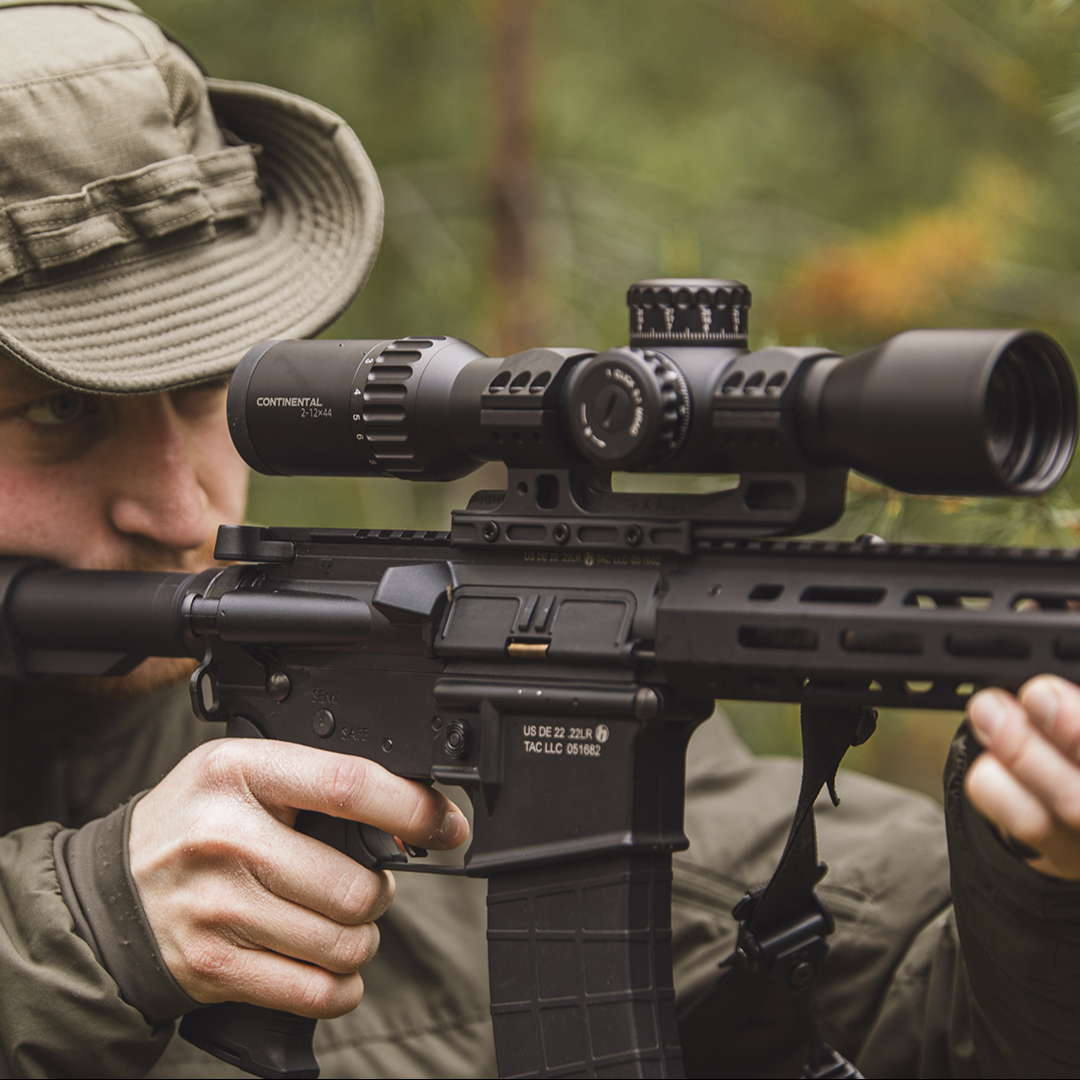
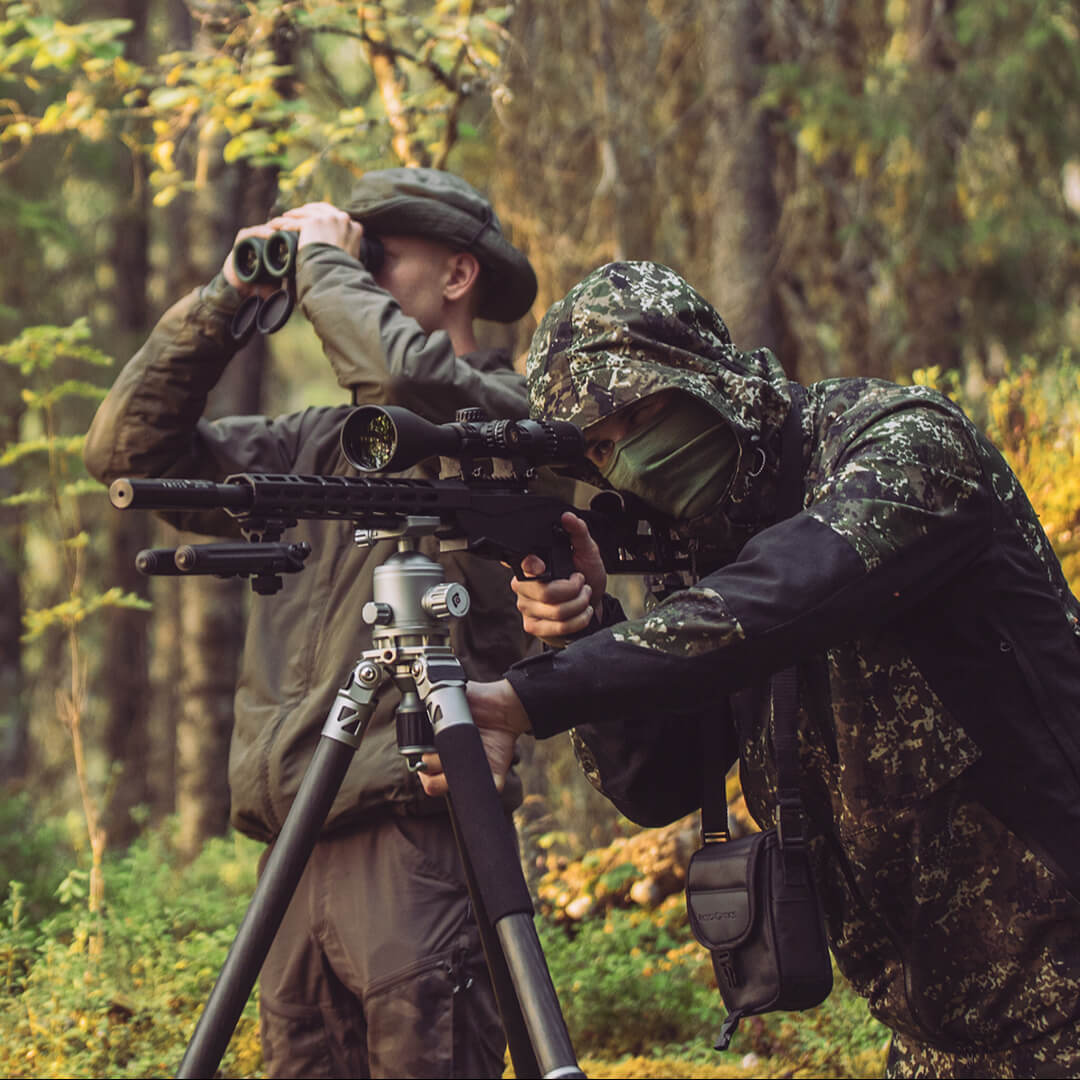
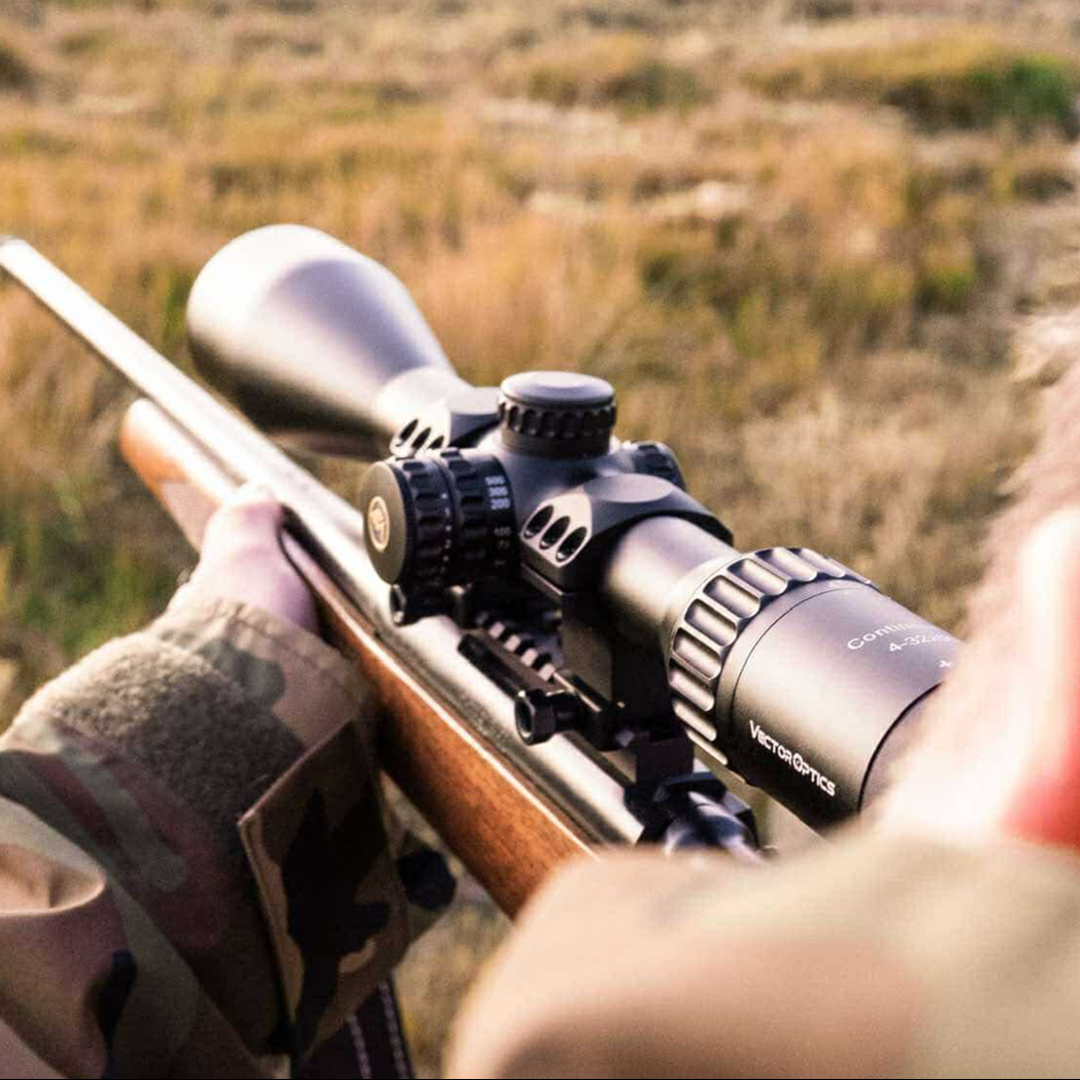
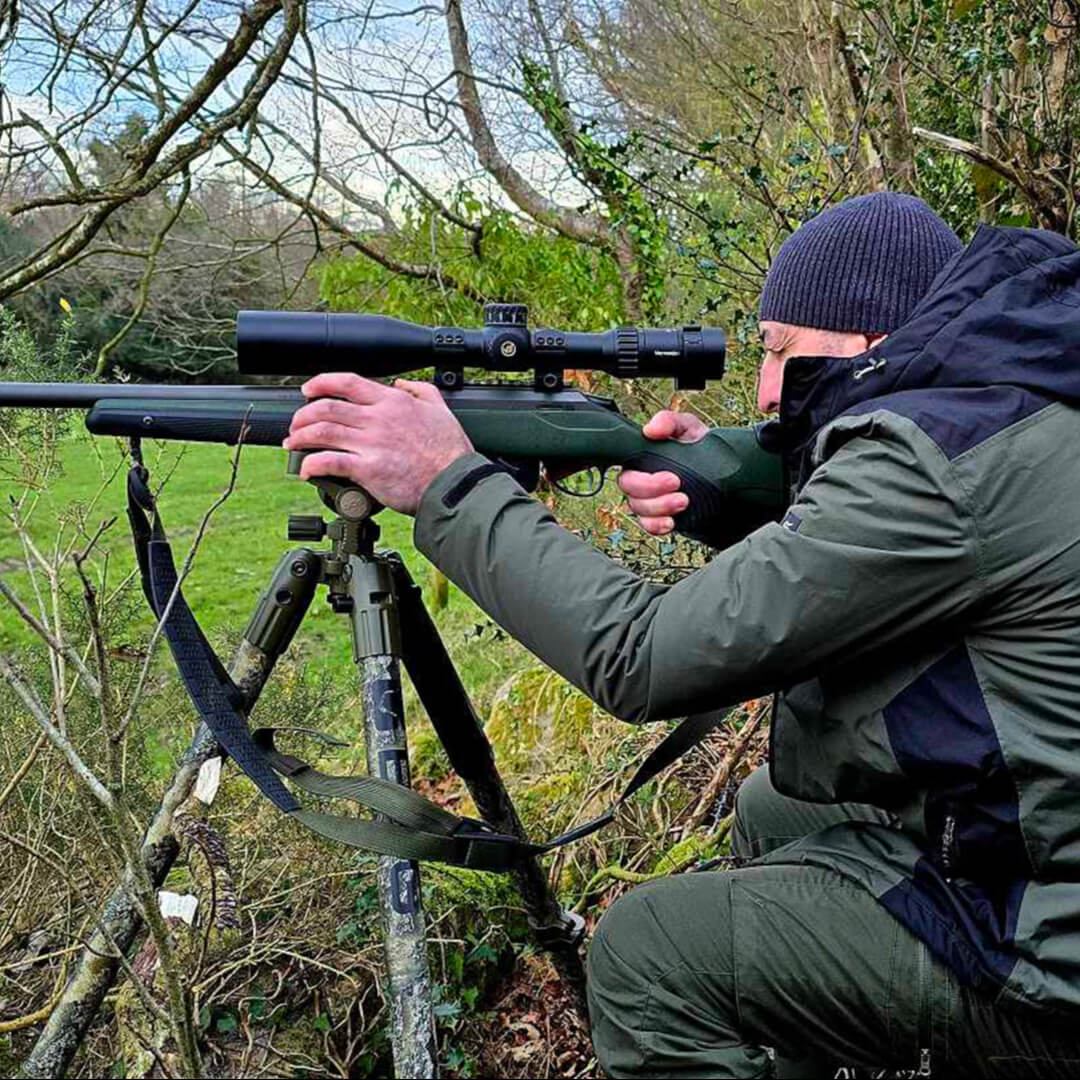
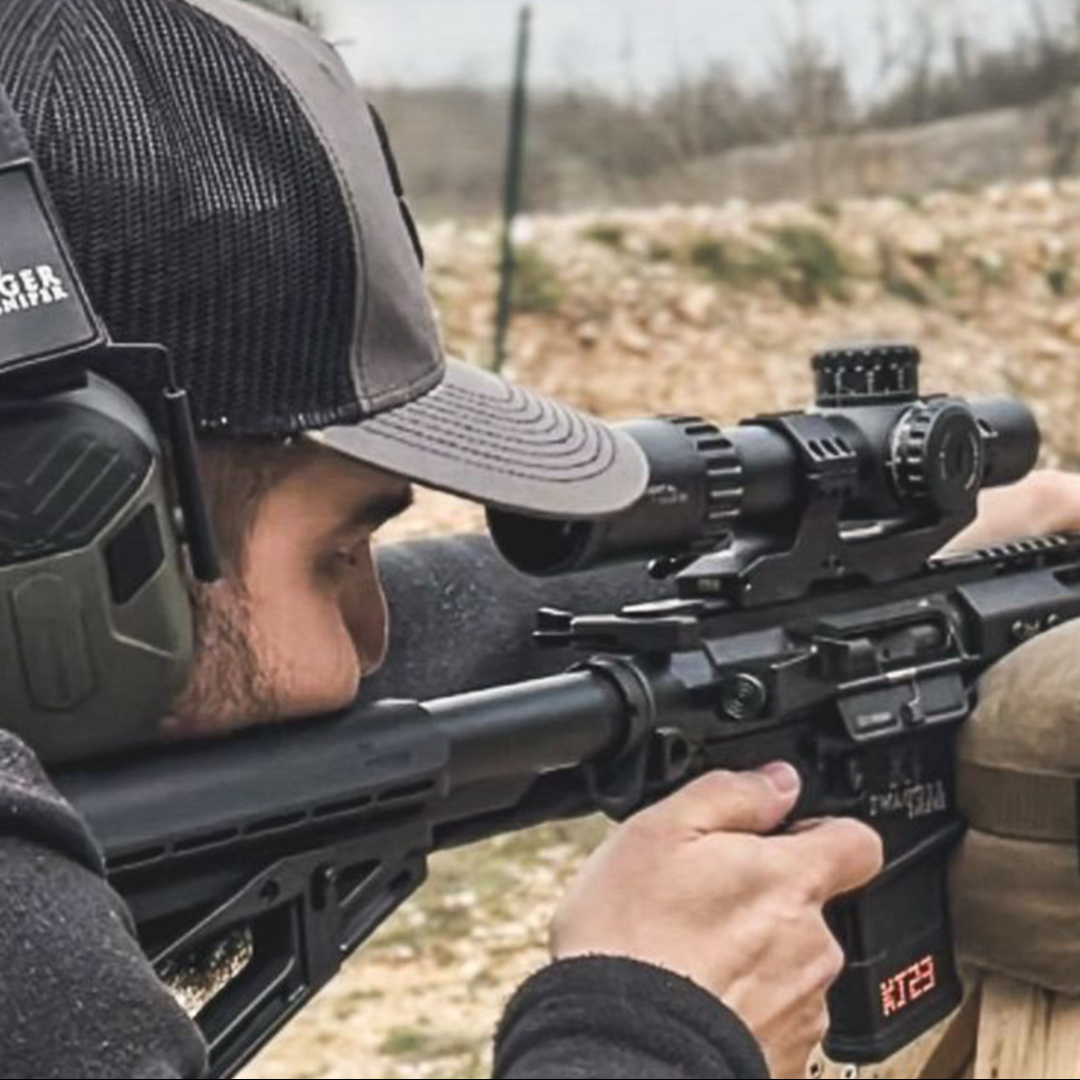
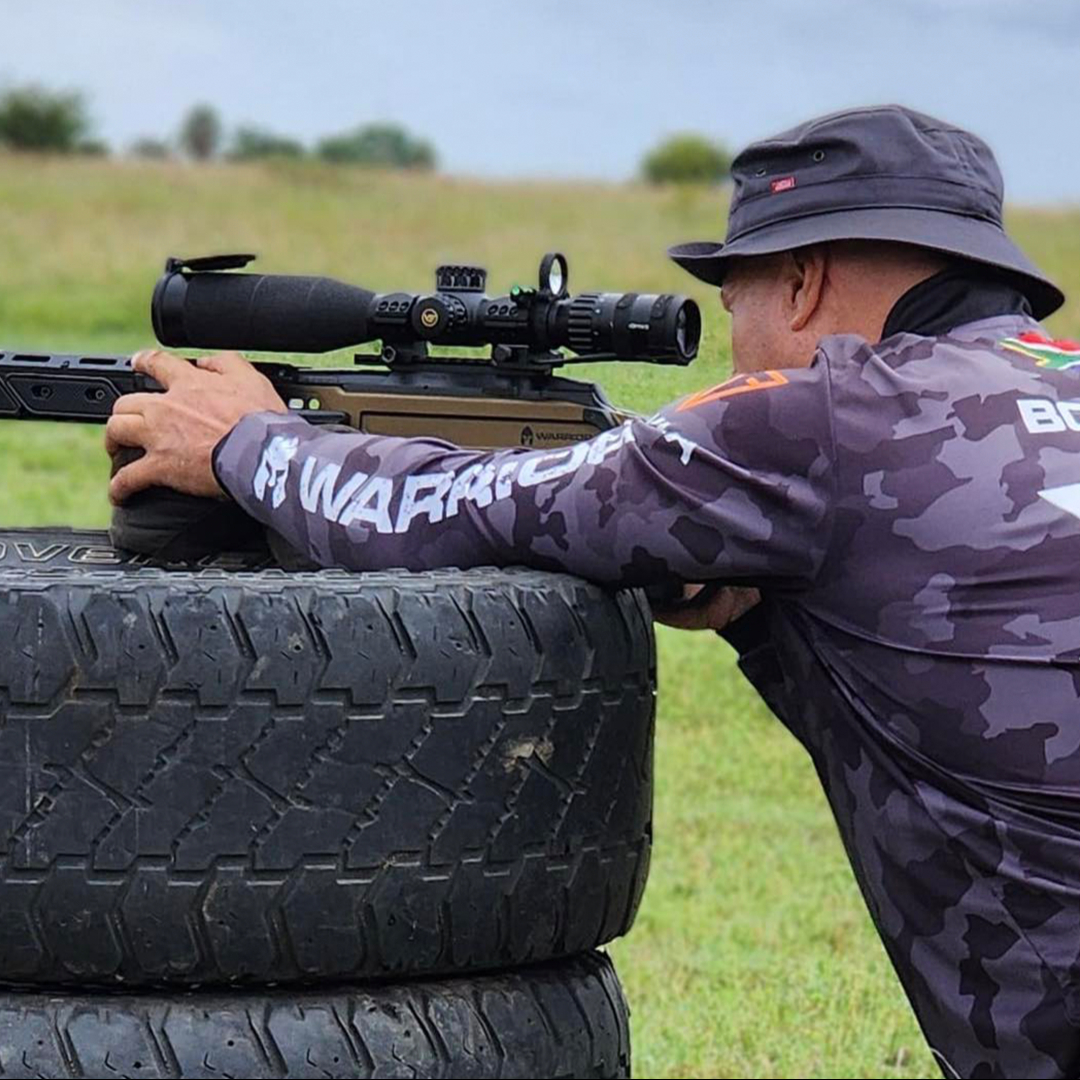
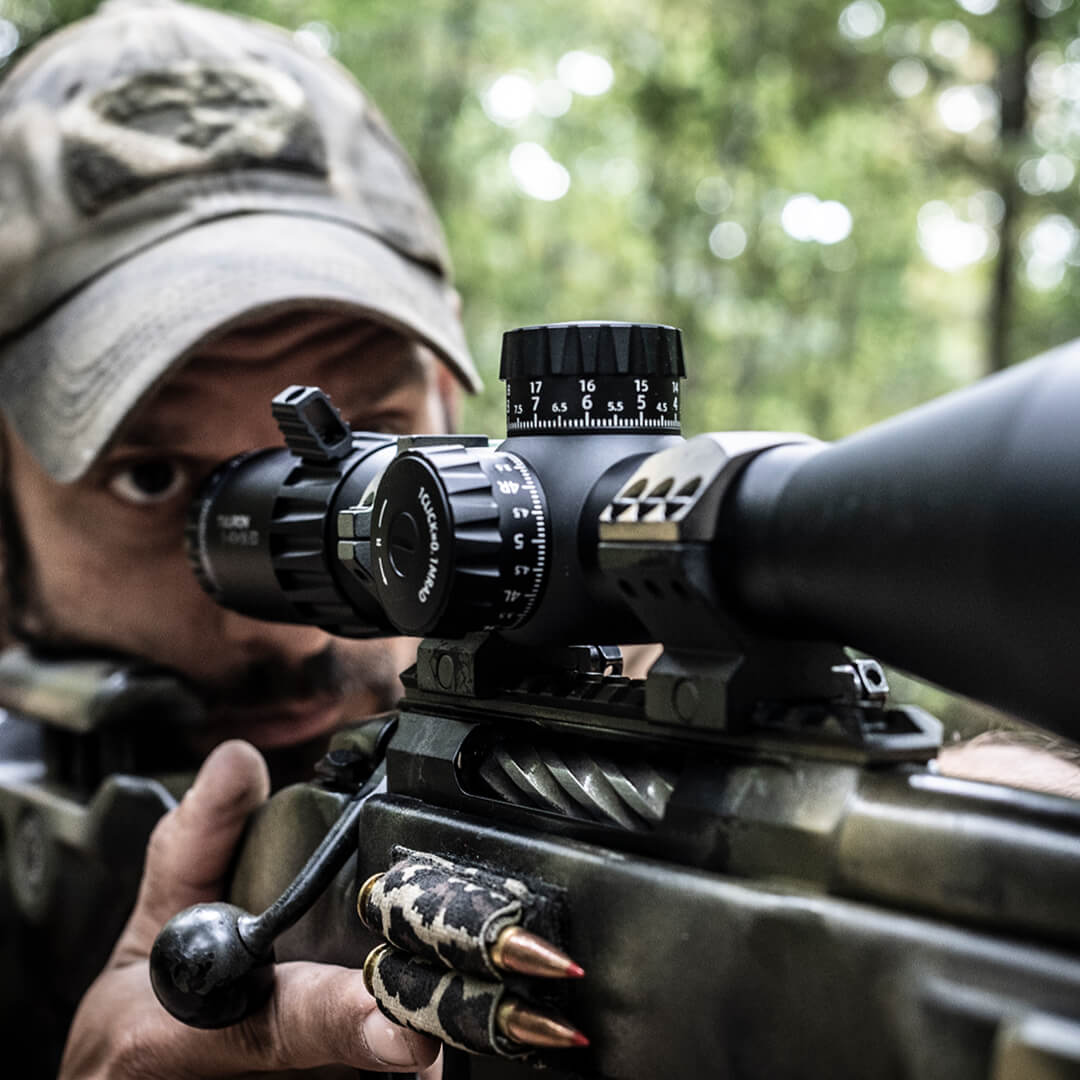
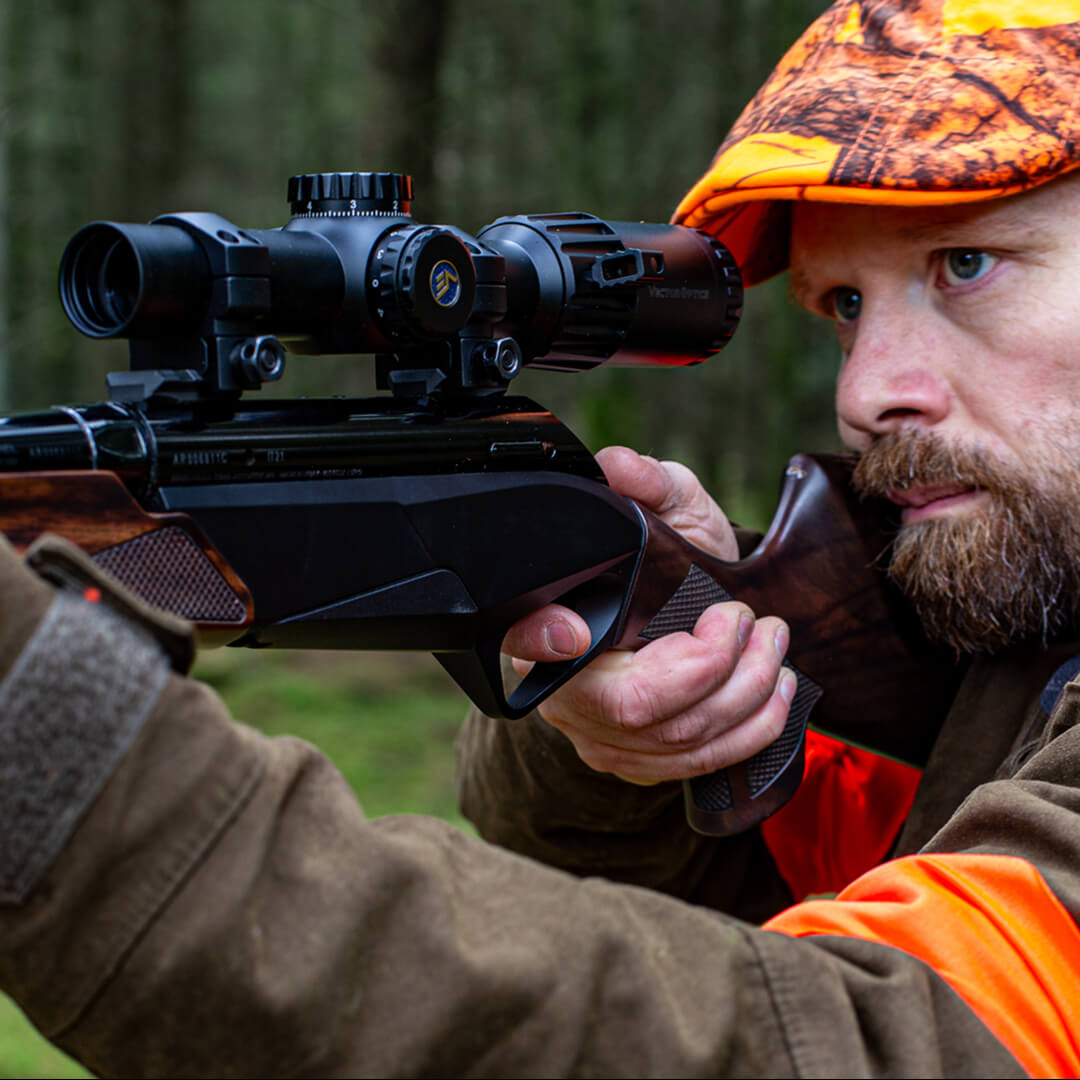
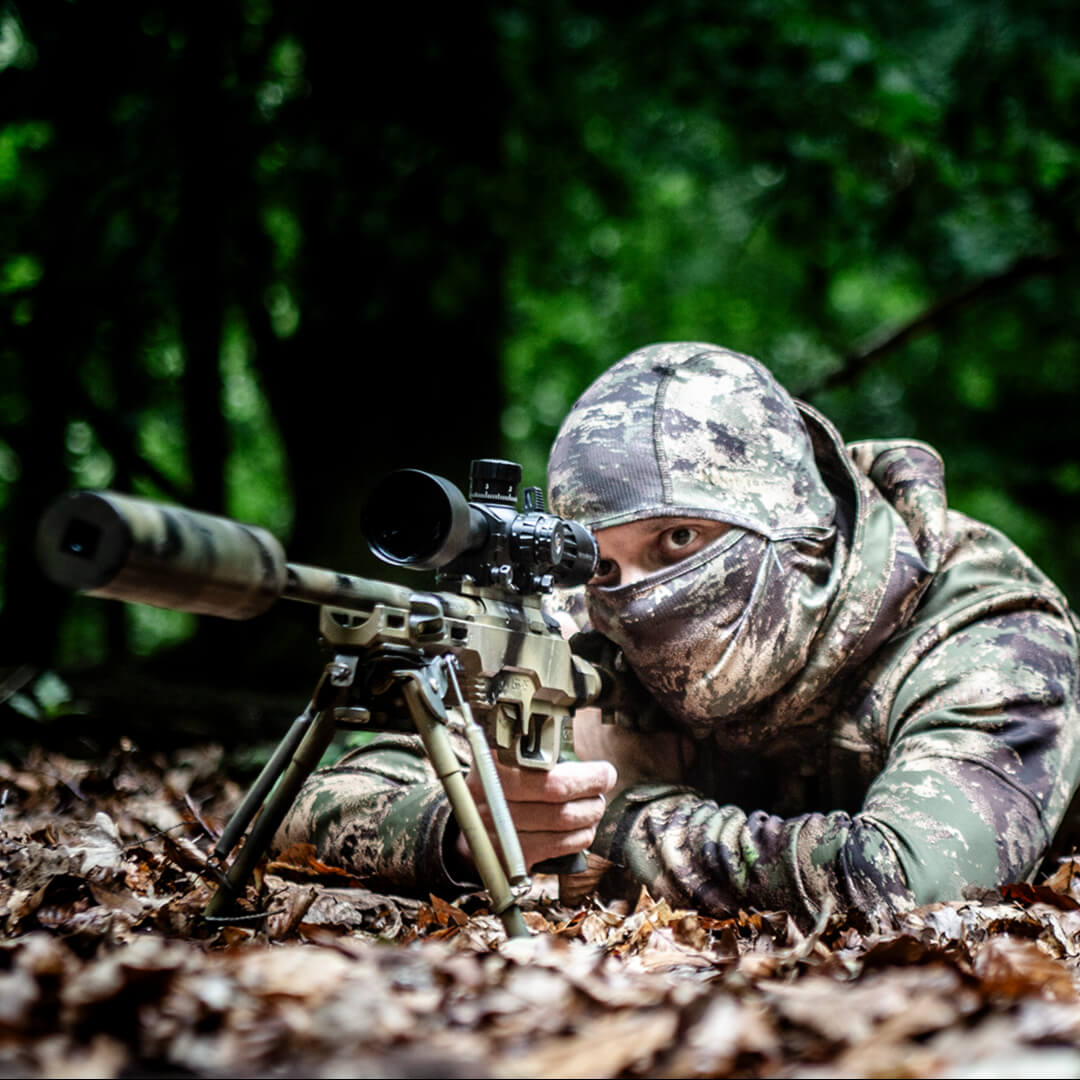
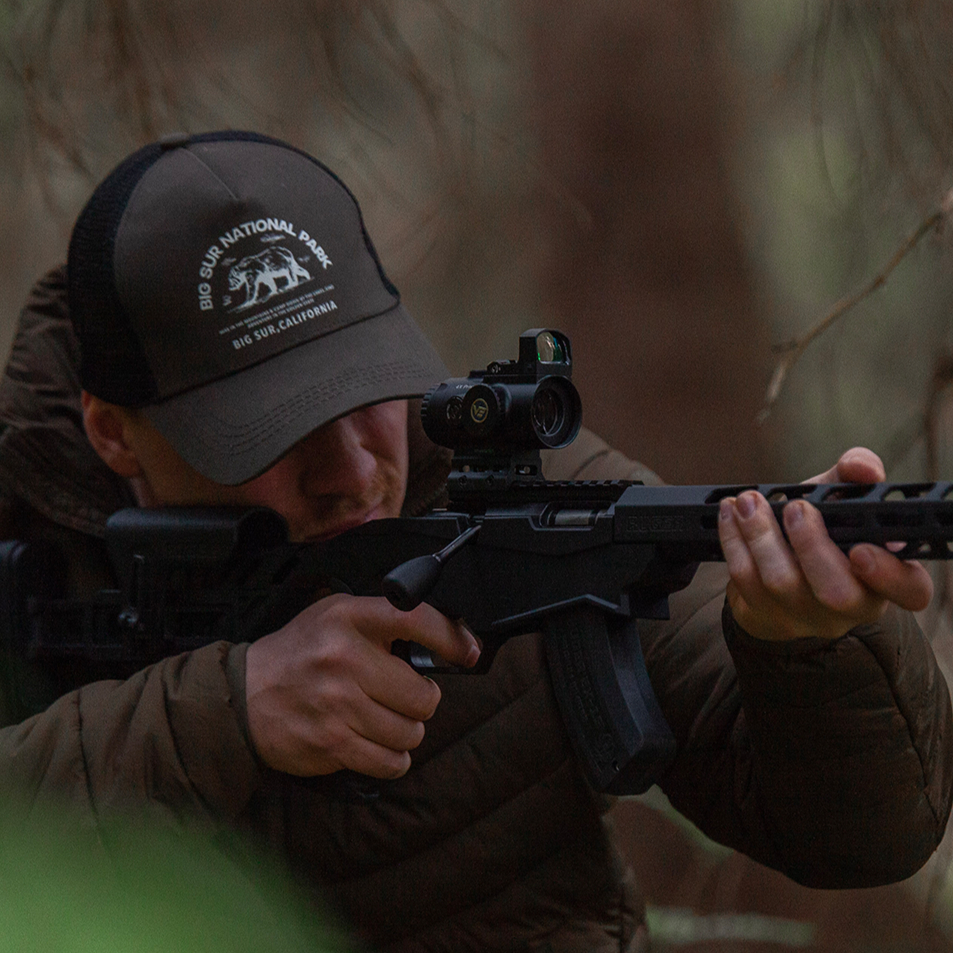
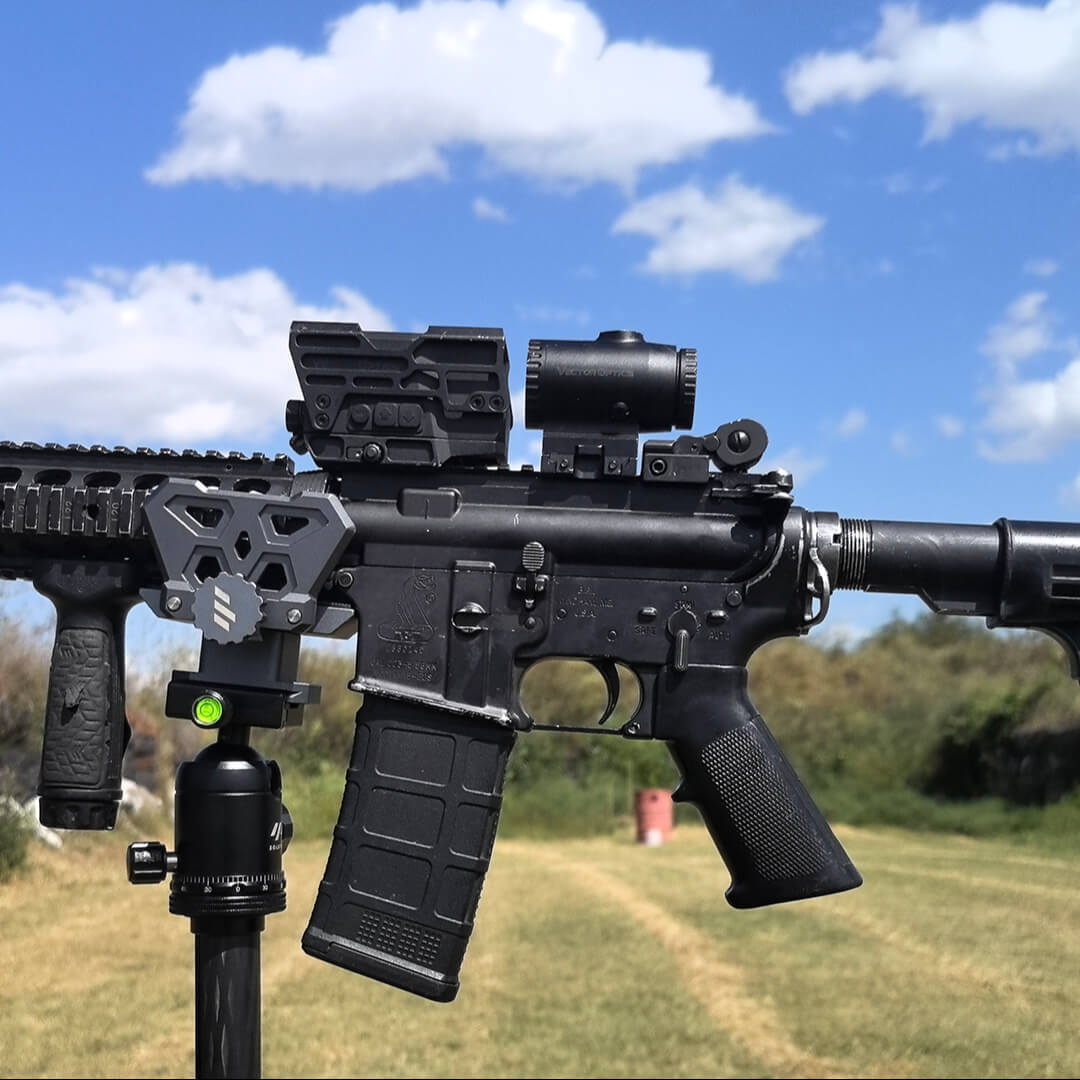
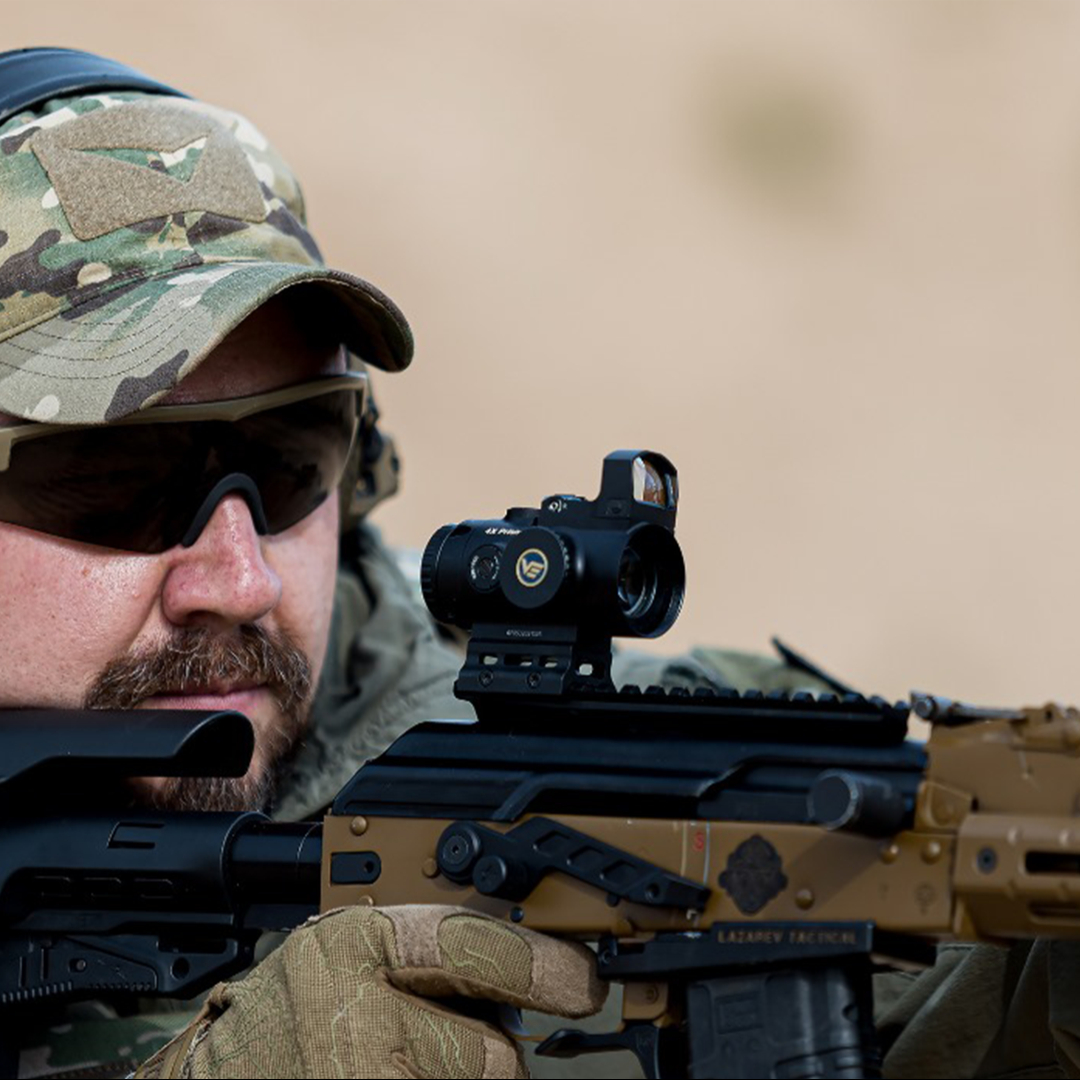
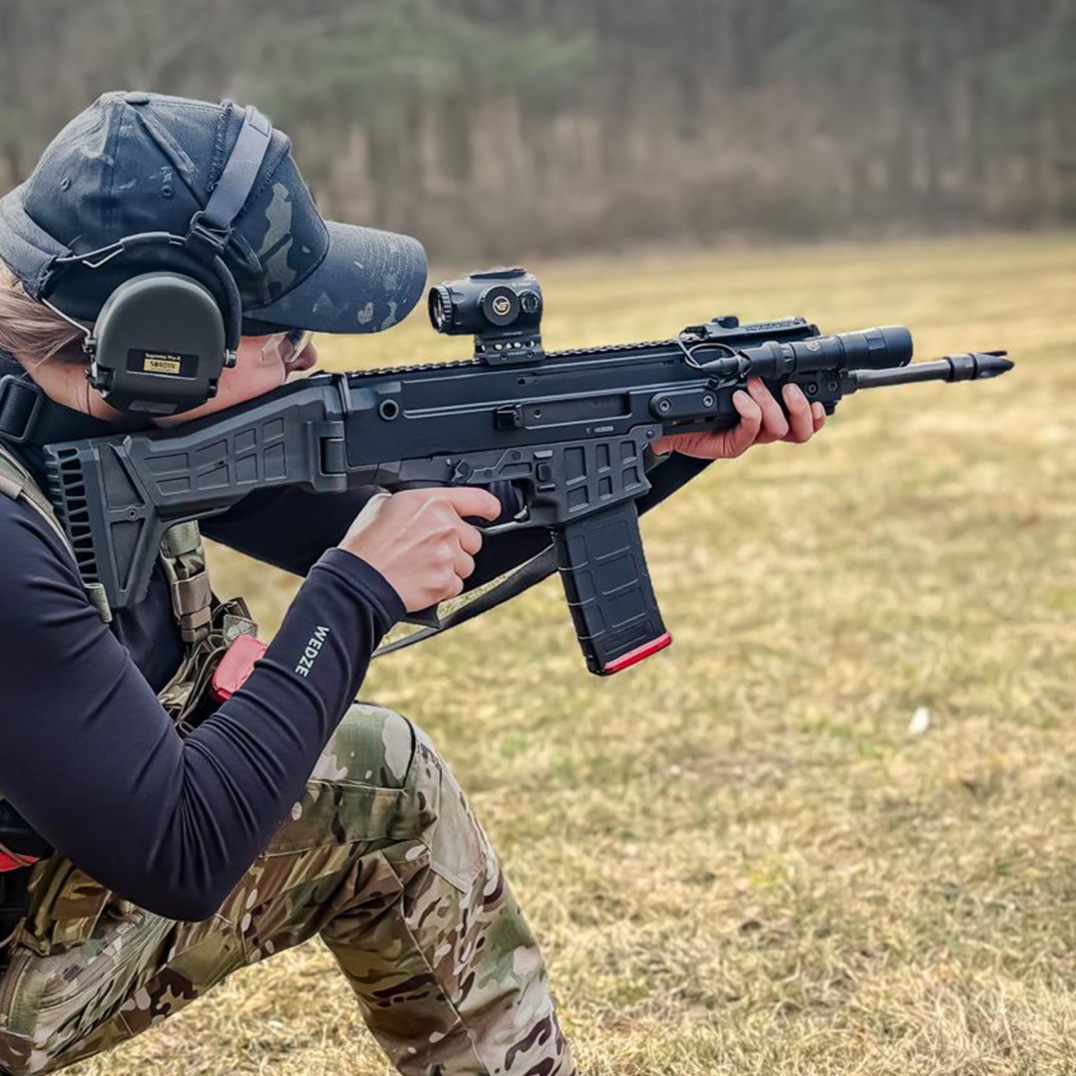
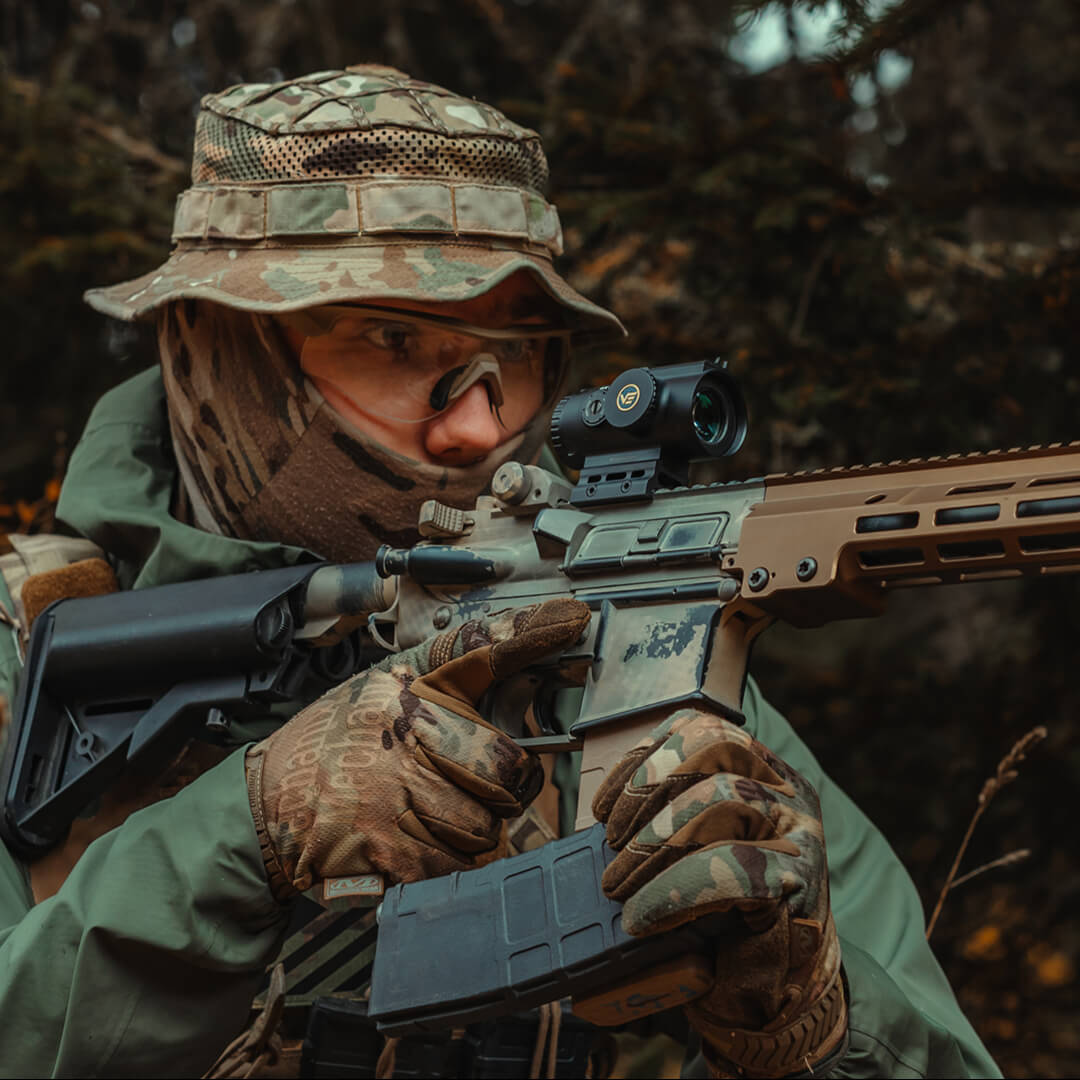
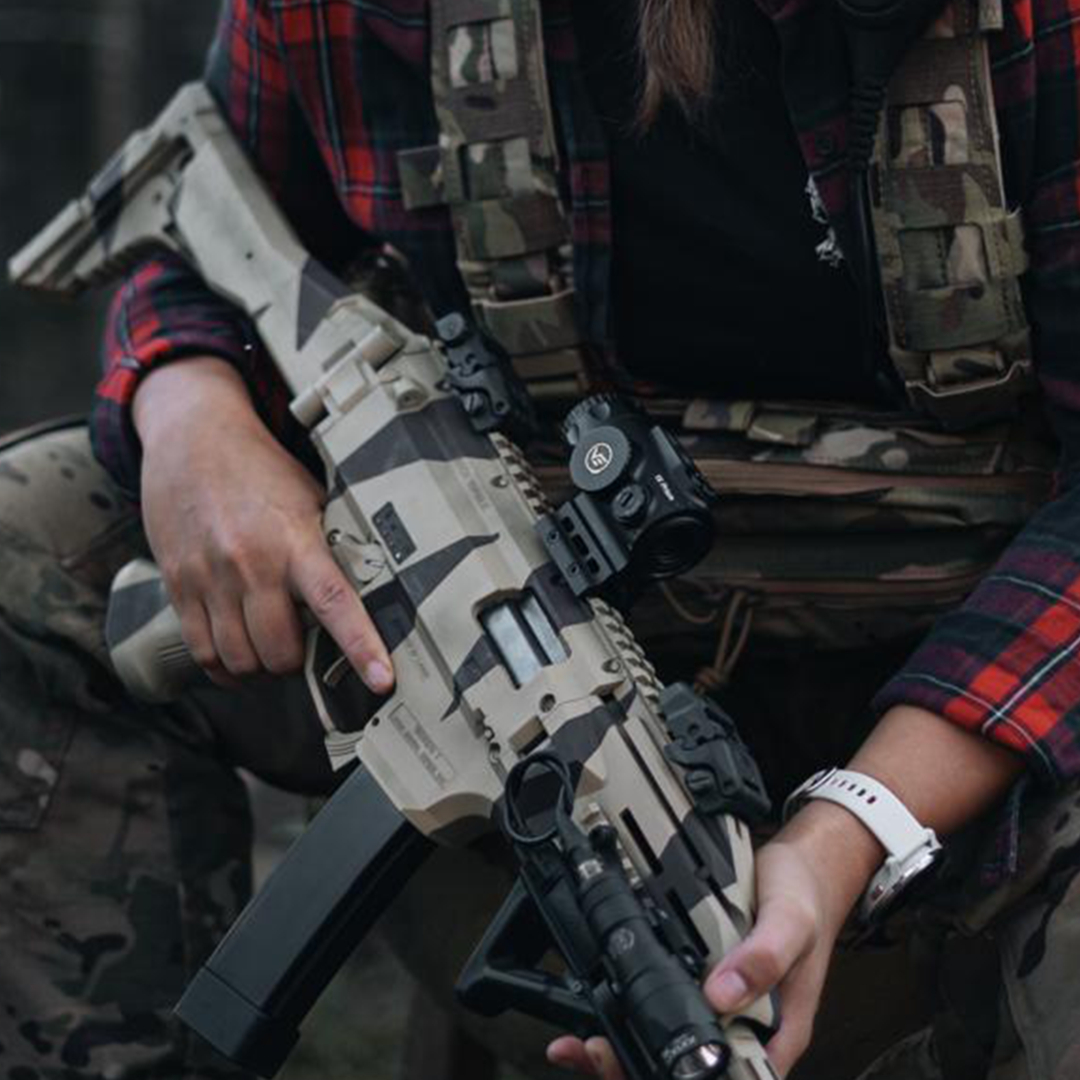
Long-range precision shooting is the repeatable placement of shots on distant targets by controlling the shooter, rifle, ammunition, optic, ballistic data, and environment. There is no universal distance where a shot becomes "long range." A better definition begins when bullet drop, wind, and atmospheric conditions require measured corrections rather than relying on the rifle's zero alone.
A 200-yard shot may be straightforward on a large supported target, but difficult on a small target, in wind, or from an unstable position.
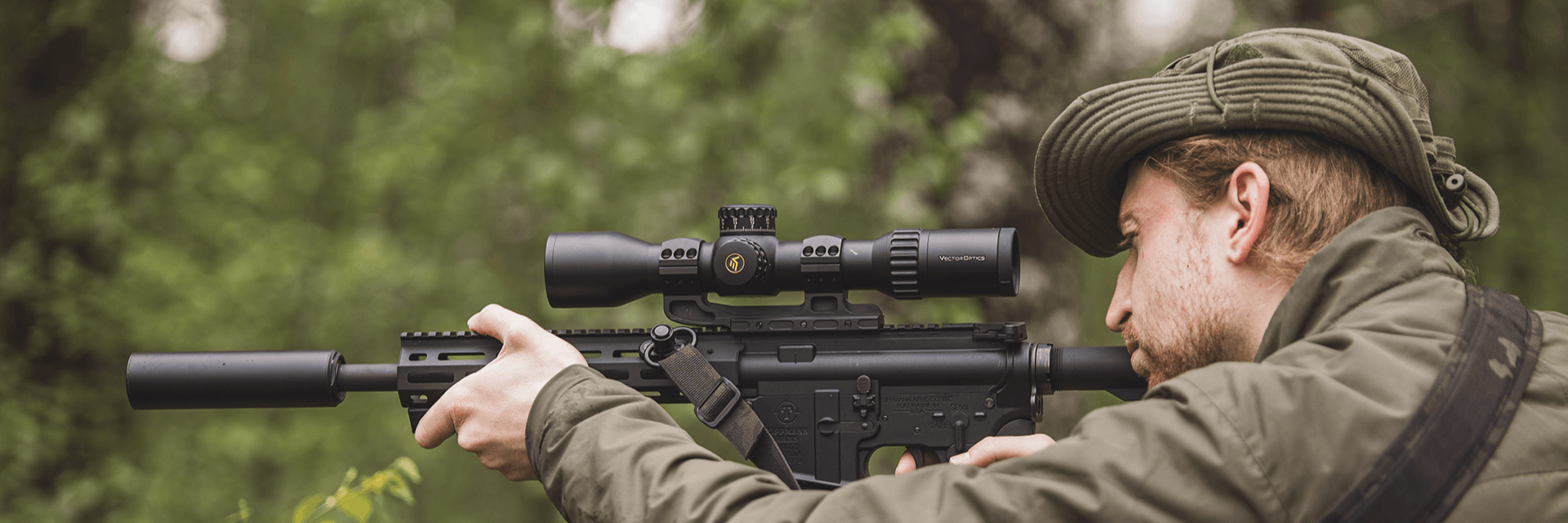
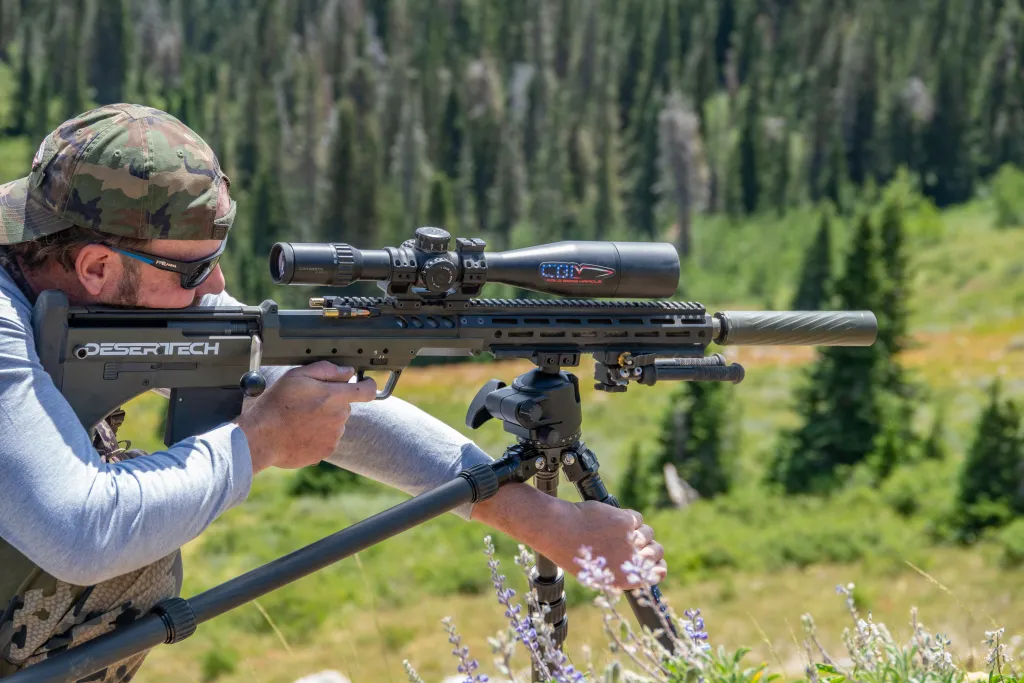
Long-range precision shooting can take different forms. In static target shooting, the emphasis is often on building the most stable position possible, refining ballistic data, and minimizing every source of dispersion. In PRS-style competition, the same fundamentals must be applied under time pressure, from changing positions and improvised supports, while engaging multiple targets at different distances.
This article is for lawful target shooting. Train with a qualified instructor, follow range rules, use a verified backstop, and always know your target and what lies beyond it.
1.The Long-Range System: Where Misses Come From?
Every shot contains uncertainty. The practical goal is to identify and reduce the largest source of error:
Shooter: position, natural point of aim, sight picture, trigger control, recoil management, follow-through, and the ability to rebuild a stable position quickly when shooting from barricades or other supports.
Rifle and ammunition: mechanical and velocity consistency.
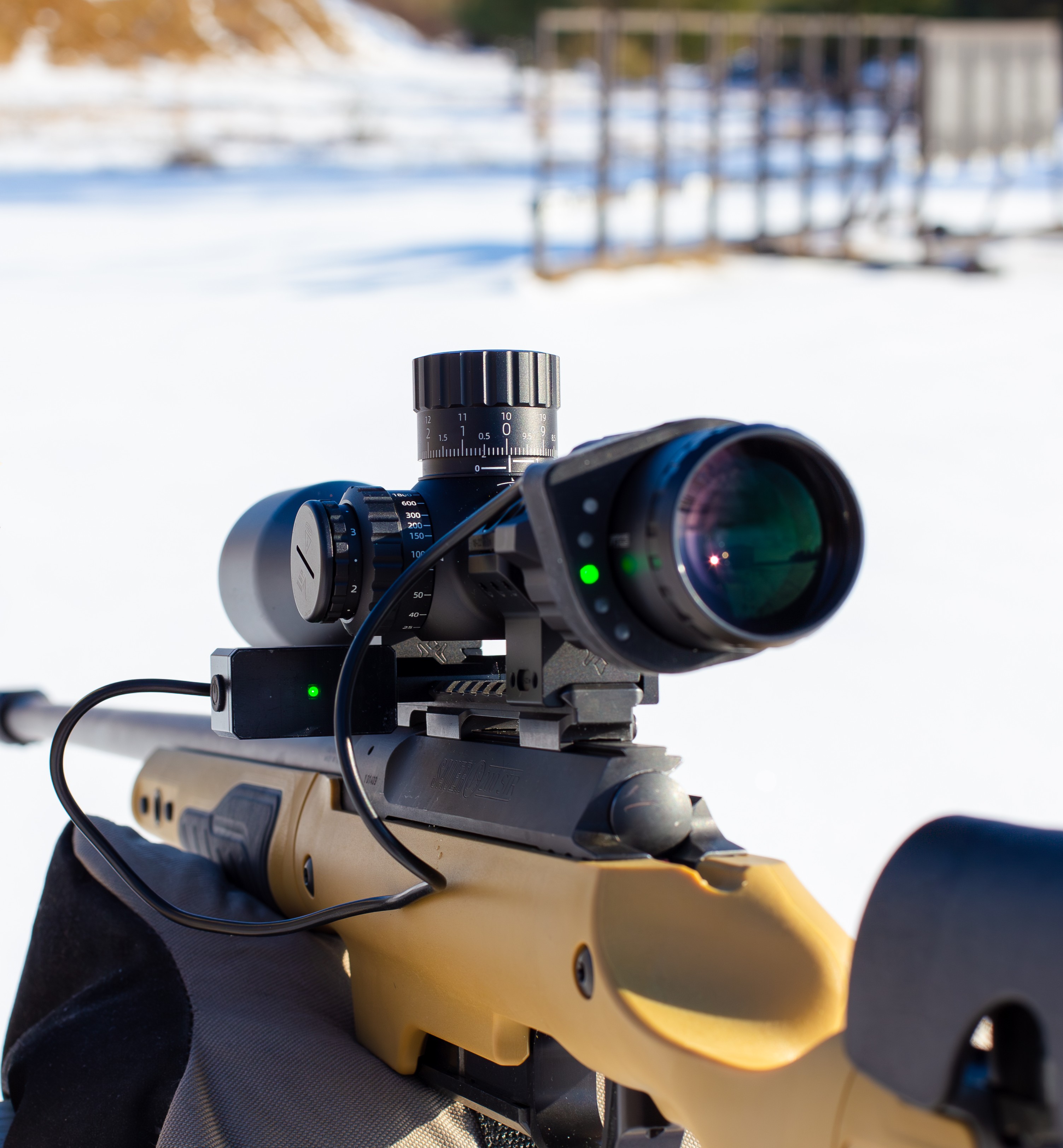
Optic: zero retention, repeatable tracking, readable reticle subtensions, parallax correction, field of view, and an eyebox that remains usable when shooting from imperfect positions.
Data: correct range, verified ballistic inputs, and confirmed elevation data.
Environment: wind, air density, terrain, light, and shooting angle.
Errors grow with distance. Small range, velocity, or wind errors can become misses. Magnification cannot correct poor data or inconsistent technique. Specifically, in static long-range shooting, the shooter has more opportunity to refine stability and data. In PRS, the same errors are compressed by time pressure, movement, target transitions, and changing shooting positions.
2.The Ballistics You Actually Need to Understand
Ballistics is usually divided into internal, external, and terminal phases. For target shooting, internal and external ballistics are the most relevant.
2.1 Internal Ballistics vs. External Ballistics
Internal ballistics covers what happens from ignition until the bullet leaves the muzzle. Variations in actual muzzle velocity affect time of flight and vertical correction, so published velocity should be treated as a starting point and verified with chronograph data and range results when possible.
External ballistics describes the bullet’s flight after it leaves the muzzle. During this phase, gravity acts continuously while aerodynamic drag reduces velocity. Muzzle velocity, ballistic coefficient, air density, and shooting angle influence the predicted trajectory. Wind is usually harder to solve because it can change across the flight path.
Treat a ballistic calculator as a starting model. Confirm its elevation on known-distance targets. A DOPE (Data on Previous Engagements) log should record distance, elevation, wind, conditions, ammunition, and observed correction.
The most effective learning loop is simple: predict, shoot, observe, diagnose, correct, and record. Do not adjust from an impact you cannot identify confidently.
2.2 Dialing vs. Holding Corrections
Elevation can be dialed on the turret or held with the reticle.
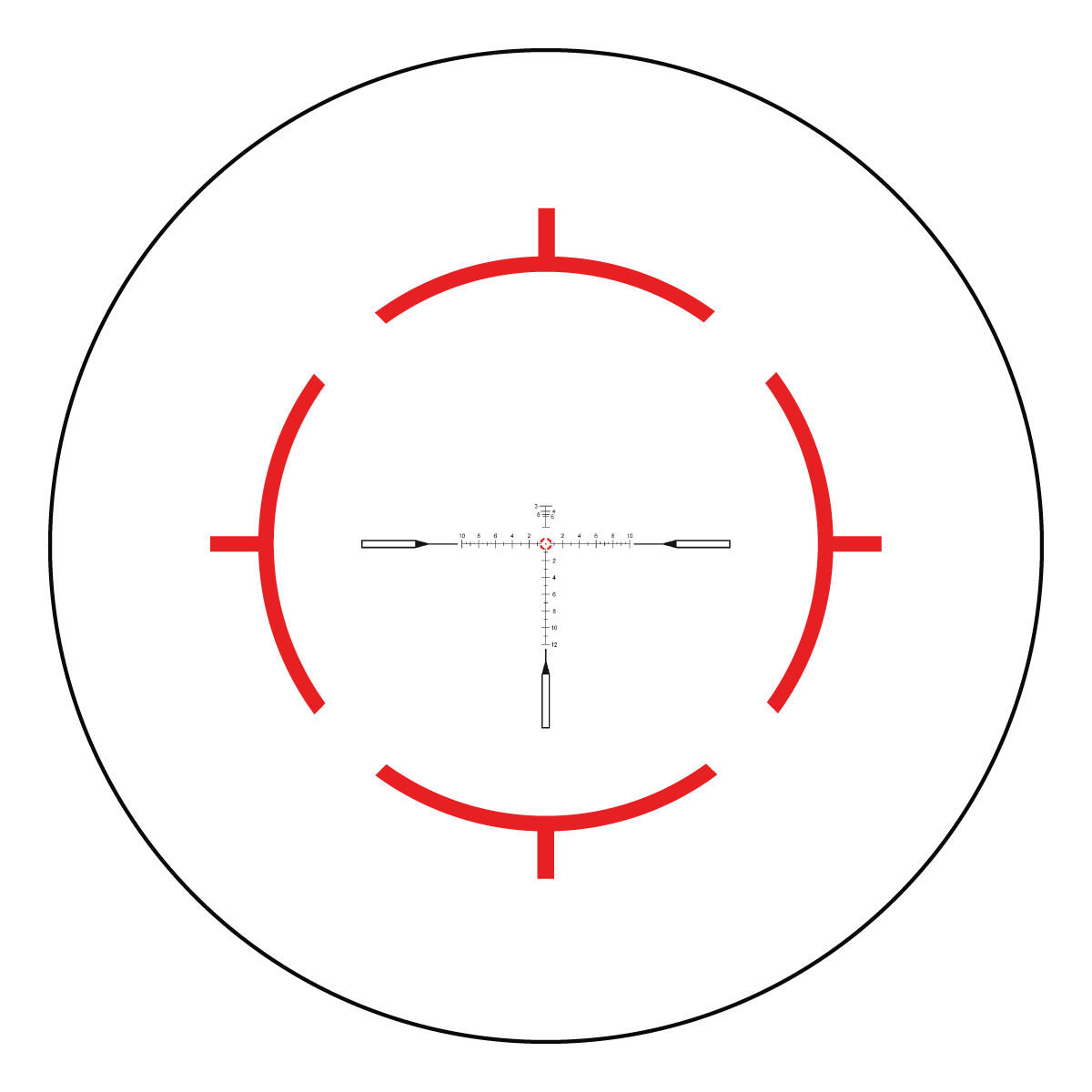
Static long-range shooting often allows time for precise dialing, while PRS shooters may dial for one distance and use reticle holds for other targets or changing wind conditions. This makes clear FFP reticles, including Christmas-tree designs, especially useful in dynamic competition.
3.MOA or MIL?
Minute of angle (MOA) and milliradian (MIL or MRAD) are angular measurements; neither is inherently more accurate. One MOA spans approximately 1.047 inches at 100 yards, while one MIL spans 3.6 inches. For a more detailed comparison, see MIL or MOA: How to Use Them.
Choose a scope whose reticle and turrets use the same unit. A matched MOA/MOA or MIL/MIL system lets you measure an error in the reticle and apply the same value as a hold or turret correction. Both systems work, but MIL/MRAD is particularly common in modern precision-rifle competition because decimal corrections such as 0.2, 0.5, or 1.1 MIL can be communicated and applied quickly.
To understand how each turret click translates into angular adjustment, see How Click Value and Adjustment Range Affect Rifle Scope Accuracy.
4.What Matters in a Long-Range Scope?
Maximum magnification is not the best single measure of an optic. In both static shooting and dynamic PRS competition, prioritize:
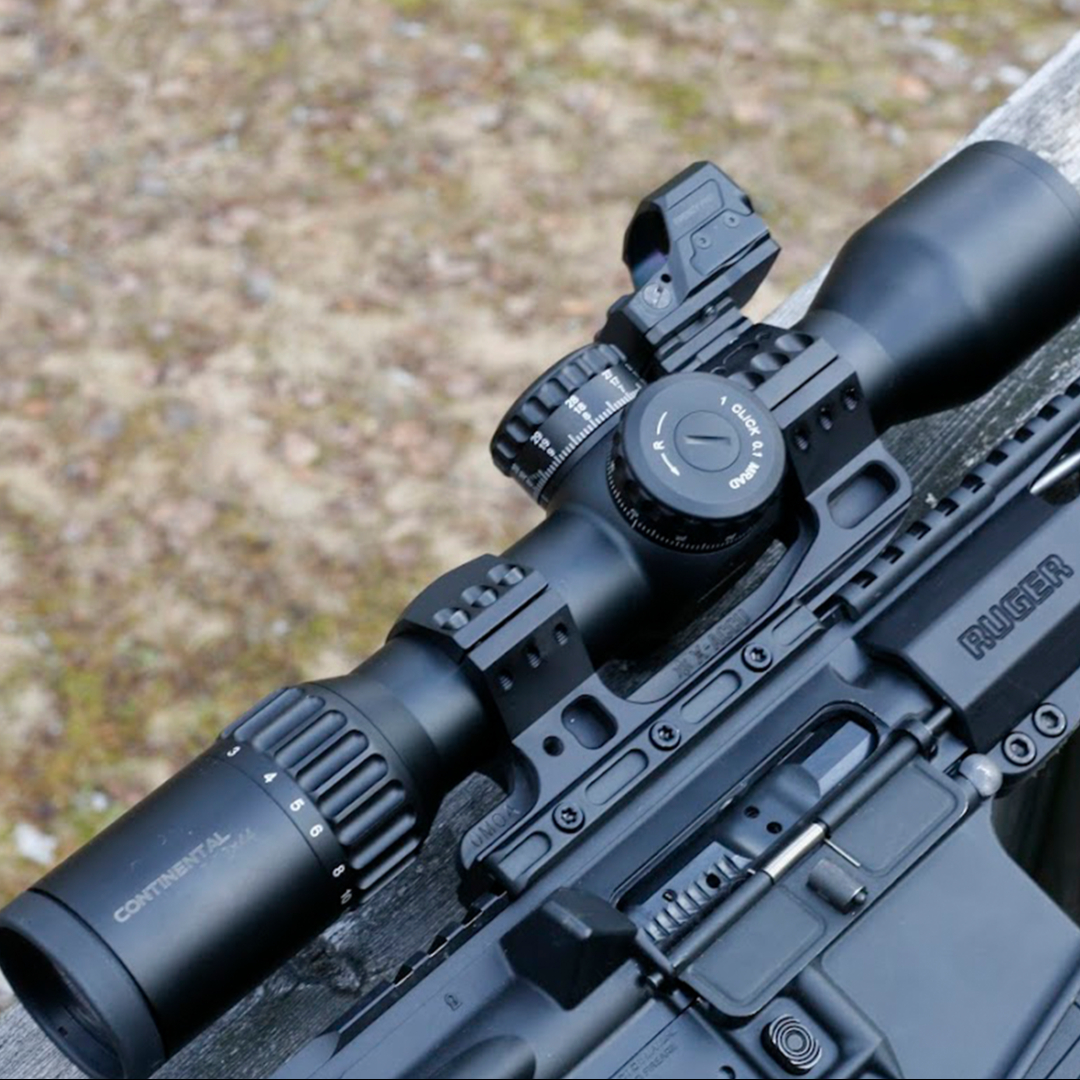
Repeatable tracking and return to zero. Corrections must move the point of impact predictably. A zero stop can make this process faster and reduce dialing errors. A locking windage turret may reduce accidental movement.
A usable matched-unit reticle. The reticle and turrets should use the same unit, allowing measured holds and corrections without unnecessary conversions. It should also provide clear elevation and wind references without hiding the target.
Parallax adjustment. Correcting parallax reduces apparent reticle movement when eye position changes. Dial markings are approximate; check for reticle movement on the target.
Practical image quality. Resolution, contrast, light transmission, eye box, and field of view can matter more than maximum power.
Suitable focal plane. An FFP reticle keeps its angular scale valid at every magnification. An SFP reticle normally subtends correctly at one specified setting.
While the core requirements remain the same, static long-range shooting and dynamic PRS competition place different priorities on scope performance.
Static long-range shooting typically allows more time to refine the shooting position, confirm distance, dial elevation, and observe conditions. Optical resolution, high usable magnification, precise aiming references, repeatable turret tracking, and fine parallax control are therefore especially valuable.
PRS places greater emphasis on speed, positional flexibility, and efficient target engagement. A wide field of view helps locate targets, a forgiving eye box supports imperfect shooting positions, and a clear FFP reticle enables fast elevation and wind holds. A zero stop, locking turrets, and a revolution indicator can also help shooters maintain awareness of their turret settings during a stage.
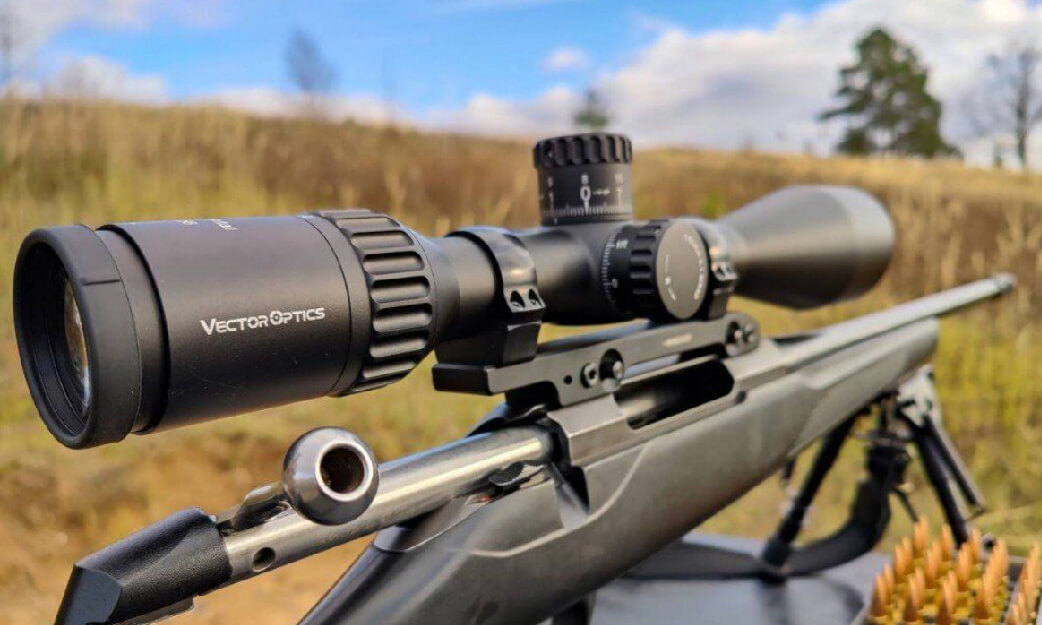
The following Vector Optics scopes are suitable for different long-range precision shooting needs:
● Tauron 6-24x50 HD MIL FFP Rifle Scope (SCFF-81): Built for practical precision and PRS-style shooting. Its 6-24x range balances target identification with practical field of view, while the FFP VTA-3 MIL reticle, 0.1 MIL adjustments, zero stop, revolution indicator, and locking windage turret support rapid corrections across changing distances and shooting positions.
● Continental 5-30x56 VEC MBR Rifle Scope (SCFF-41): The 5-30x magnification range gives it more reach for deliberate long-range shooting, while the FFP VEC-MBR reticle, 0.2 MIL hold references, Christmas-tree layout, and LRZ turret system remain well suited to faster PRS-style corrections.
● Continental x6 6-36x56 FFP Rifle Scope (SCFF-70): A premium PRS and long-range option with an FFP MIL reticle, 1/10 MIL adjustments, side focus, zero stop, turret lock, revolution indicator, and at least 31 MIL of elevation adjustment.
● Tauron 5-25x56 HD MIL FFP Rifle Scope (SCFF-71): A core PRS option featuring a VTA-8 MIL FFP Christmas-tree reticle, 1/10 MIL adjustments, side focus, zero stop, locking windage, a revolution indicator, and at least 32 MIL of elevation adjustment.
● Tauron 3-24x56 ED FFP Rifle Scope (SCFF-33): A versatile long-range and PRS option with an 8x zoom range, ED glass, a VTA-5 MIL FFP Christmas-tree reticle, 1/10 MIL adjustments, side focus, zero stop, and 30 MIL of elevation adjustment.
High power can narrow field of view, magnify mirage, and slow target acquisition, so choose a scope for its usable magnification, tracking, reticle, and parallax performance rather than maximum power alone. Always confirm mounting and rifle compatibility before use.
5.A Six-Step Practice Process
Step 1 Define the task.
Record target size, distance, position, and time limit. Convert target size to MOA or MIL.
Step 2 Build a Repeatable Position.
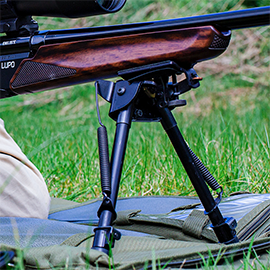
First confirm fundamentals from prone or another stable support. Then practice rebuilding stability from common supported positions.
Step 3 Verify zero.
Use multi-shot groups rather than chasing individual impacts. Mark or set the turret reference only after the zero is confirmed. For a step-by-step procedure, see How to Zero a Rifle Scope.
Step 4 Extend gradually.
Apply a predicted solution at known distances and separate vertical data errors from horizontal wind errors.
Step 5 Confirm DOPE.
Repeat observations across more than one session before treating the data as reliable.
Step 6 Progress to Dynamic PRS Practice.
Once your DOPE and accuracy are repeatable, introduce multiple target distances, position changes, and time limits. The goal is not simply to shoot faster, but to maintain the same ballistic and positional discipline while reducing unnecessary movement and decision time.
A 200-yard range can develop position, angular correction, tracking, and observation. Smaller targets or range-approved rimfire practice add challenge but cannot reproduce all longer-range centerfire behavior.
6.Final Takeaway
Long-range precision shooting is a measurement process, not an equipment shortcut. Define the target in angular terms, control the largest error, verify inputs, and record results. A capable optic supports this process with repeatable adjustments, a usable reticle, and parallax correction.
FAQ
1.Is a 1 MOA rifle and ammunition combination enough for a beginner?
Often, but the target's angular size decides what is adequate. A nominal 1 MOA system may suit many introductory targets, while wind, zero uncertainty, shooter error, and the way group size was measured still affect results. Evaluate repeatability, not one unusually small group.
2.Should a beginner choose MOA or MRAD?
If you plan to shoot PRS, NRL, or organized tactical matches, MIL (MRAD) is recommended due to its universal adoption and decimal simplicity. If you come from traditional hunting, benchrest, or U.S. target shooting backgrounds, MOA may feel more familiar. The crucial rule is to ensure your reticle and turrets use the same unit.
3.How much magnification do I need at 600 yards?
Magnification needs depend on target size, ambient mirage, and shooting discipline. Static bench shooters often utilize 20x to 30x+ power. However, dynamic PRS competitors routinely shoot at 12x to 18x at 800+ yards to maintain a wide field of view, keep eye box tolerance forgiving, and reduce visual mirage distortion.
4.Is adjustable parallax necessary?
It is highly useful for precision shooting because it reduces an avoidable aiming error as distance changes. Set the diopter first, then adjust parallax by checking apparent reticle movement rather than trusting the dial number exactly.
5.Can I learn long-range skills on a 200-yard range?
Yes. A 200-yard range (or precision .22LR rimfire setup at 100–200 yards) is ideal for refining position stability, natural point of aim, trigger control, reticle holdovers, turret tracking tests, and data logging. While full centerfire trajectory verification requires longer distances, position mechanics and shot execution translate directly.