When two scopes share the same magnification range, the reticle often becomes the deciding factor. An etched glass reticle prioritizes detailed aiming information and an unpowered pattern. An LED-fed fiber-wire reticle prioritizes a concentrated, highly visible center point. Neither is universally better: the right choice depends on whether your main task rewards information, speed, or bright-light contrast.
If you first need the construction basics, start with our wire, etched glass and fiber reticle comparison.
What Is the Main Difference Between Fiber and Etched Reticles?
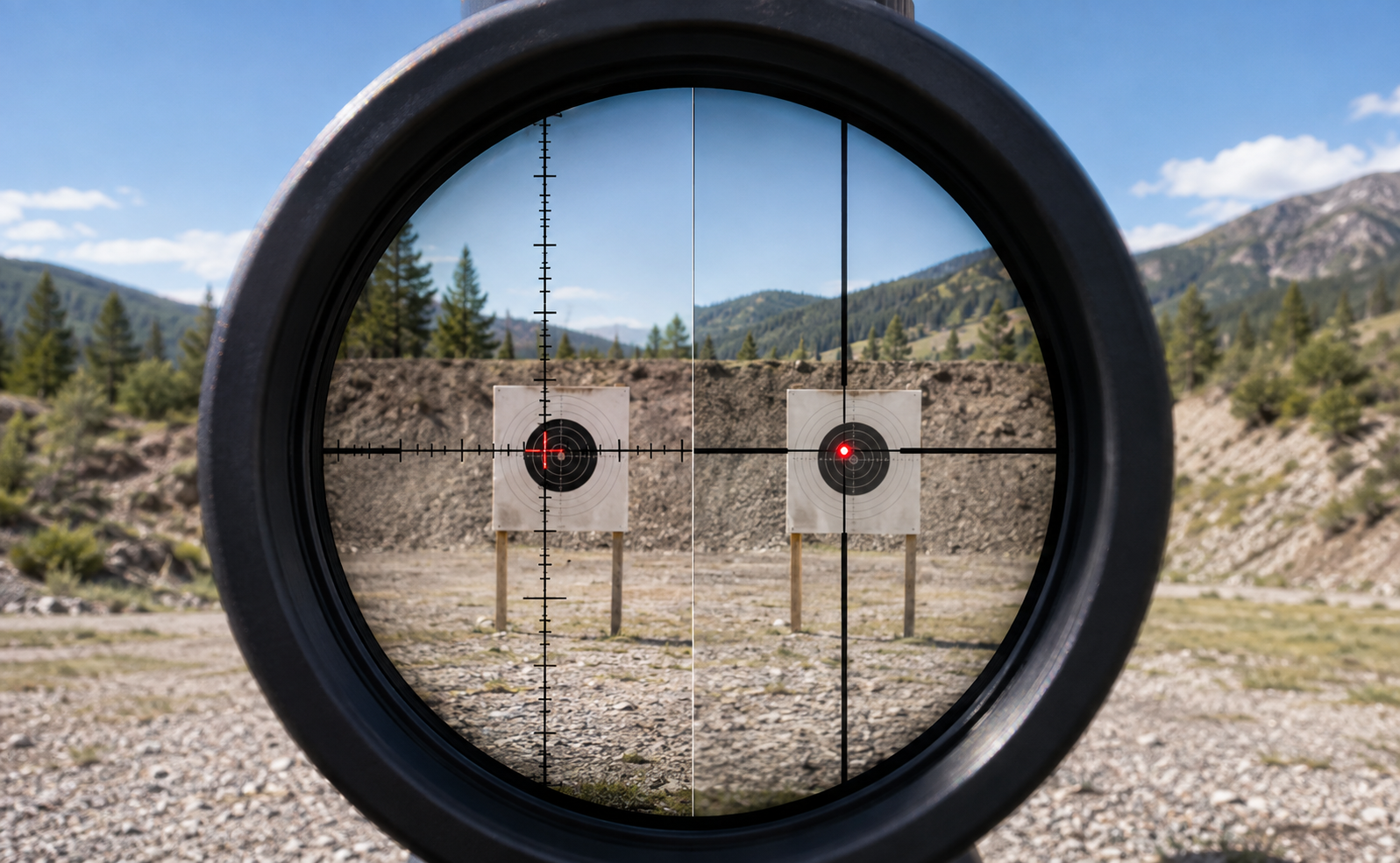
Fiber reticle is a broad term. Some fiber-optic systems collect ambient light, while many modern Vector Optics scopes use battery-powered, LED-fed fiber-optic illumination. So for concise expression, "fiber reticle", "fiber-wire reticle", "fiber-optic reticle" is referred to as LED-fed fiber-optic illumination.
Here is a comparison table for better understanding:
Decision factor | Fiber optic reticle | Etched glass reticle |
Bright daylight | Concentrated center dot can remain easy to see against bright backgrounds | Dark pattern remains usable; illuminated elements may not be daylight-bright |
Reticle detail | Usually simpler around the illuminated center | Supports fine BDC, MIL, MOA, ranging, and wind-hold patterns |
Low light | Brightness should be reduced to avoid flare; active illumination requires a battery | Low settings can improve contrast while the etched pattern remains visible without power |
Focal plane | Common in SFP designs; verify each product | Widely used in both FFP and SFP scopes |
Primary advantage | Speed and center-dot visibility | Precision information and versatility |
Do not judge two fiber scopes from the word fiber alone. A finer fiber can support a smaller, more refined aiming point, but visible quality also depends on the fiber endpoint, polishing, alignment, cladding, bonding, and the supporting reticle structure.
When Is an Etched Reticle the Better Choice?
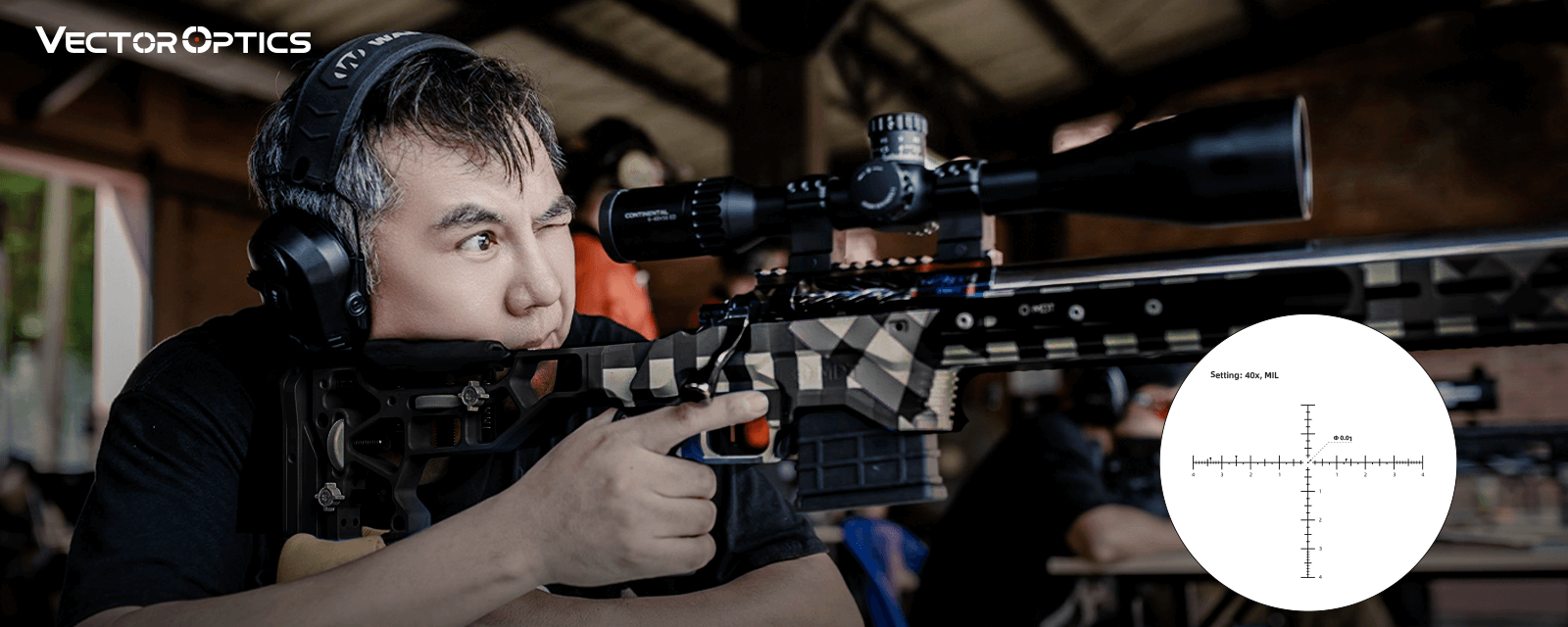
Choose etched glass when you need detailed holdovers, range estimation, wind references, or an FFP reticle that scales with magnification. It is also the safer choice when you want the complete aiming pattern to remain available without illumination. In strong daylight, the black reticle may already provide enough contrast; illumination becomes most useful in shade, dawn, dusk, or against dark targets.
The etched reticle sort of solved the problems of wire reticles. The reticle was etched on the glass by laser or some chemical material. The etched reticle can realize intricate patterns, considering bullet drop compensation and wind drift compensation, such as well-known Christmas tree reticles. We will talk about the specific reticle patterns later in this article. Some manufacturers possess advanced techniques, producing thinner lines than others. Some etched reticles feature illumination, which can be used in low-light conditions, while some do not.
Another advantage of the etched reticle is its strong shockproof. It is quite durable compared to the other two reticles. The potential sacrifice of it is dust and fog accumulation, which affects the light transmission rate. That further negatively influences the imaging and viewing experience. Most VE scopes are filled with nitrogen to prevent the fog. High manufacturing costs of etched reticles are another concern for those who have budget limitations.
Additionally, if a scope lacks a high waterproof rating and is stored improperly or used in heavy rain, water may seep into the scope, potentially causing the glass get damped or molded. Moreover, an illuminated etched reticle requires significantly more power than a fiber optic one—up to three to four times more, to achieve comparable brightness. Some brands prioritize brightness over battery longevity. CR2032 will last only three to four hours under the brightest illumination. Shooters may need to carry spare batteries for extended shooting sessions.
When Is a Fiber-Optic Reticle the Better Choice?
Choose LED-fed fiber-wire illumination when you want the center point to be found quickly, especially at low power in bright outdoor conditions. Because the light is concentrated into a small endpoint, the center dot can provide stronger contrast than illumination spread across a larger etched area. This makes fiber-wire designs attractive for sport shooting, dynamic use, and LPVO users who want a more red-dot-like aiming reference at 1x.
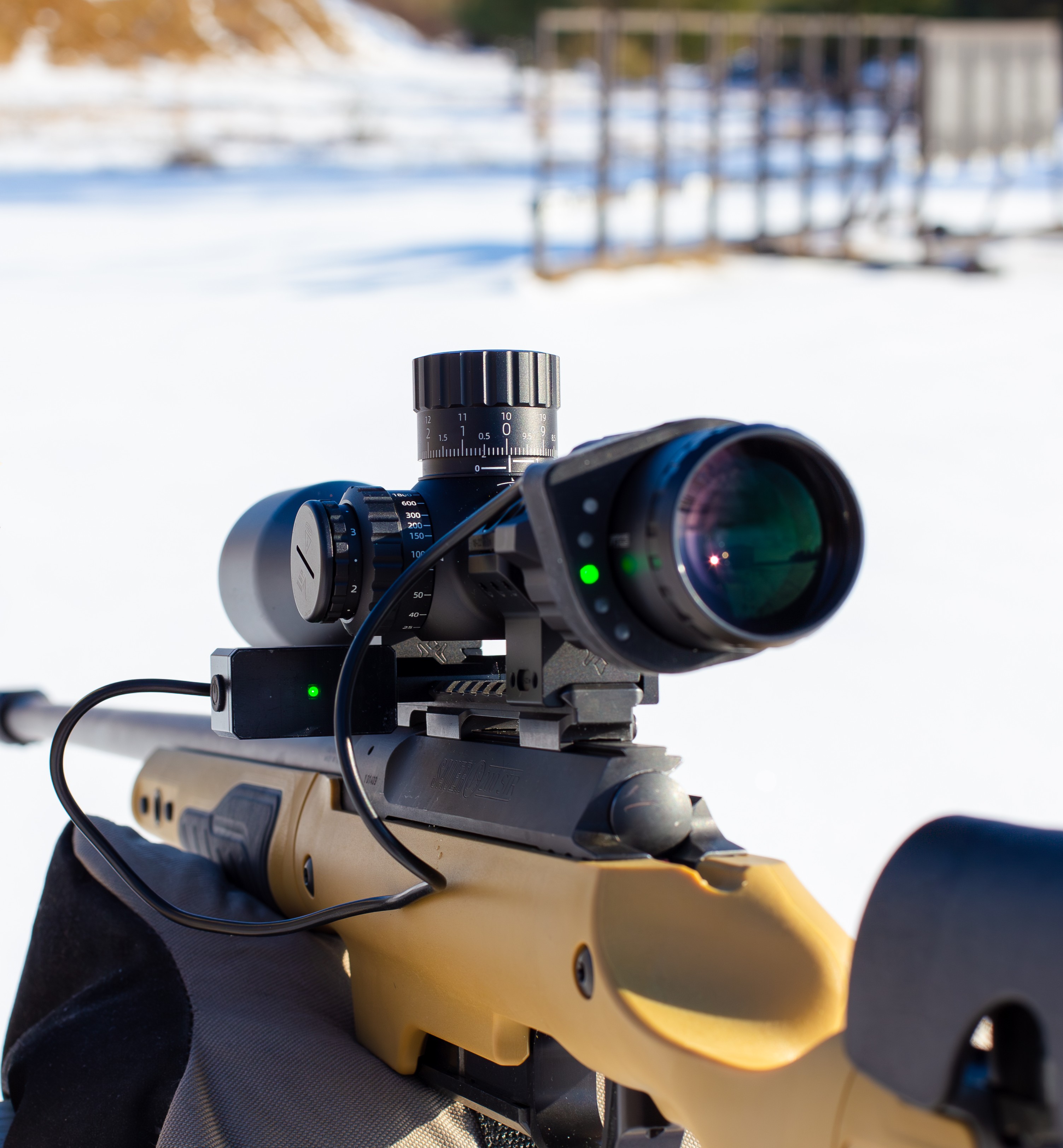
The fiber reticle positions a very thin fiber optic light pipe behind the wire for illumination purposes. It may look similar to the wire reticle, but the biggest difference appears when you turn on the illumination. Only the center dot will be illuminated, allowing for rapid target acquisition. The center dot is super crisp and bright, highly visible even under bright sunlight or low light conditions. This feature allows for precise aiming under bright daylight. Indeed, when a fiber reticle is applied to Low Power Variable Optics (LPVOs), shooters can utilize it similarly to a red dot sight. At 1x magnification, they have the advantage of keeping both eyes open, allowing for a wide field of vision while having an illuminated center dot for rapid target acquisition. That may even work better than the red dot.
However, the fiber one inherits some cons of wire reticle. Due to the material constraints, it's hard to make a complicated reticle. Its shockproof capability is comparatively weaker than etched reticles. Also, in low-temperature conditions, below -20℃(-4°F) or even -40℃(-40°F), fiber reticles are relatively more fragile compared to the etched reticles. Additionally, its production incurs the highest cost among these three types of reticles.
Generally speaking, since fiber reticles can only realize simple reticles with a highly visible illuminated center dot, it is more suitable for close-range shooting and hunting. However, etched reticles may be more versatile. It is applicable across various scenarios such as hunting, sport shooting, tactical shooting, etc., as they can accommodate both simple and comprehensive reticle designs, considering distance estimation and bullet drop compensation.

How Should You Compare Continental Scopes at the Same Power?
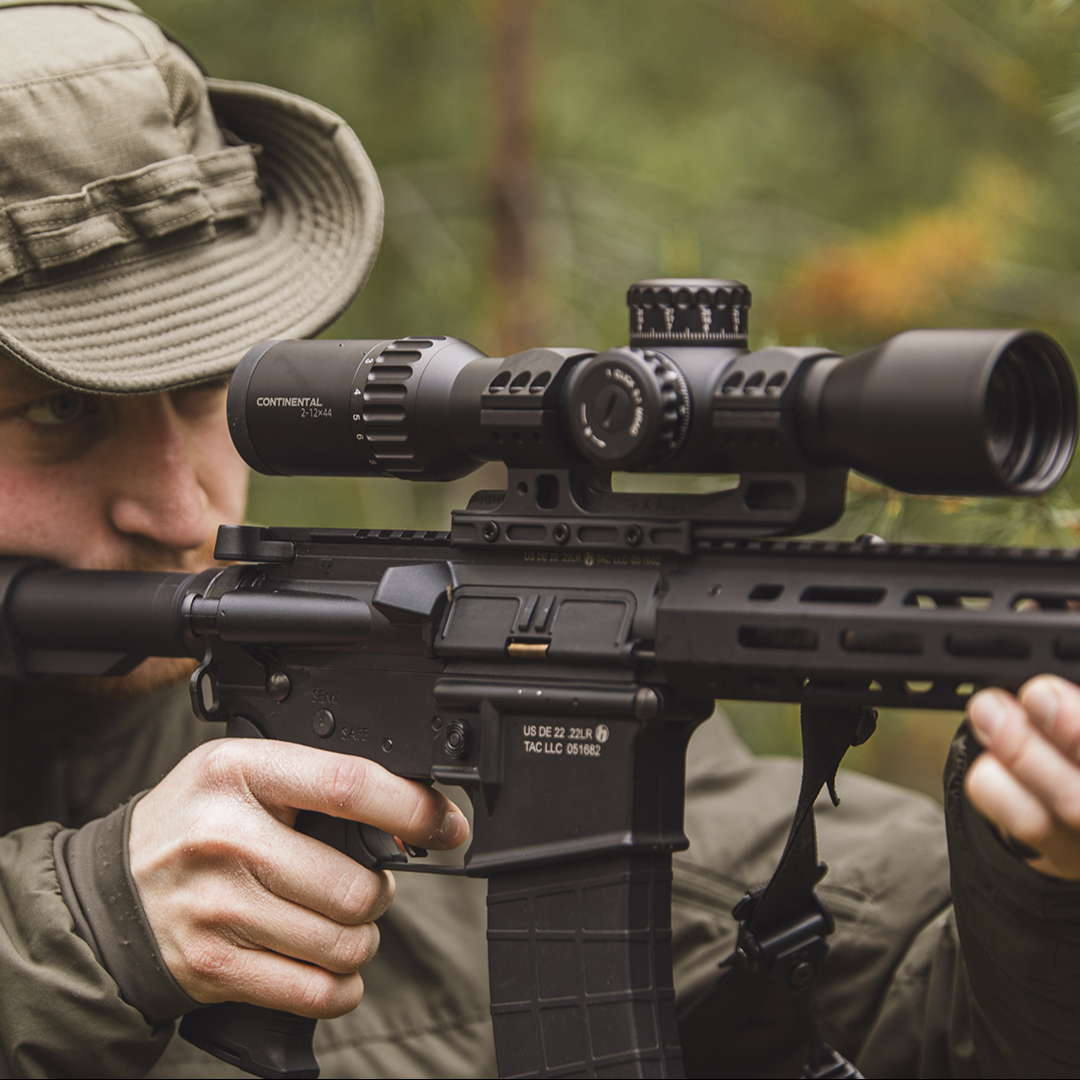
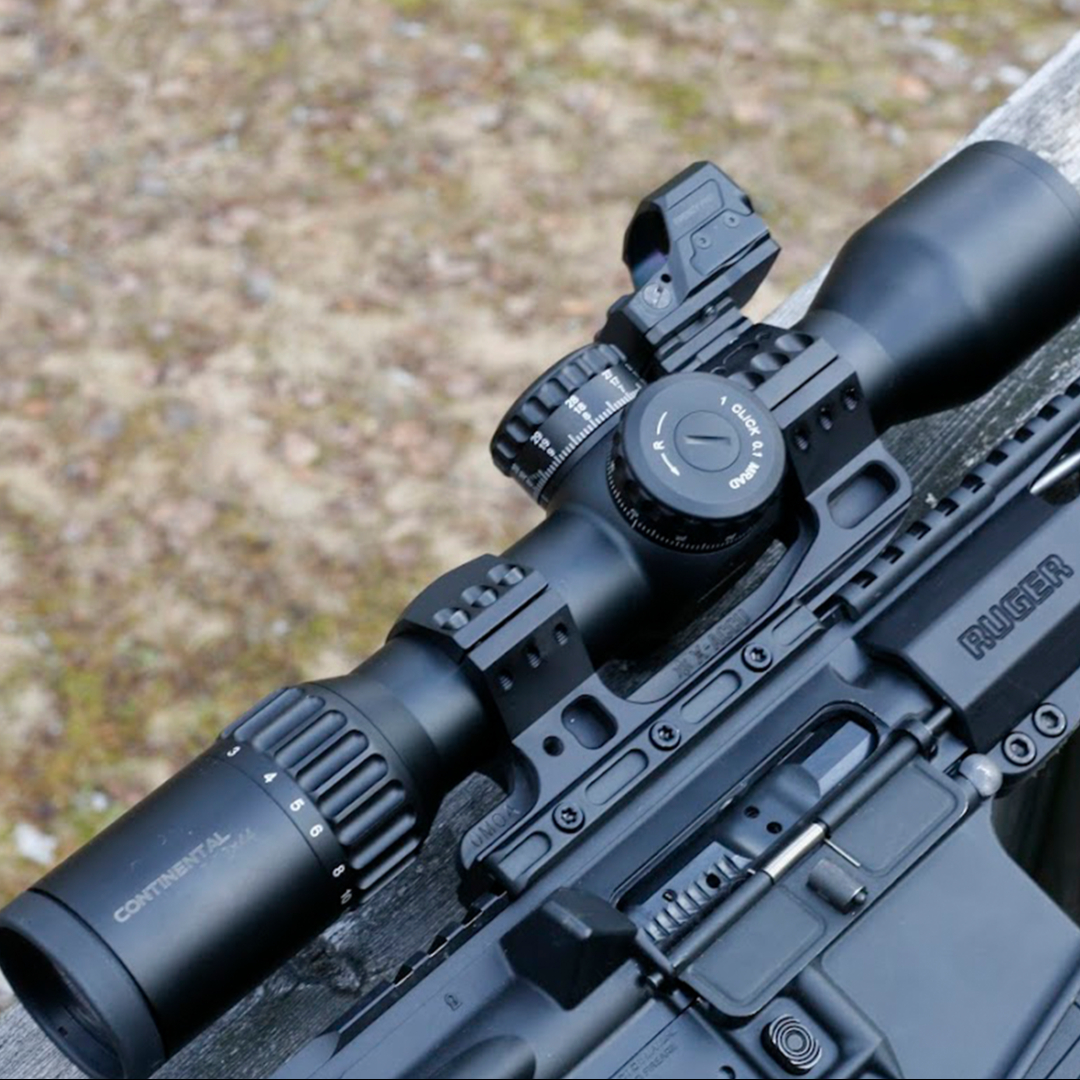
The current Continental 1–8x comparison illustrates the decision clearly. SCOC-37 and SCOC-T37 use etched reticles for different hunting or tactical priorities, while SCOC-45 uses an illuminated fiber reticle for faster center acquisition in bright conditions. Because all three are SFP 1–8x scopes, the choice should be driven by reticle function rather than magnification alone.
Comparing SCOC-37 and SCOC-T37, they both use etched reticles, which could make complicated patterns and withstand heavy recoil. SCOC-37 is designed for hunting, so we use the German #4 reticle, which could quickly draw hunters' attention to the center and provide a clear sight picture without any detail loss because of the harsh mark. We would recommend you use the hunting ones within the 200-yard distance.
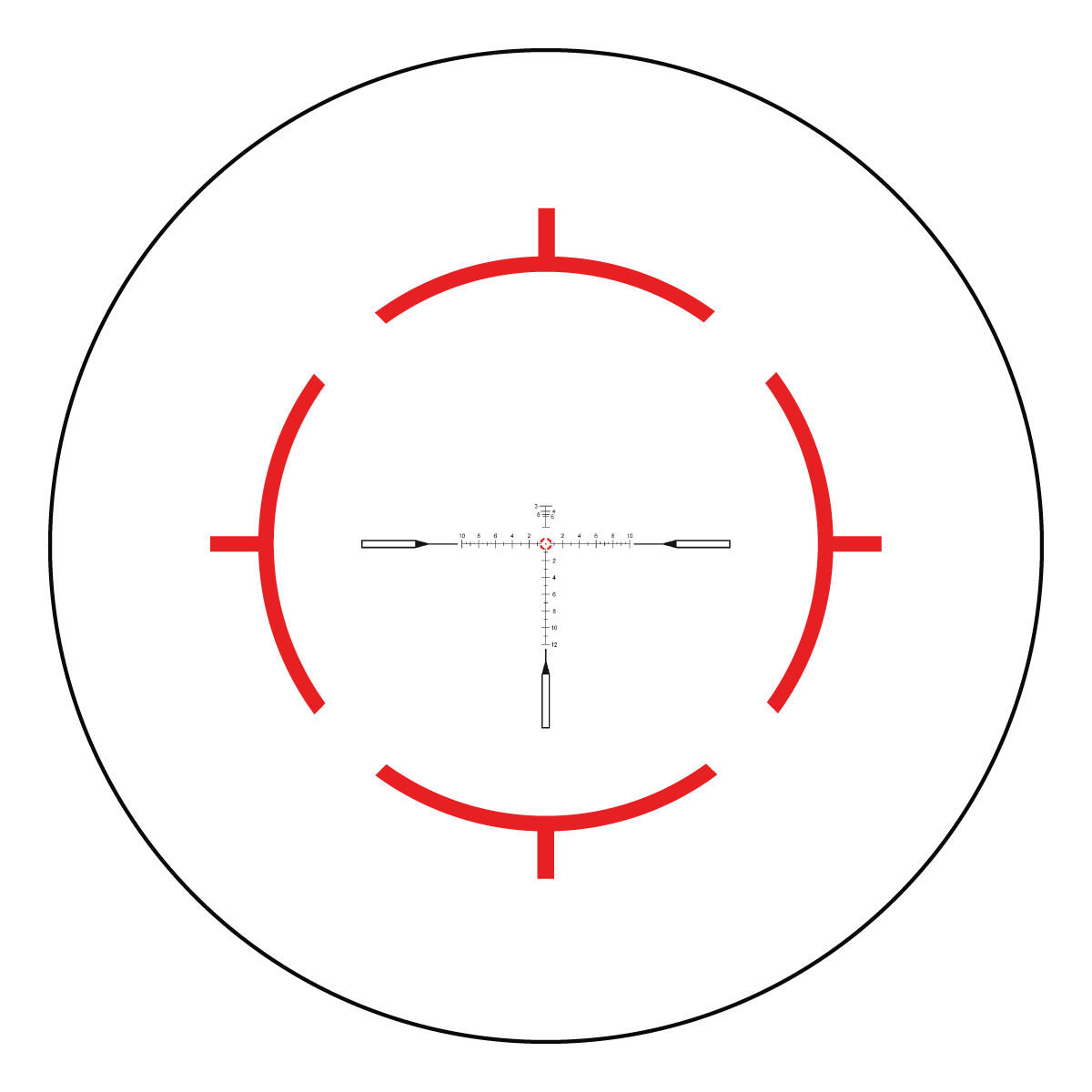
SCOC-T37 implements the VET-BTR reticle, which increases the implementation versatility of different scenarios and the preciseness of shooting. The reticle considers both wind drift and bullet drop compensation. The pattern has three bold lines on the right, left, and bottom side, an illuminated center dot with a horseshoe-shaped ring around it, as well as hash marks on both horizontal and vertical lines. It is ideal for all purposes, tactics, hunting, and competition, as we mentioned in the previous article.
SCOC-45 is developed for sport shooting purposes, especially for IPSC, which needs rapid target acquisition. The reticle design is relatively simple due to the material limitation while maintaining bullet drop compensation for preciseness. For close-ranging shooting, windage influence is negligible. Additionally, under bright daylight, a highly visible illuminated center dot (fiber reticle) improves your shooting speed.
You might still be confused about which one to choose. There is no correct answer, but depending on your primary concerns.
If you are picking the 8x hunting scope, then the Continental SCOC-37 1-8x24 ED capped turret is designed for you. If you would love to use the scope for different scenarios, the SCOC-T37 1-8x24 ED exposed turret is a great option for you, providing both preciseness and durability. If you are picking the scope for sporting shooting without considering wind drift or light conditions, Continental SCOC-45 1-8x24i ED or SCOC-47 x10 1-10x24i ED is your scope.
We have also listed Vector Optics Continental x6 LPVOs below. Same rules, but we provide an FDE color option.
Continental x6 1-6x24 Tactical LPVO Riflescope FDE | Continental x6 1-6x24 G4 Riflescope | Continental x6 1-6x24 Tactical LPVO Riflescope | Continental 1-6x24i Fiber Tactical Riflescope |
FDE | Black | Black | Black |
SCOC-34 | SCOC-23 | SCOC-23T | SCOC-44 |
Etched Reticle | Etched Reticle | Etched Reticle | Fiber Reticle |
BDC VET-BTR | German #4 | BDC VET-BTR | VET-FDR |
 |  |  |  |
For tactical scenarios | For hunting scenarios | For tactical scenarios | For various light condition scenarios |
Which One Should You Pick?
Choose etched glass for precision information, complex holds, FFP flexibility, or the strongest unpowered fallback. Choose LED-fed fiber-wire for fast center-dot visibility and bright-daylight contrast. If both scopes have the same power, do not treat magnification as the differentiator—the reticle’s job should decide the purchase.
To understand why a concentrated fiber endpoint can remain easier to see in full sun, continue to day-light-bright fiber-optic scopes.