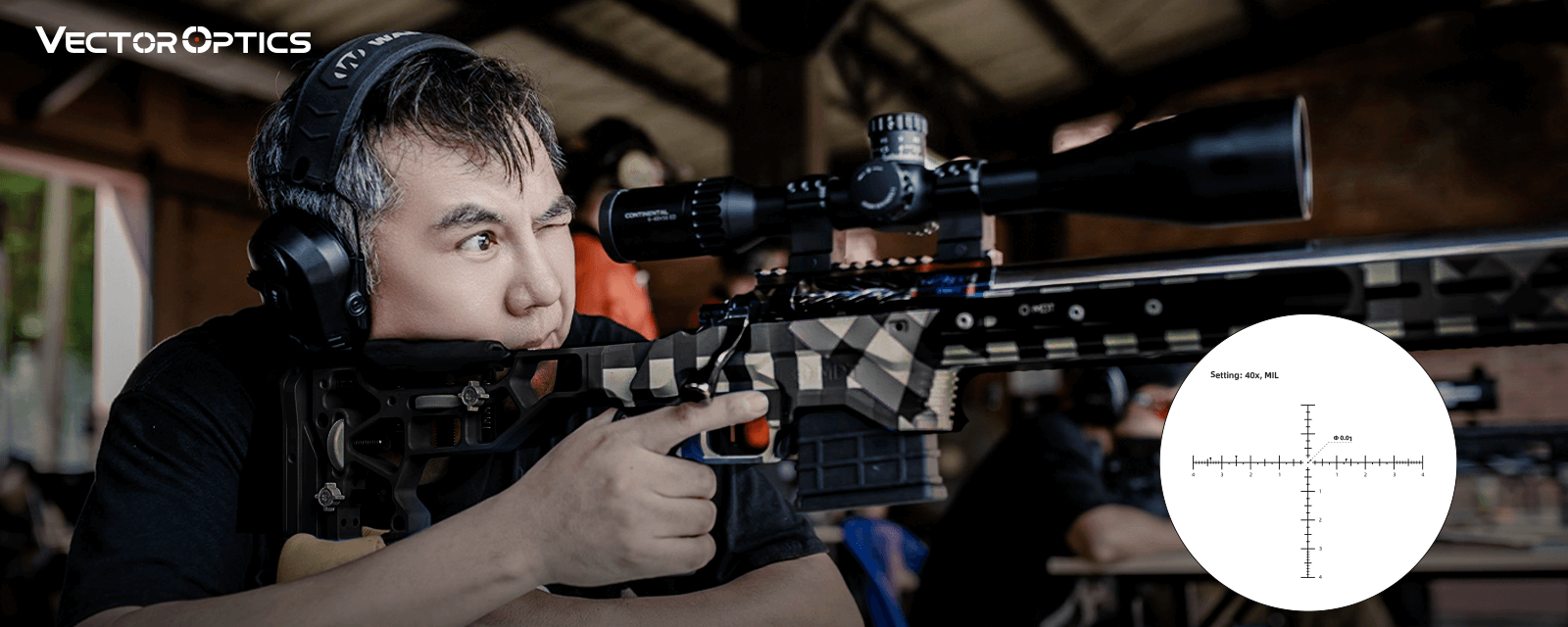
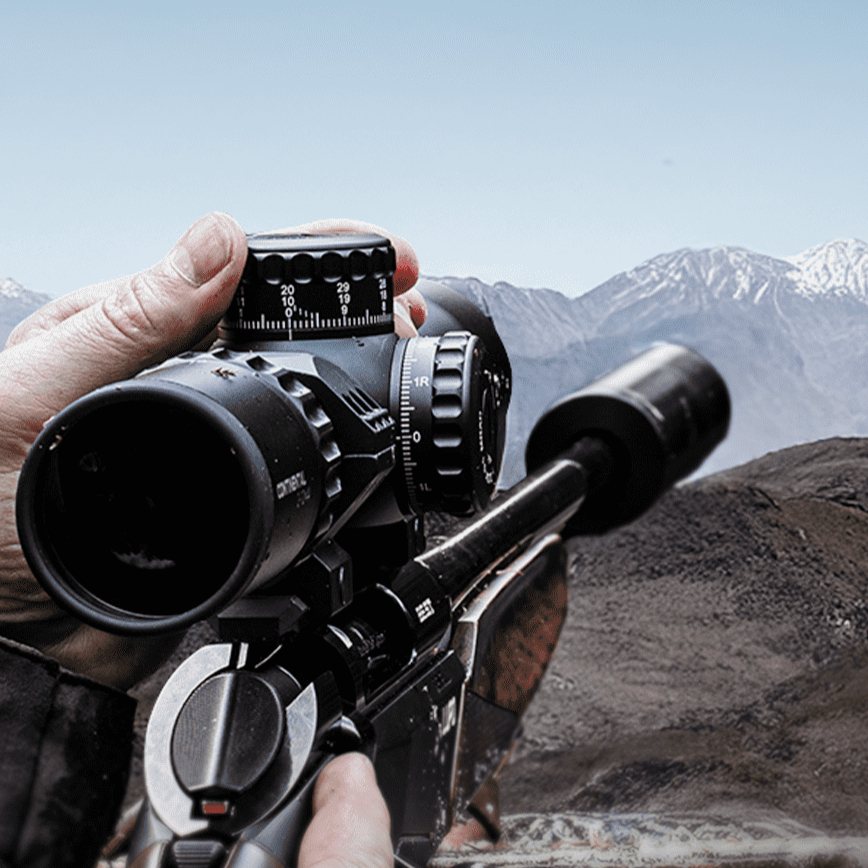
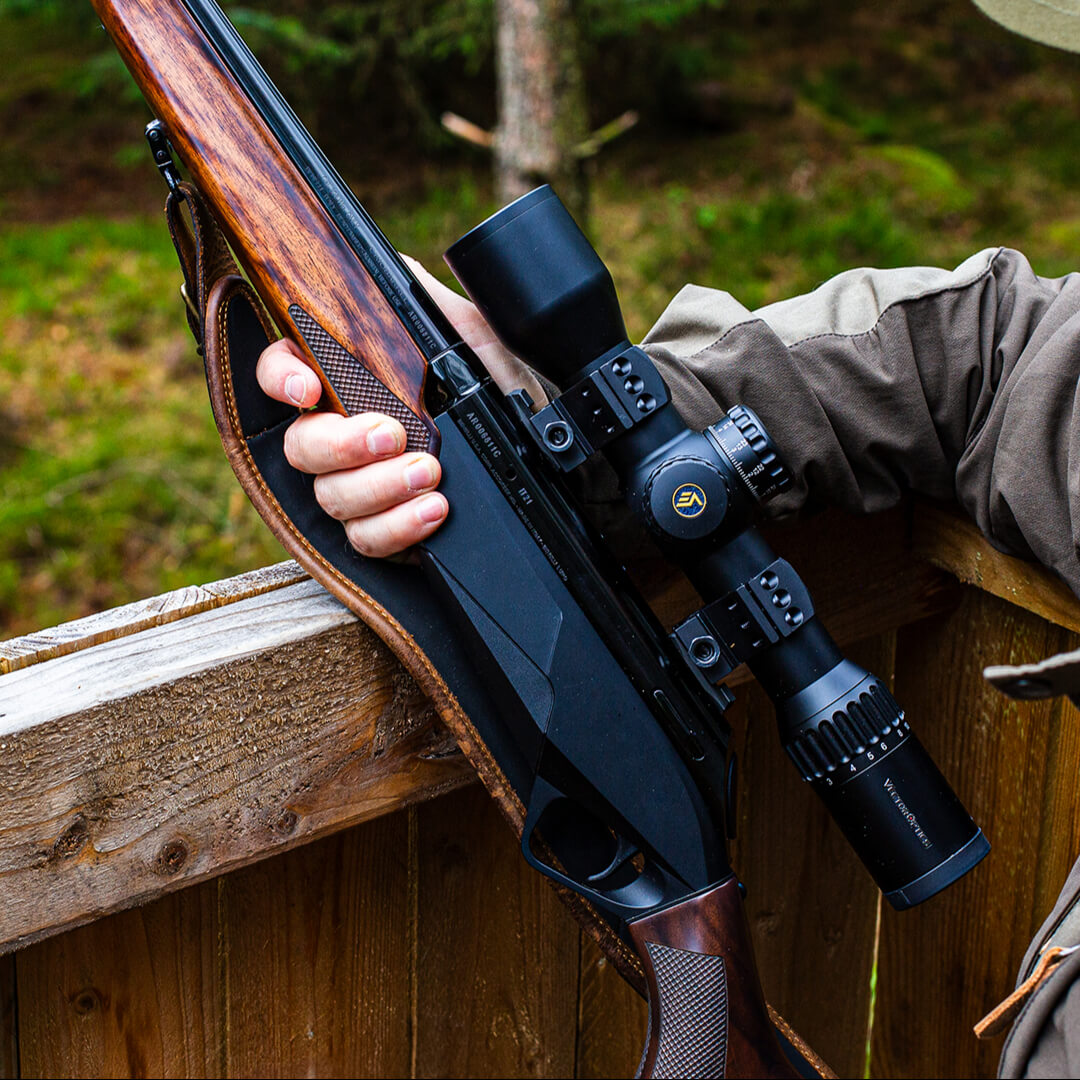
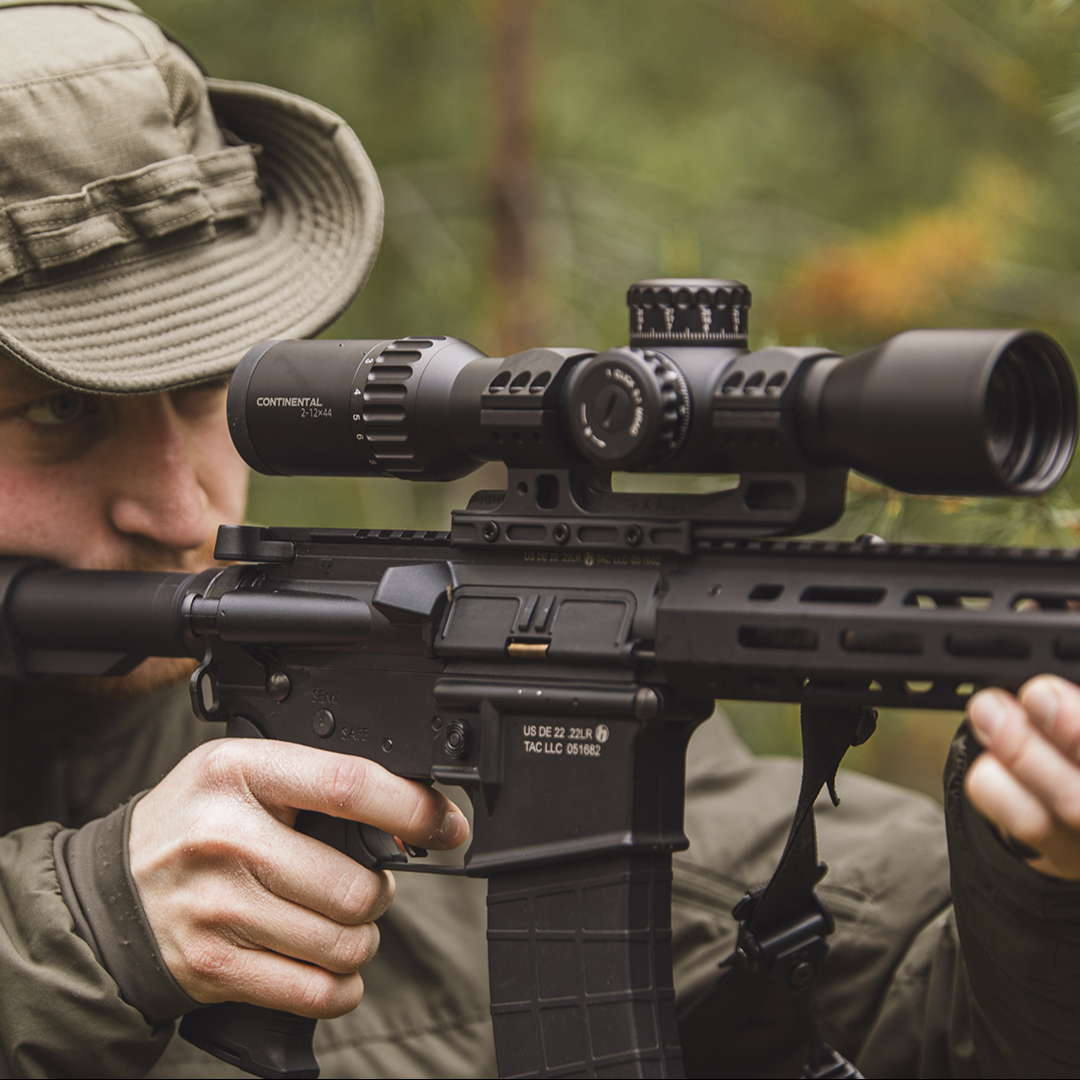
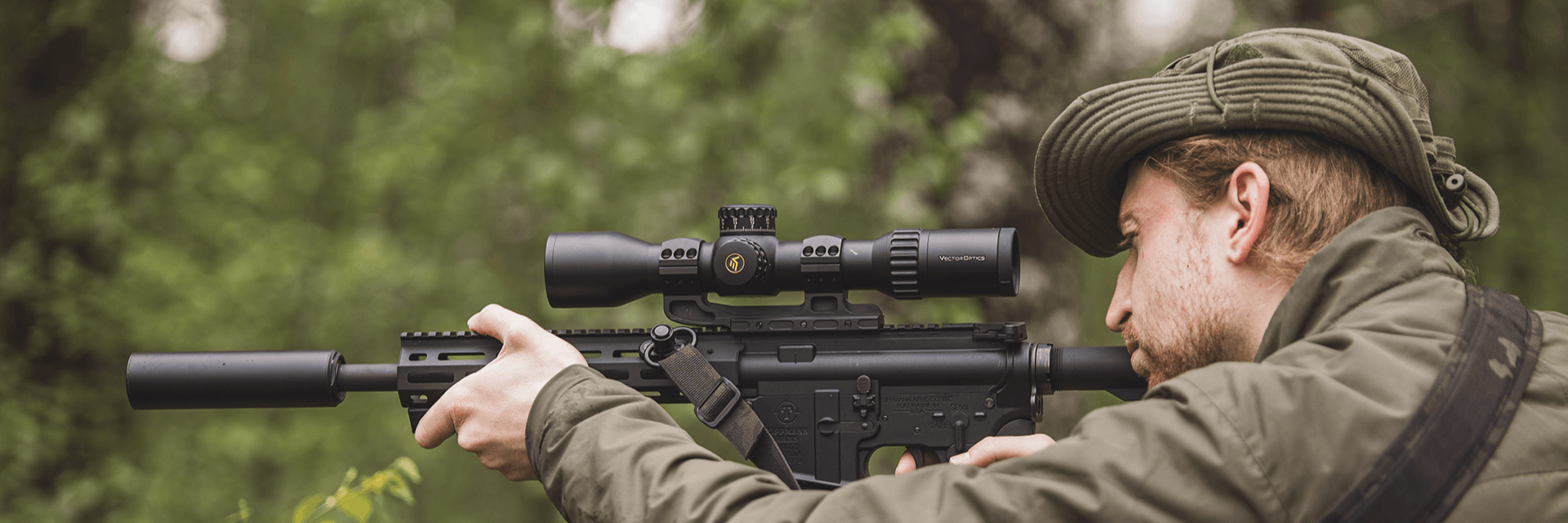
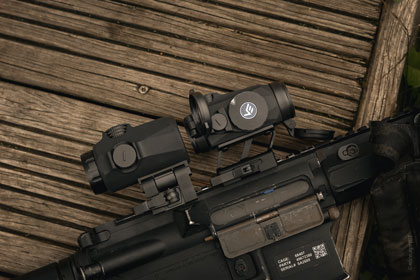
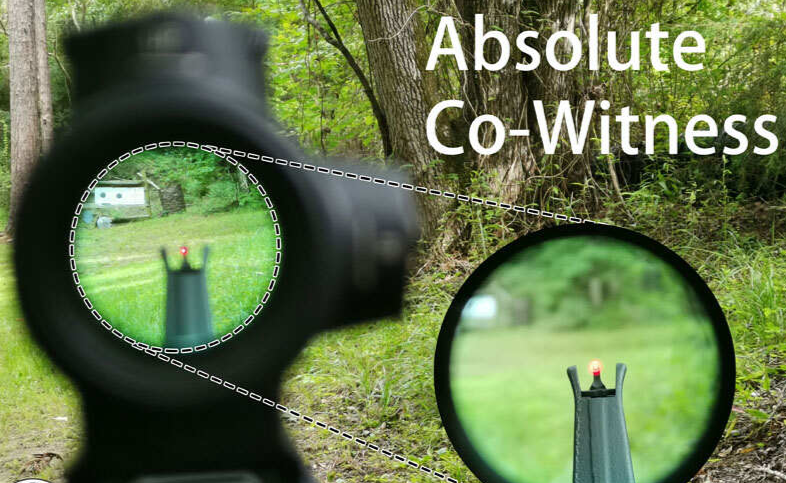
A bright target, reflective ground, or harsh sunlight can make conventional reticle illumination difficult to see. LED-fed fiber-wire reticles address that problem by directing light through a fine optical fiber to a concentrated center point. The result is a crisp aiming dot that can remain visible against bright backgrounds and support faster target acquisition.
Terminology note: Fiber-optic reticle is a broad category. In this article, fiber-optic scope refers specifically to Vector Optics designs that use battery-powered, LED-fed fiber-wire illumination unless stated otherwise.
How Does LED-Fed Fiber-Optic Illumination Work?
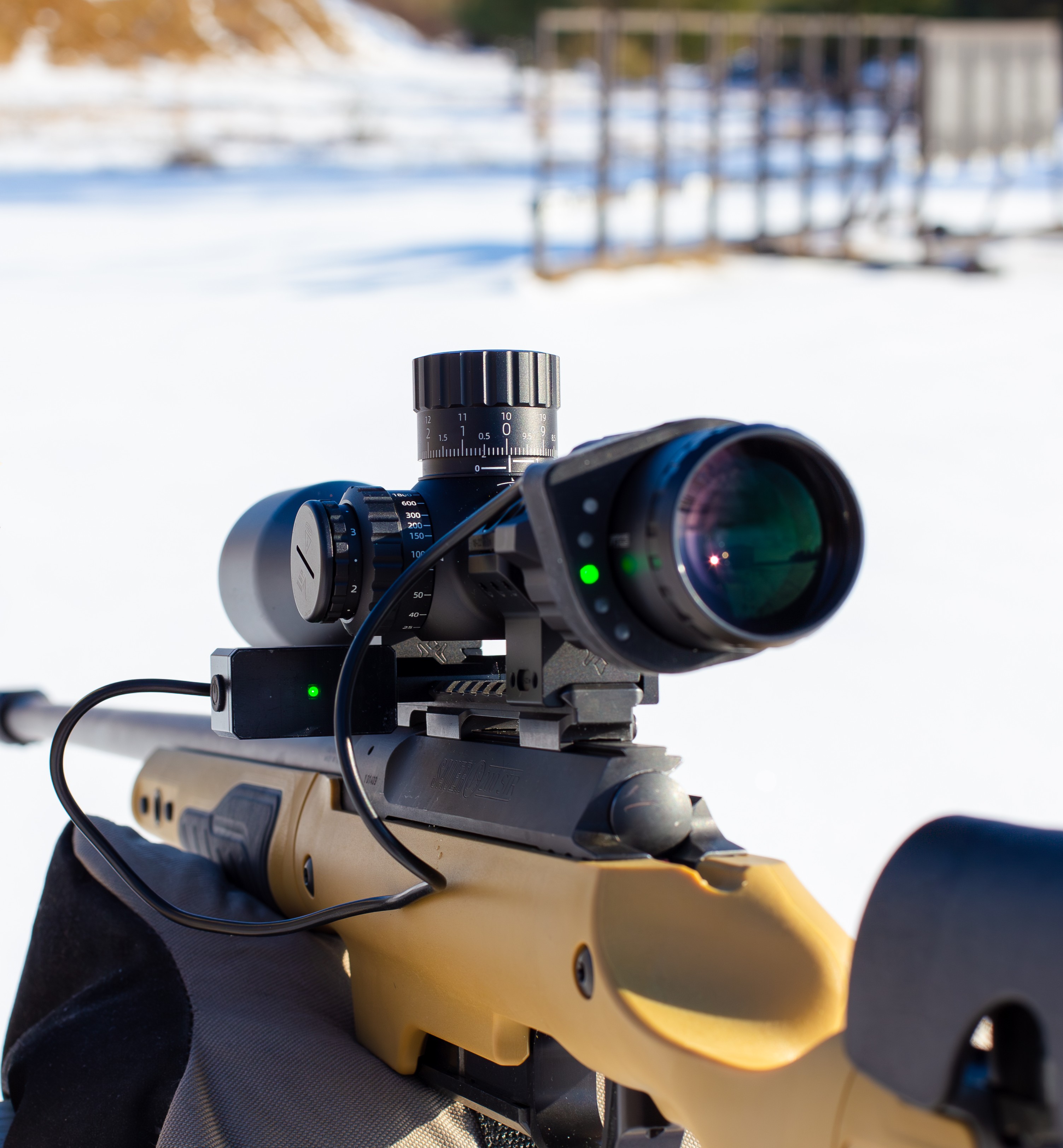
An LED provides the light source. A fine optical fiber then guides that light to the center of the reticle, where the illuminated endpoint appears as a small dot. The fiber does not generate or amplify light; it delivers it efficiently. Fiber-wire reticle describes the physical structure, while fiber dot describes what the shooter sees.
LIGHT PATH LED → optical fiber → concentrated illuminated center point
Why Is a Fiber-Wire Reticle Easier to See in Bright Daylight?
A conventional etched illumination system may distribute light across a center section, ring, or multiple reticle lines. A fiber-wire system concentrates the available light into a smaller endpoint, creating stronger local contrast against sunlit terrain or reflective targets. Daylight-bright is still a performance description, not a universal fiber standard: output depends on LED power, fiber coupling, endpoint finish, brightness settings, battery condition, coatings, and the complete optical design.
What Are the Main Benefits of a Daylight-Bright Fiber Center Dot?
High center-dot contrast against bright or visually busy outdoor backgrounds.
Faster visual pickup at low magnification, especially in an LPVO near 1x.
A simple point of aim that can feel more familiar to shooters transitioning from a red dot.
Adjustable brightness for changing outdoor, shaded, and lower-light conditions.
What is the Fiber-Optic Scope?
Fiber-optic scopes utilize advanced light-collecting fibers to create an illuminated reticle with a signature center dot that remains bright and visible.
A thin fiber optic light pipe is positioned behind the wire reticle, and when illumination is activated, only the center dot lights up — making for incredibly fast target acquisition. The dot stays crisp and highly visible, even in bright daylight or low-light conditions, ensuring precise aiming in any environment.
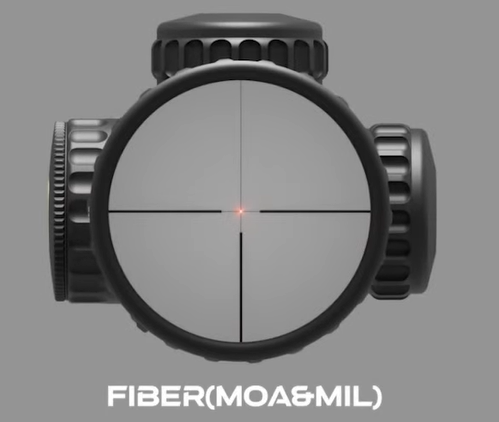
When used in Low Power Variable Optics (LPVOs), fiber-optic scopes can even mimic the function of red dot sights. At 1x magnification, shooters maintain both-eyes-open awareness with a sharp illuminated center dot that outperforms traditional red dots in clarity.
What Are the Key Features of Fiber-Optic Scope?
The fiber-optic center dot delivers consistent visibility in bright daylight, maintaining clear contrast against sunlit or reflective backgrounds.
The illuminated center dot supports both-eyes-open aiming for rapid target engagement, offering superior clarity — ideal for dynamic shots in open terrain.
With its enhanced visibility and faster target acquisition under harsh sunlight, the system supports confident, all-day performance across fields, deserts, and high-altitude environments.
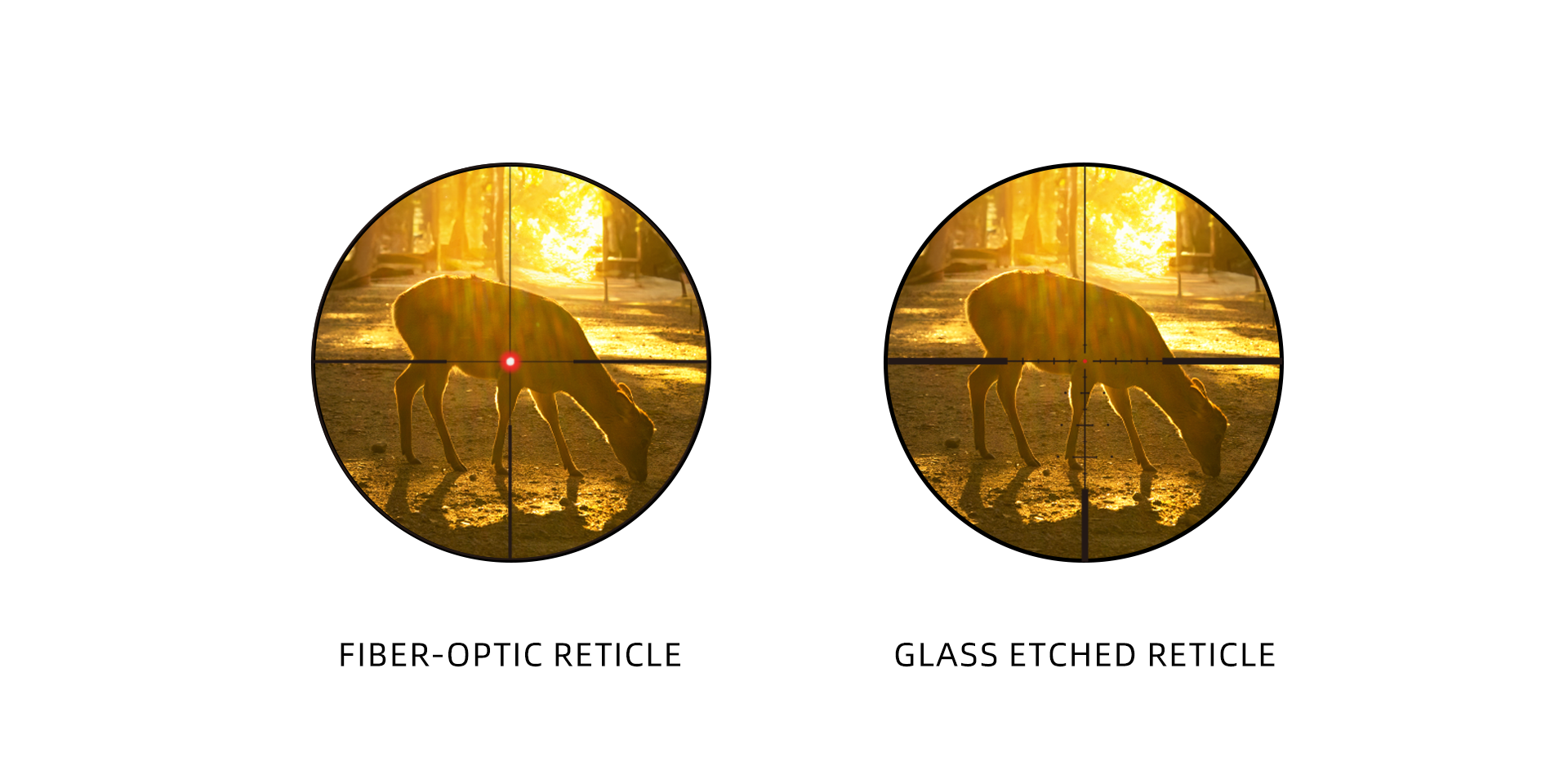
When Should You Consider Glass Etched Reticles Instead?
While fiber-optic scopes excel in bright-light environments, certain demanding conditions — such as extreme cold, high-impact scenarios, or varied operational settings — call for an alternative approach. Glass etched reticles provide a robust solution, offering enhanced durability, shock resistance, and consistent performance across a broader range of environmental challenges.
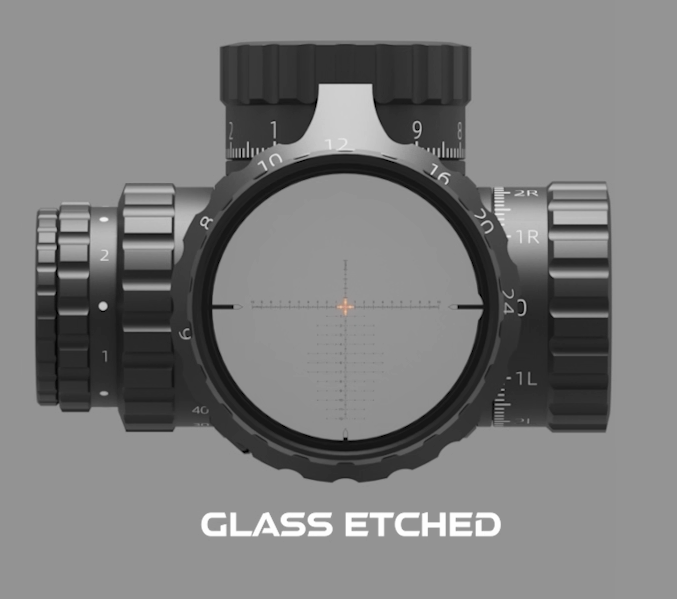
The etched reticle is formed by engraving the aiming pattern directly onto the glass lens, offering superior shock resistance and durability. It also enables complex and precise designs, such as Christmas tree-style holdover reticles. Although the process involves multiple steps — like coating and assembly with strict dust and fog control — it remains more efficient and cost-effective than the more intricate construction of fiber-optic reticles. For a more detailed comparison guide, read Fiber Reticle vs. Etched Glass Reticle.
Which Models Fit Different Hunting Scenarios Best?
For users seeking robust durability and precision, the SCOL-X21 Continental X6 3-18x50 CDM Hunting with glass etched reticle offers reliable performance and advanced holdover functions at an accessible price point.
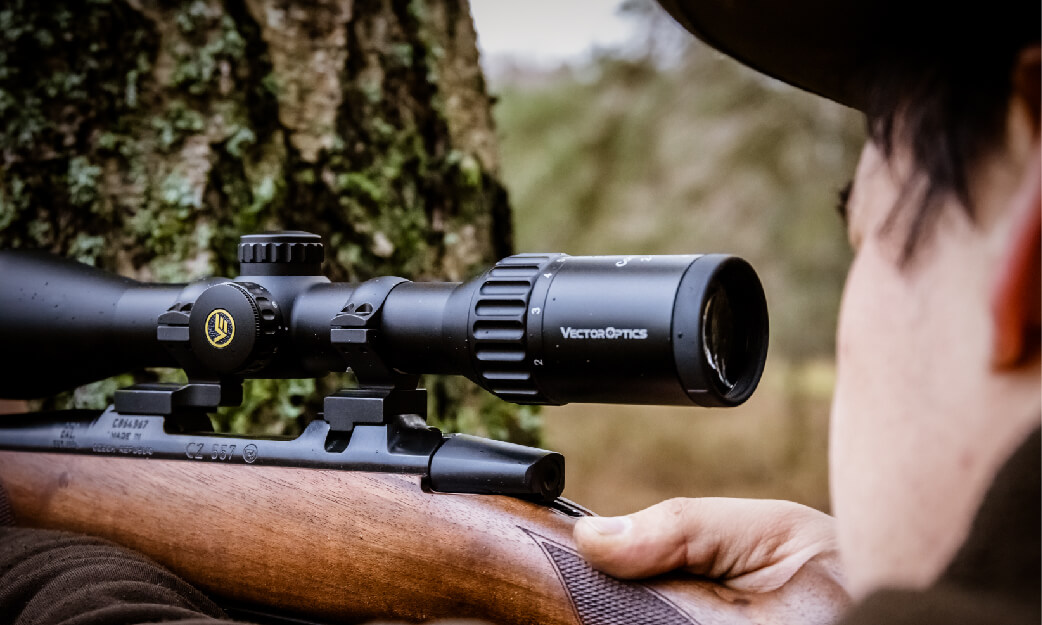
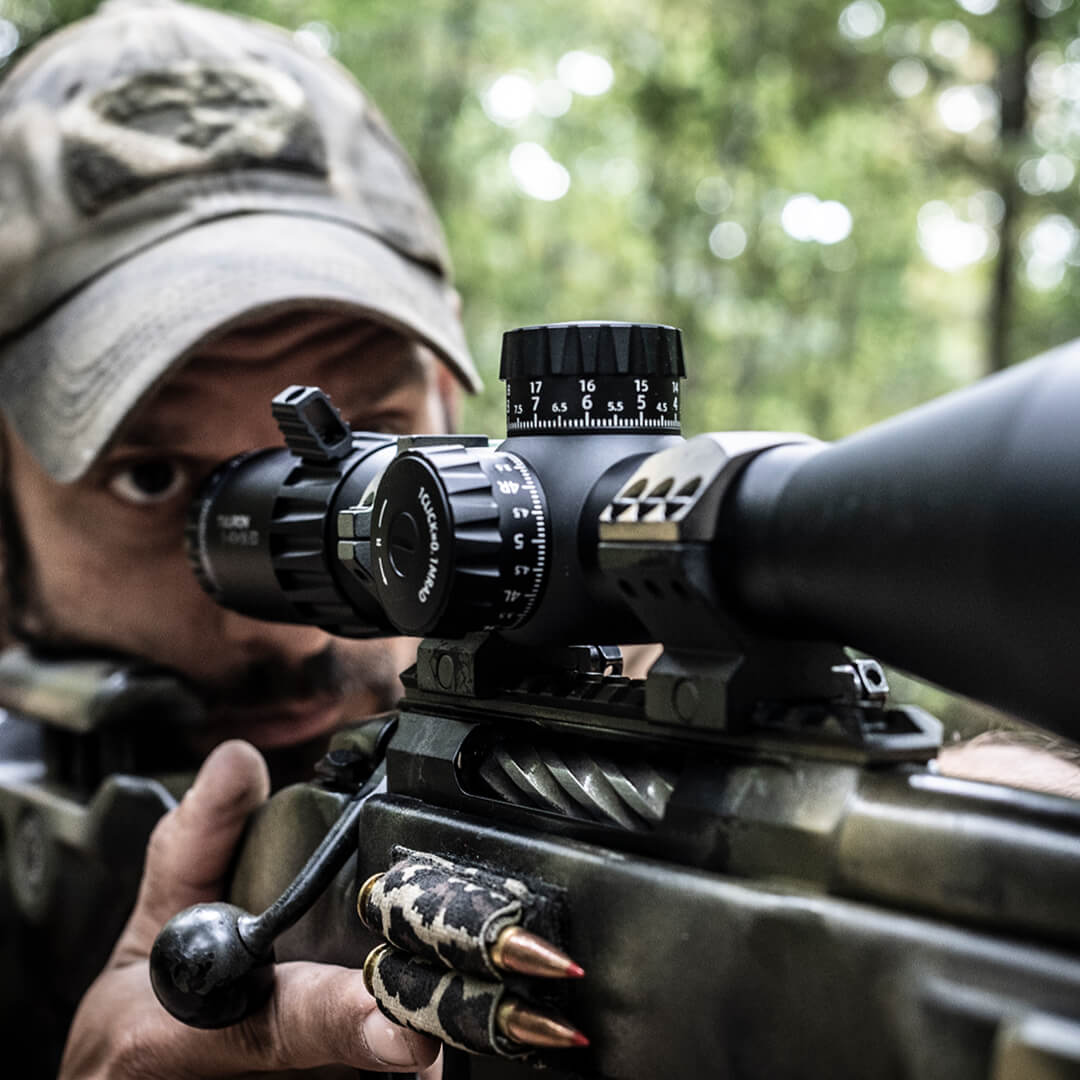
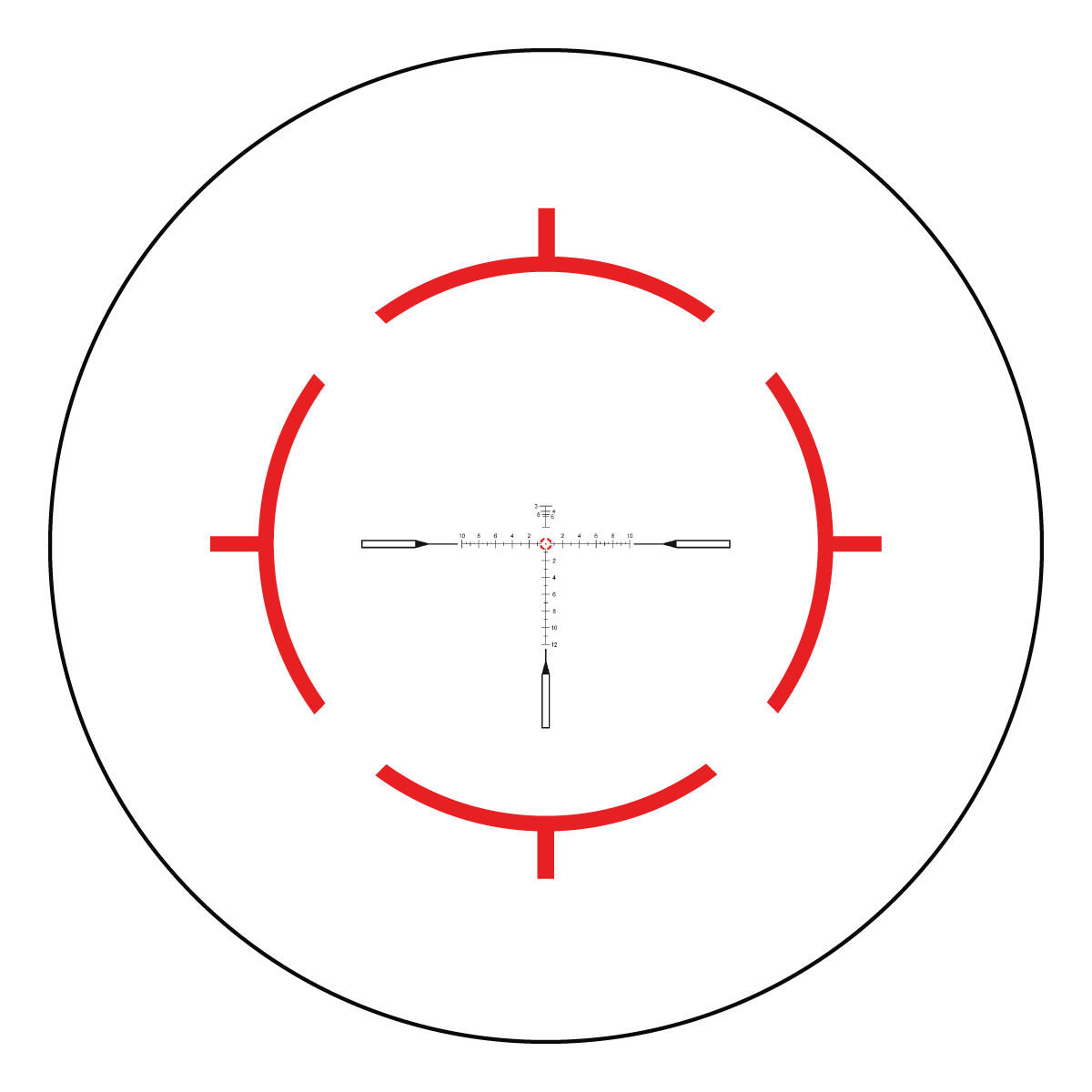
For those requiring enhanced daylight visibility and faster target acquisition, the SCOL-65 Continental X6 3-18x50 Fiber provides the same optical and mechanical quality with a fiber-optic illuminated German #4 reticle, ideal for varmint hunting scenarios such as coyotes, foxes, and prairie dogs in open terrain. Featuring capped turrets for all-weather protection and hunting readiness, the SCOL-65 ensures reliable performance in harsh outdoor environments. Its IP67 waterproof and dustproof rating allows for direct rinsing after exposure to mud, sand, or debris, making it a practical choice for demanding field conditions.
FAQ
Q1. How does a fiber optic scope work?
It works by capturing ambient light through thin fiber strands built into the reticle and channeling that light toward the center aiming point. This creates a bright, high-contrast dot that stands out clearly against different backgrounds, helping you stay on target faster when lighting conditions shift from bright sun to mixed outdoor environments.
Q2. Do fiber-optic scopes need batteries?
No batteries are required at all. The illumination is completely passive, relying on surrounding light sources instead of electronics, which means there’s nothing to switch on, charge, or worry about running out during long hunting sessions in the field.
Q3. Are they suitable for night hunting?
They are generally not designed for night hunting. Since the system depends on external light to function, performance drops noticeably in very low-light or dark conditions where there isn’t enough ambient brightness to properly illuminate the reticle center.
Q4. How do I maintain the reticle clarity?
Maintenance is straightforward but important: use a microfiber cloth with lens-safe cleaning solution to gently clean the optics when needed, avoid touching or rubbing the fiber elements directly, and always store the scope in a dry, padded case to protect it from dust, moisture, and accidental impact that could affect long-term optical clarity.