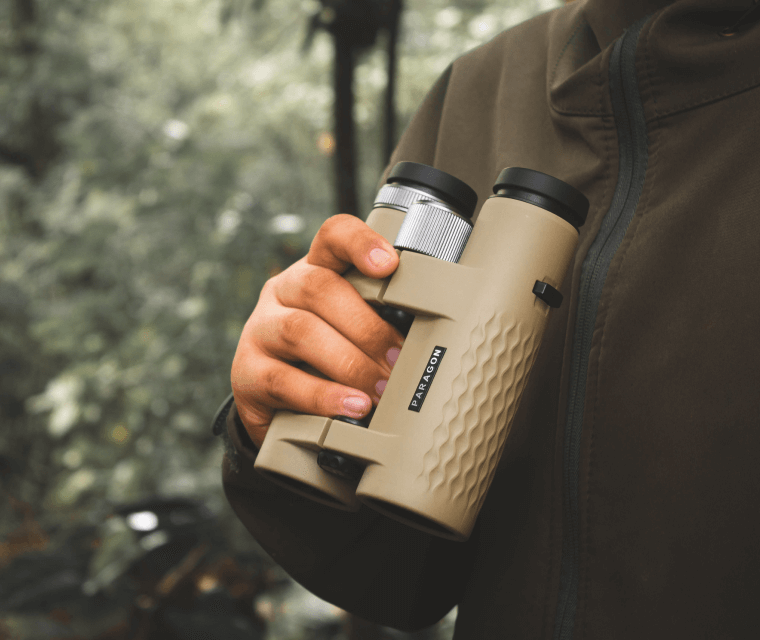
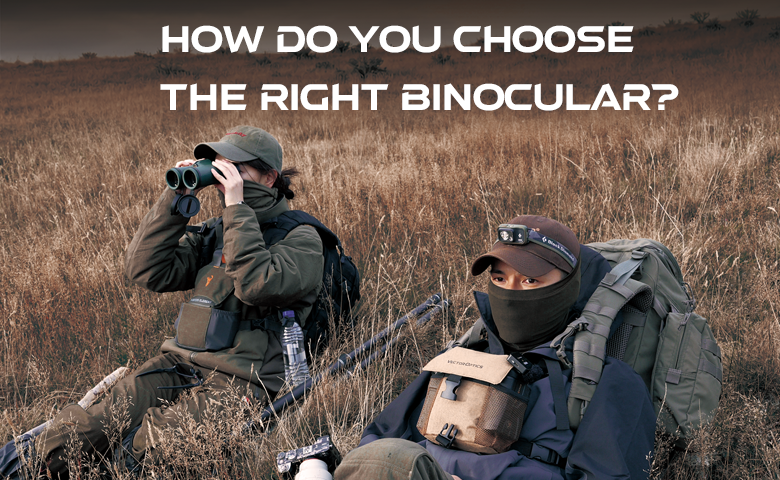
Choosing the right binocular is not simply about higher magnification or larger lenses. It requires a balance between optical performance, portability, stability, and your intended use.
Whether for bird watching, hunting, wildlife observation, or outdoor exploration, understanding binocular specifications and performance differences will help you select a binocular that delivers clearer images and a better viewing experience.
1. What Makes a Good Binocular?
A good binocular is not defined by one specification alone. The right choice depends on how its optical performance, size, and handling match your viewing needs.
When choosing a binocular, focus on five key factors:
Optical Quality — Determines clarity, brightness, contrast, and color accuracy.
Magnification — Controls how much closer distant subjects appear.
Lens Size — Affects light gathering, brightness, and overall size.
Weight — Influences portability and comfort during extended use.
Intended Use — Bird watching, hunting, hiking, and long-distance viewing require different priorities.
The best binocular is the one that balances these factors for how you actually use it.
2. How Can Binoculars Be Classified?
Different binocular models serve different purposes. They may be grouped by size, or equipped with extra features such as distance measurement and image stabilization.
The following sections introduce the most common binoculars in these two categories.

2.1 Binocular Categories by Size
Objective lens size plays an important role in balancing brightness, portability, and viewing performance. The table below helps you compare different binocular sizes and choose the right option for your needs.
Type | Typical Objective | Advantages | Limitations | Best For |
Pocket Binocular | ≤25mm | Ultra-light, easy to carry | Dimmer image, narrow FOV | Travel, sightseeing, casual viewing |
Compact Binocular | 32mm | Lightweight, well-balanced | Weaker in low light, less long-range detail | Bird watching, hiking, wildlife |
Full-Size Binocular | 42mm | Bright image, larger exit pupil, versatile | Bulkier, heavier | Hunting, wildlife, all-around outdoor use |
High Magnification Binocular | ≥50mm | Long-range detail, powerful reach | More shake, narrow FOV, heavier | Long-distance hunting, scouting, mid-to-long range target shooting |
For users ready to step up to a High Magnification Binocular, the Continental 15×56 ED Binocular (SCBO-09) and Forester 12×50 Binocular (SCBO-18) bring distant subjects closer with greater reach and detail, making them ideal for long-distance observation.
2.2 Binocular Categories by Function
Beyond size, binoculars can also be designed with specialized features for different tasks and environments. The table below compares two popular specialized binocular types.
Type | Typical Objective | Advantages | Limitations | Best For |
Rangefinder Binocular | 42mm | Observe and measure distance | Higher cost, heavier, battery required | Hunting, ranging, field observation |
Image Stabilized Binocular | Around 50mm | Stable image, easier handheld viewing | Higher cost, larger size, battery required | Sports, moving subjects |
If a rangefinder binocular fits your needs,the Paragon 10×42 Rangefinder Binocular (SCBRF-02) is designed for hunting and outdoor observation.
Magnification | Pros | Cons | Best For |
7x | Stable, wide view | Less detail | Marine, wildlife |
8x | Easy handheld | Less reach | Birding, hiking |
10x | More detail | More shake | Hunting, outdoor |
12x | Higher detail | Needs steady hands | Long distance |
15x+ | Maximum reach | Tripod recommended | Long range |
(Choosing the Right Magnification)
3. What Should You Consider When Choosing a Binocular?
The best binocular is not always the one with the highest specifications. The right choice depends on your activity, environment, and viewing preferences.
3.1 A Simple Binocular Selection Guide
When choosing a binocular, consider these factors in order:
Different activities require different binoculars. Choosing the right binocular for different applications is covered later in this guide.
Higher magnification isn't always better. Balance image detail, field of view, brightness, and portability to suit your needs.
High-quality optics, including ED or HD glass, fully multi-coated lenses, and BaK-4 roof prisms, have a greater impact on image quality than additional functions.
A binocular that's comfortable to carry is more likely to be used. Weight, ergonomics, and accessories all contribute to long-term comfort in the field.
Functions such as laser rangefinding or image stabilization can be valuable for specific applications, but they're not essential for every user.
3.2 Choosing a Binocular for Bird Watching
Bird watching requires fast target acquisition, a comfortable field of view, and lightweight handling.
Important factors include:
Many users looking for the best binocular for bird watching prefer 8×32 or 8×42 binoculars because they provide a good balance between portability and observation capability.
Bird watching often involves spotting small birds hidden among branches or following them as they move from tree to tree. Clear optics and responsive handling make it easier to observe fine details and track birds in motion.The Continental 8×32 ED Binocular (SCBO-25) and Continental 10×32 ED Binocular (SCBO-26) feature a compact 32 mm objective lens, phase-correction coating, and 90% light transmission. This combination makes them easy to carry while delivering a bright, comfortable handheld viewing experience throughout the day.

3.3 Choosing a Binocular for Hunting
Hunting often requires observation in changing lighting conditions and across longer distances.
Important factors include:
Bright image performance
Detail recognition
Comfortable handling
A 42mm or larger objective lens can provide better light gathering ability during dawn and dusk.
For hunters who need enhanced detail without carrying a large binocular, the Continental 8×42 ED Binocular (SCBO-14) and Continental 10×42 ED Green ODBinocular (SCBO-15) are perfect picks. Built around roof prism ED optics, these binoculars deliver crisp, high-definition views with excellent detail. FMC and dielectric coatings provide bright, crystal-clear images, while the lightweight, compact design makes them easy to carry outdoors.
Hunters seeking dependable performance at a more affordable price can also consider the VictOptics 10×42 Binocular (BOSL02) or VictOptics 10×42 Binocular (BOSL04), both of which deliver bright, clear views and reliable performance for hunting.

3.4 Choosing a Binocular for Hiking and Travel
For hiking and travel, weight and portability are often more important than maximum magnification.
A compact binocular should be:
Accessories such as a binocular strap or binocular harness can also improve carrying comfort.
For hiking and travel, lightweight binoculars are often the preferred choice. The Paragon 8×32 GenII HD Binocular (SCBO-23) features 8× magnification, a compact 32 mm objective lens, phase-correction coating, a wide 8.1° field of view, and a 4 mm exit pupil. This combination makes them easy to carry while delivering a bright, comfortable handheld viewing experience throughout the day.

Final Thought
A binocular is more than an optical instrument. It is a tool that helps you explore the world with greater clarity and confidence. The right binocular allows you to discover details, observe nature, and enjoy outdoor experiences in a more immersive way. Choosing a binocular that fits your needs can make every observation more comfortable and meaningful.
FAQ
Q1. What Is the Difference Between Roof Prism and Porro Prism Binoculars?
Roof prism binoculars usually offer a more compact design, while Porro prism binoculars traditionally provide strong depth perception and optical efficiency. The choice depends on the desired balance between size, weight, and optical characteristics.
Q2. How Does Eye box and Eye Relief Affect Binocular Comfort?
Eye box refers to the range of eye positions where you can still see a clear and complete image through a binocular. A more forgiving eye box makes the binocular easier to use and reduces the need for precise eye alignment.
Eye relief is the distance between your eyes and the eyepiece while maintaining the full field of view. Longer eye relief is especially beneficial for glasses wearers, providing a more comfortable viewing experience.
Together, eye box and eye relief help improve comfort during extended observation.
Q3. Why Does Field of View Matter When Choosing a Binocular?
Field of view determines how much area can be seen through the binocular at a specific distance. A wider field of view helps users locate and track moving subjects more easily, especially during wildlife observation and bird watching.
Q4. Can High Magnification Reduce Image Quality?
Higher magnification can reveal more detail, but it also increases sensitivity to hand movement and optical limitations. A balanced combination of magnification, lens size, and stability often provides a better viewing experience.