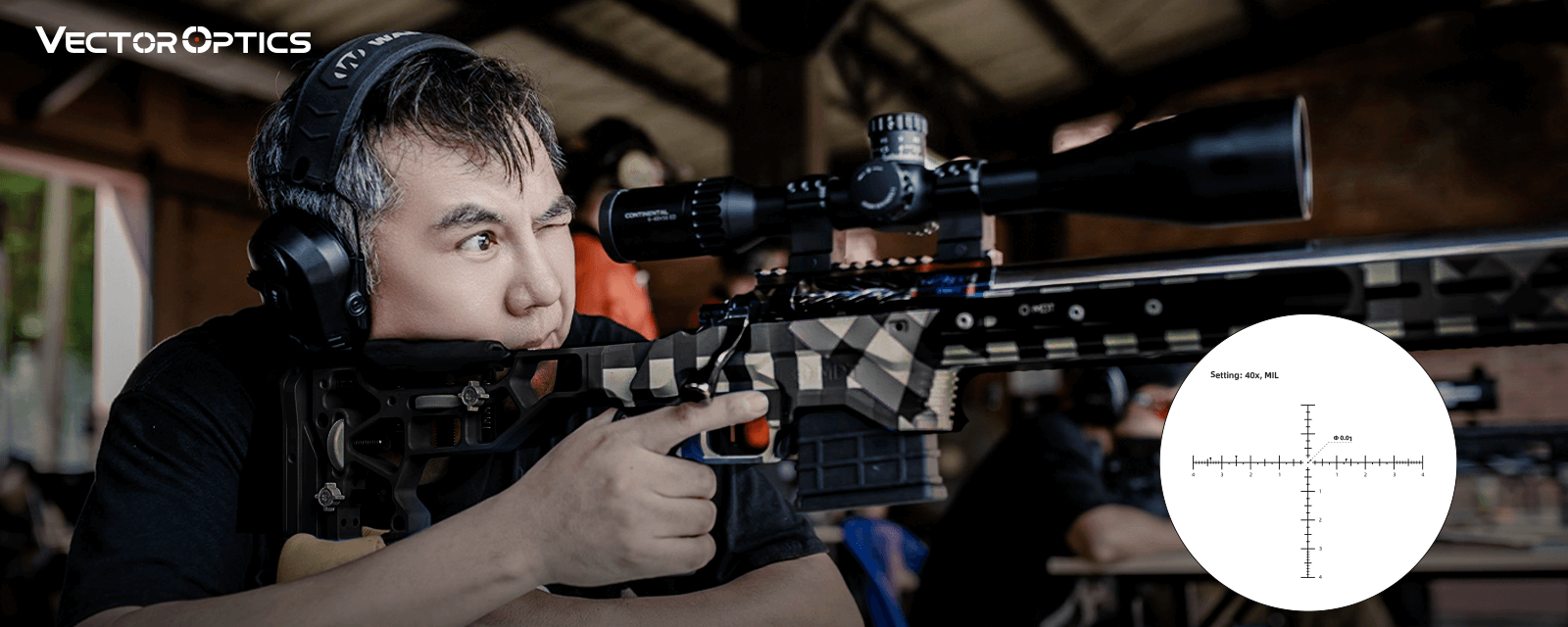
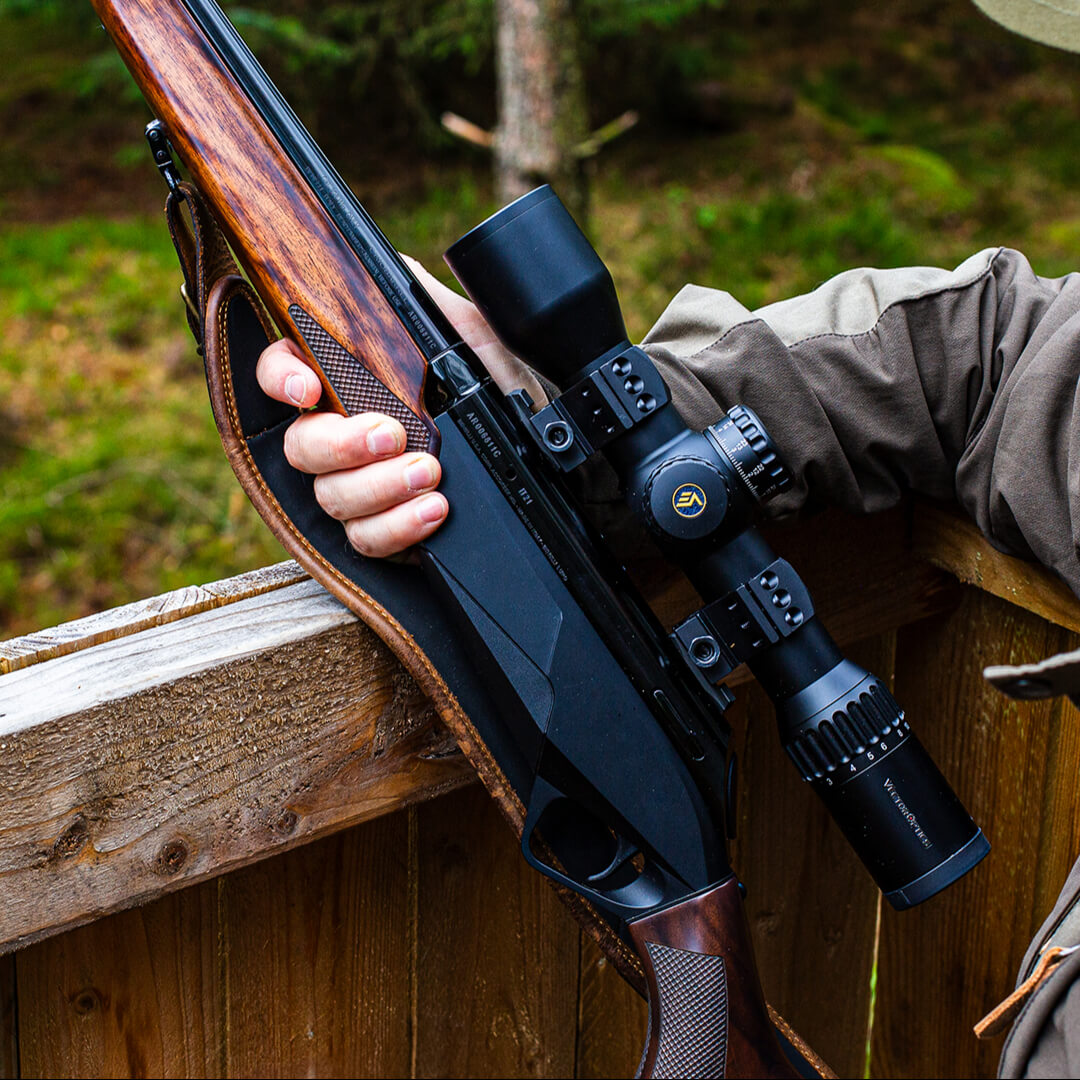
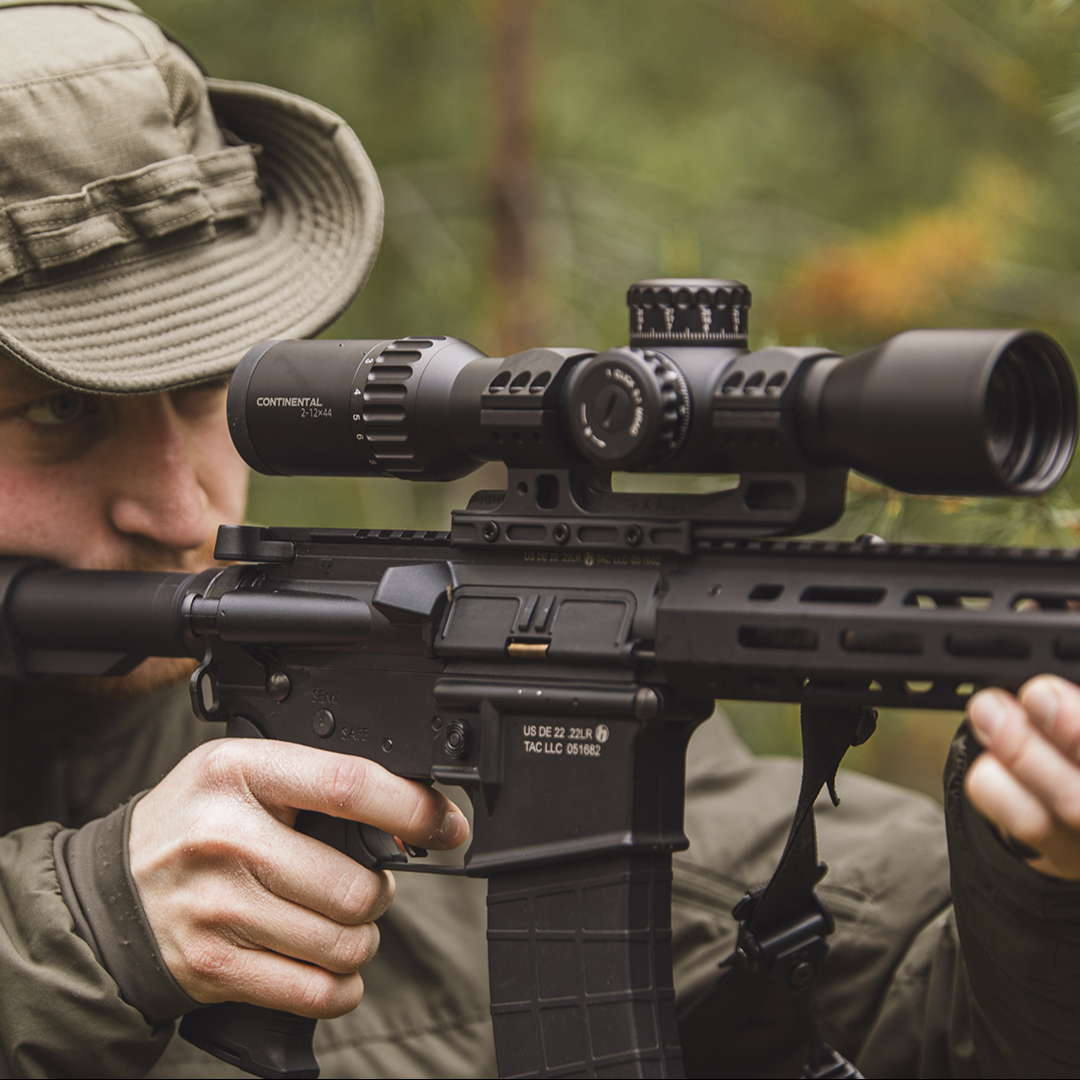
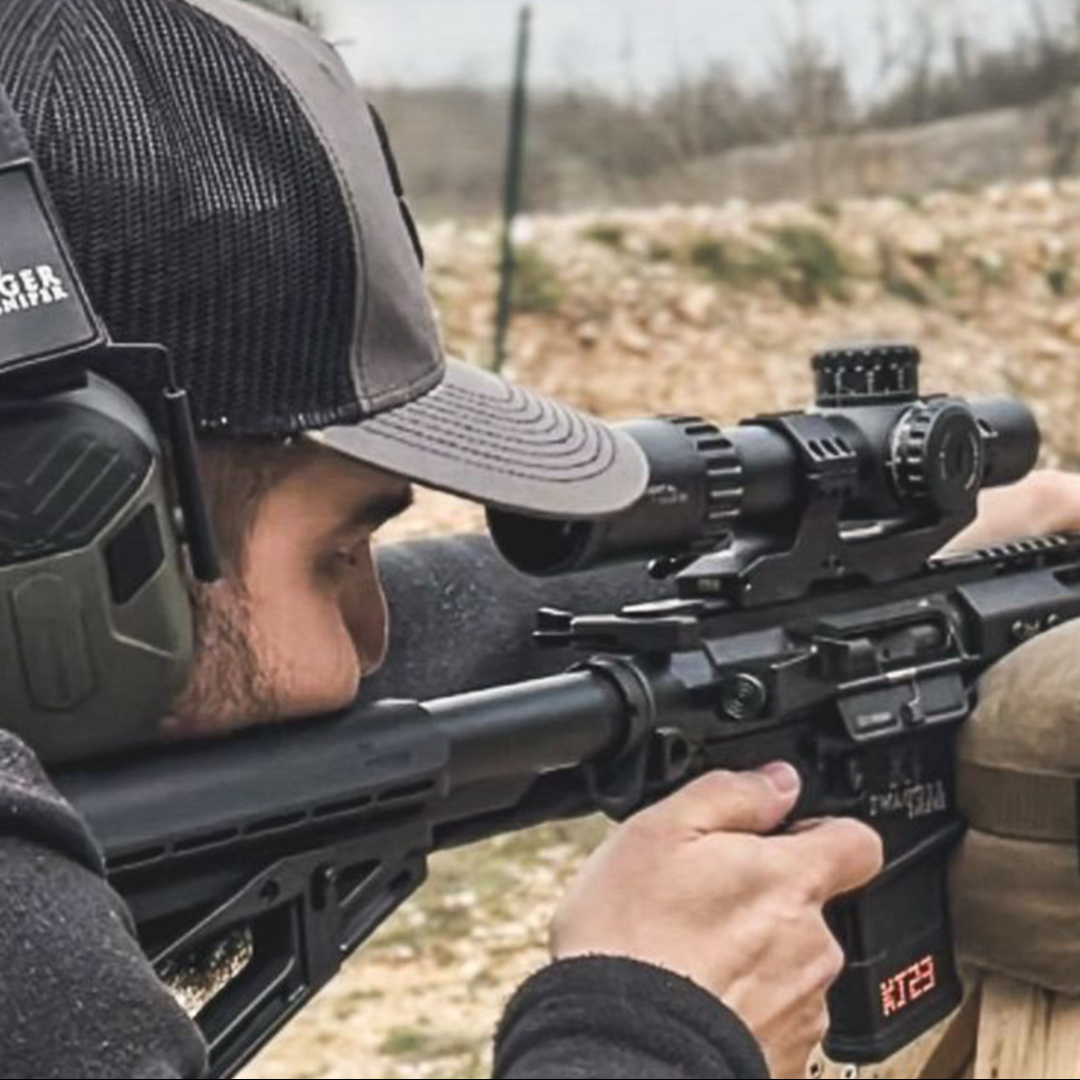
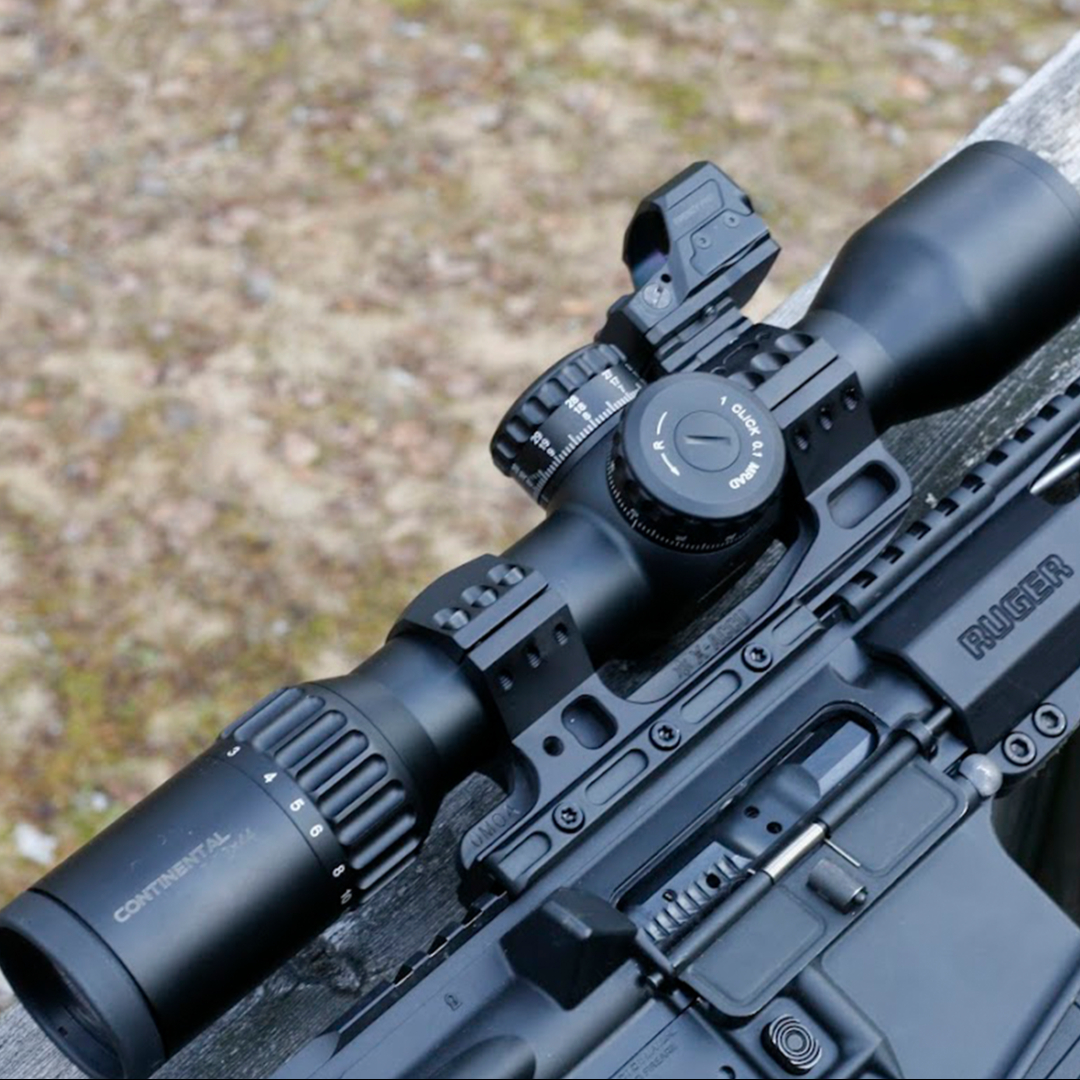
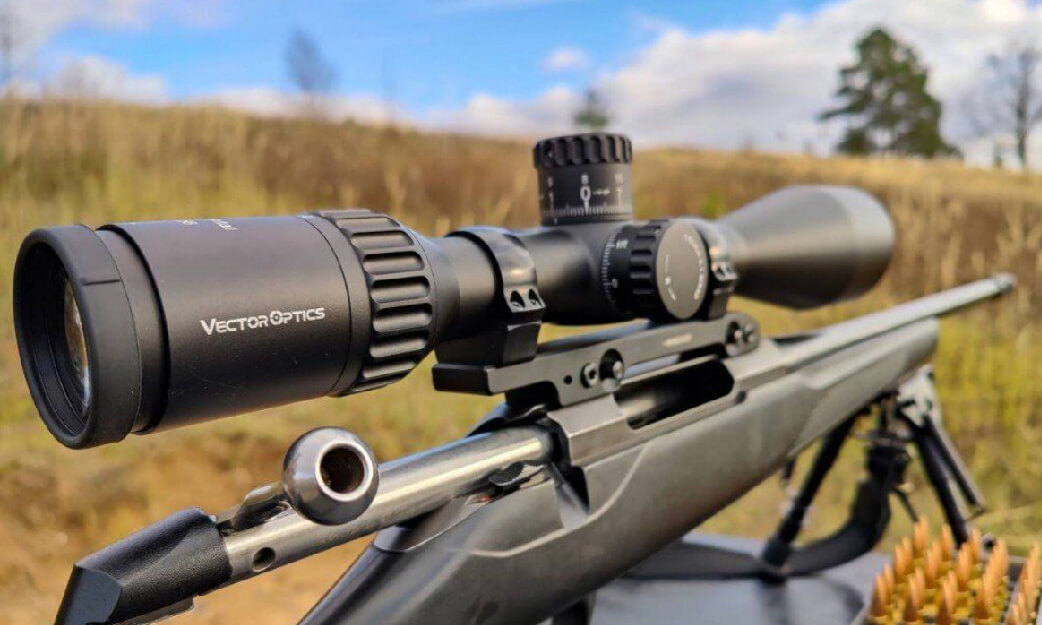
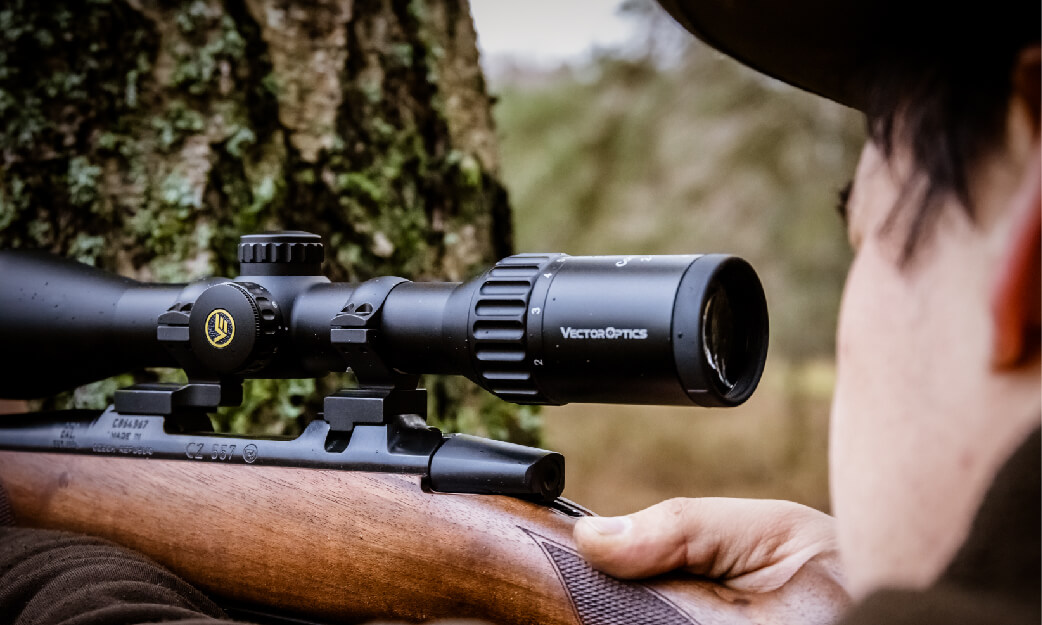
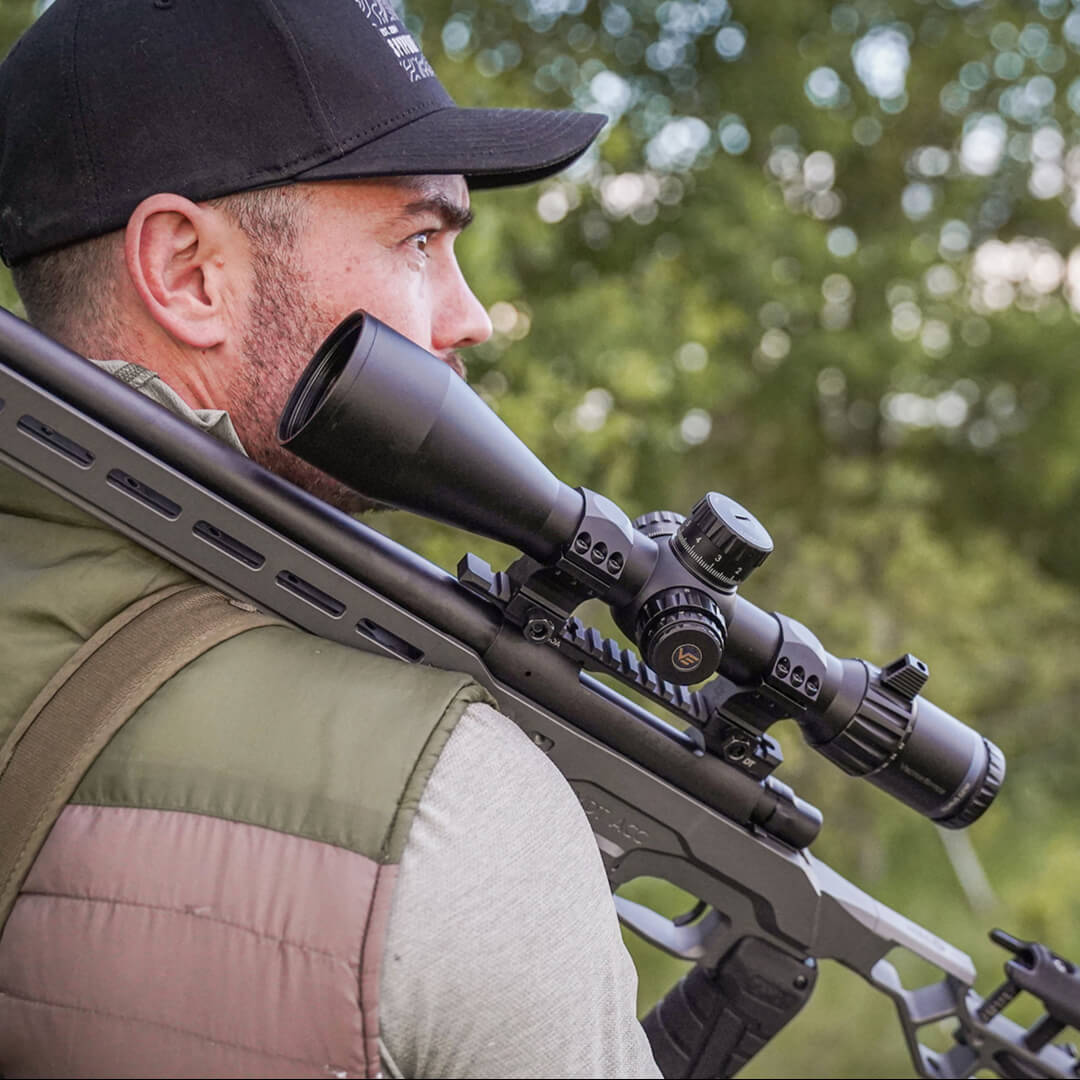
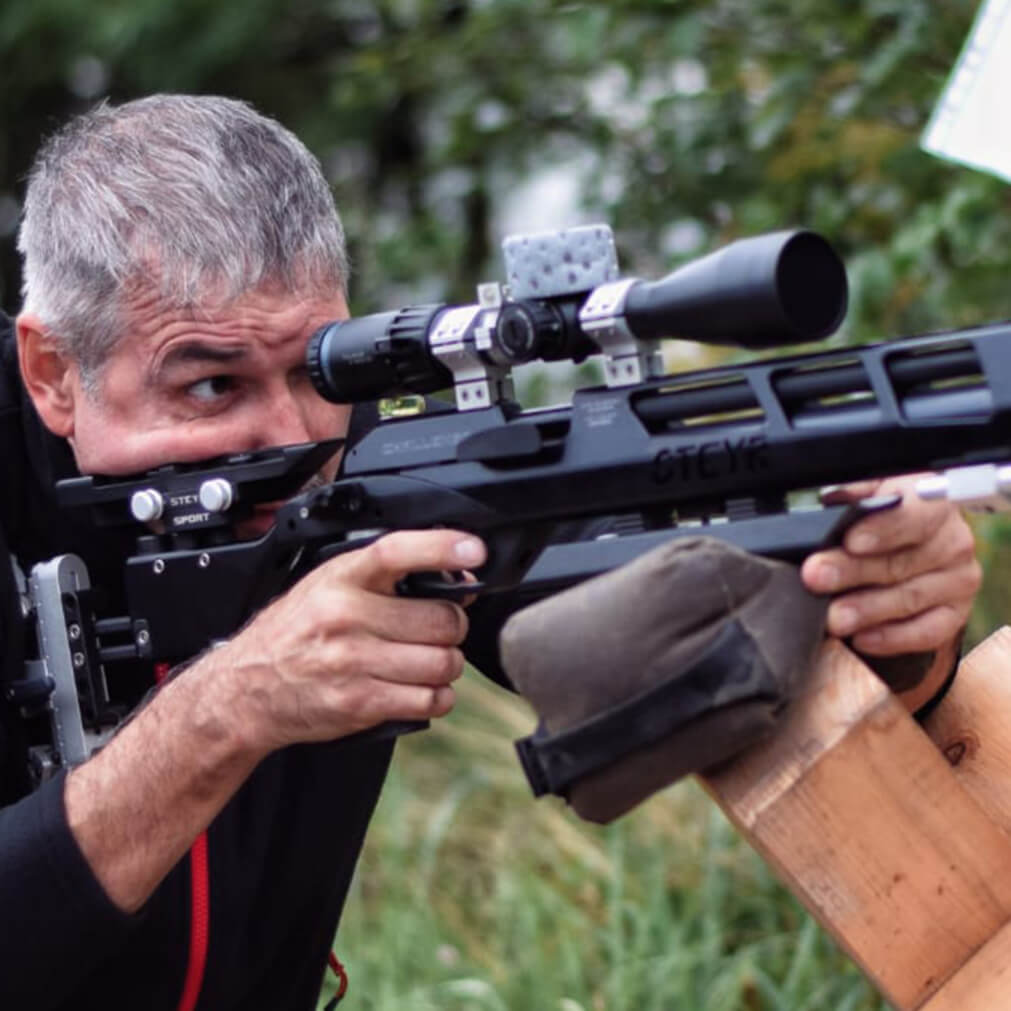
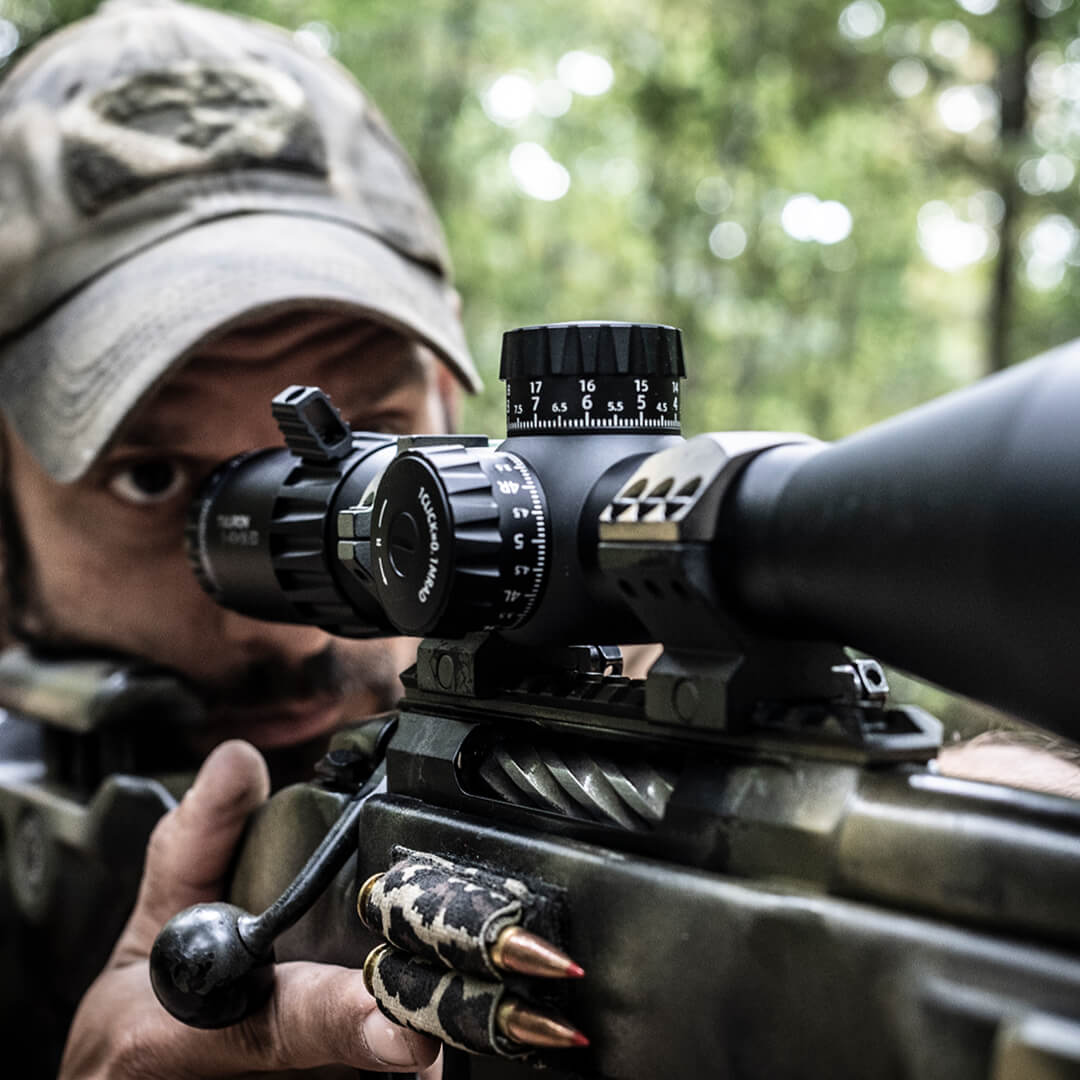
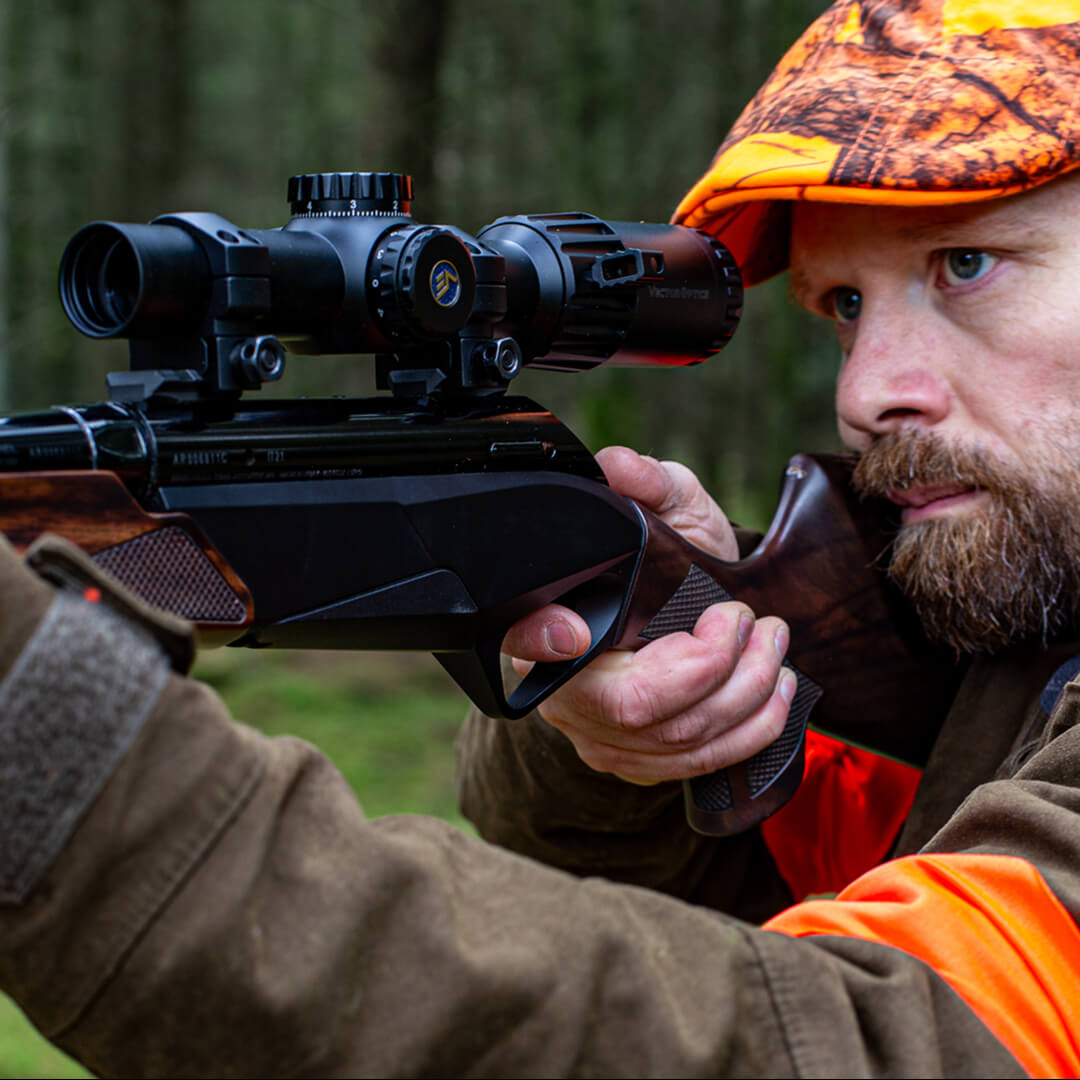
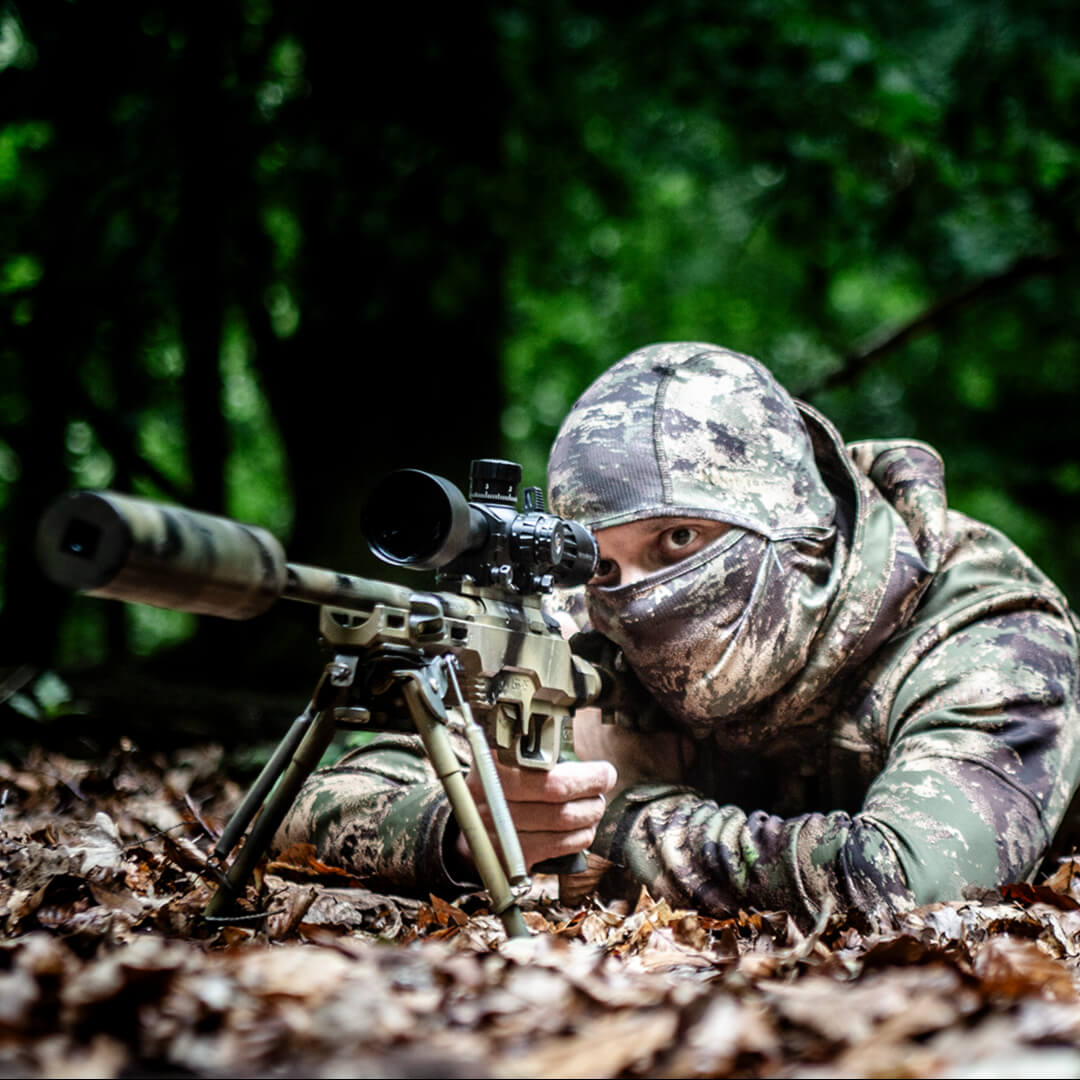
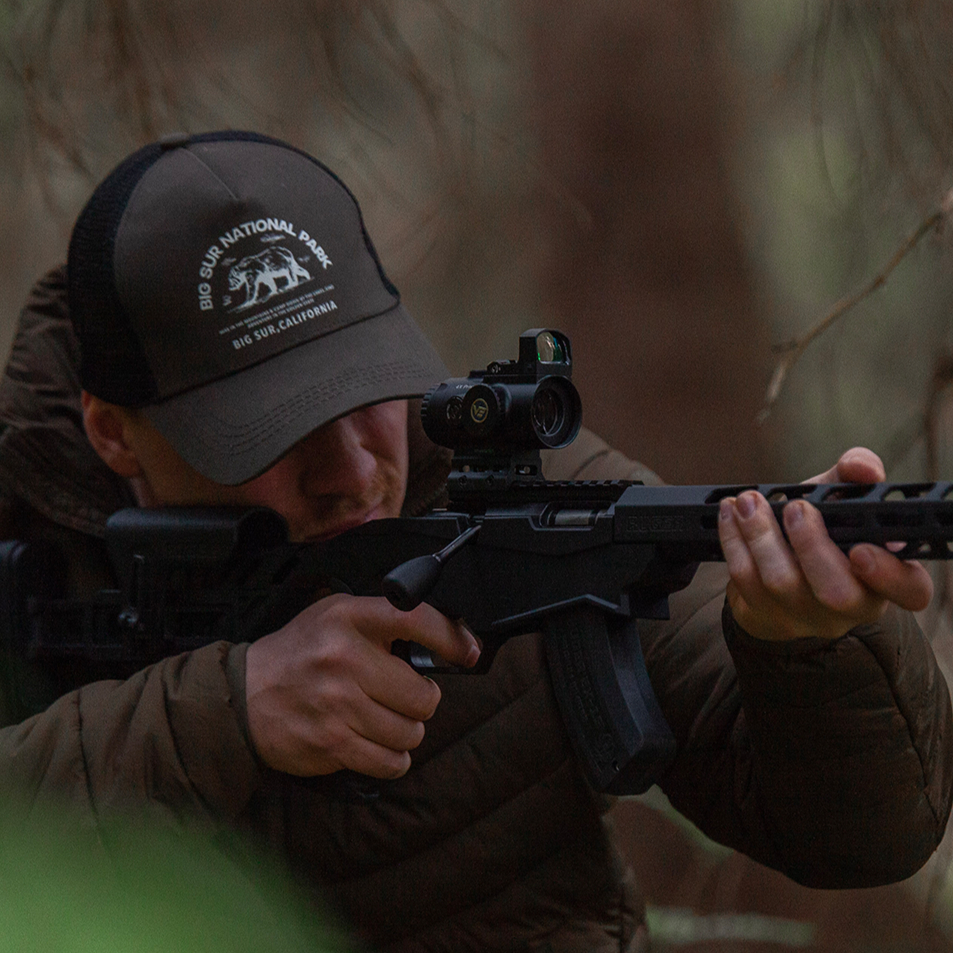
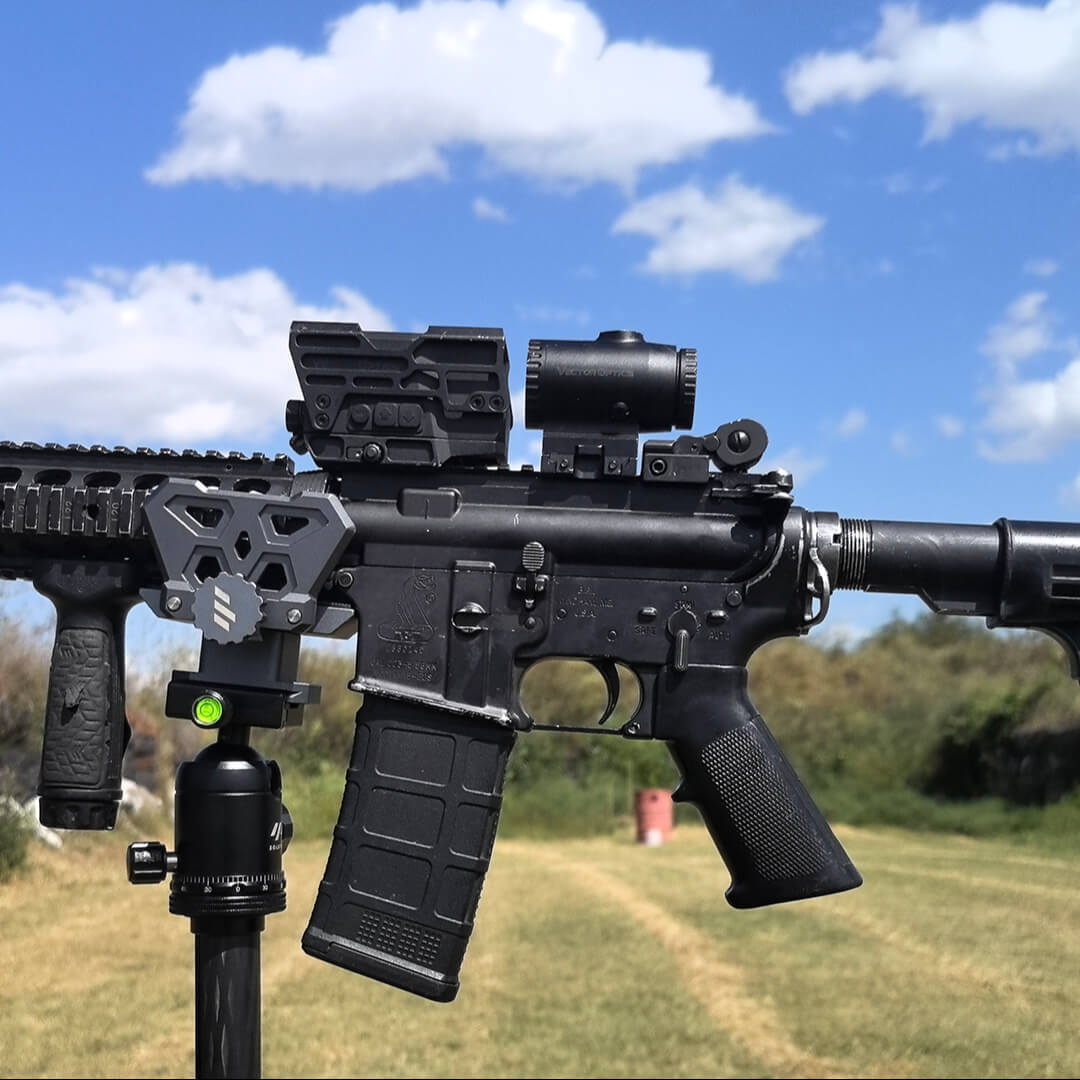
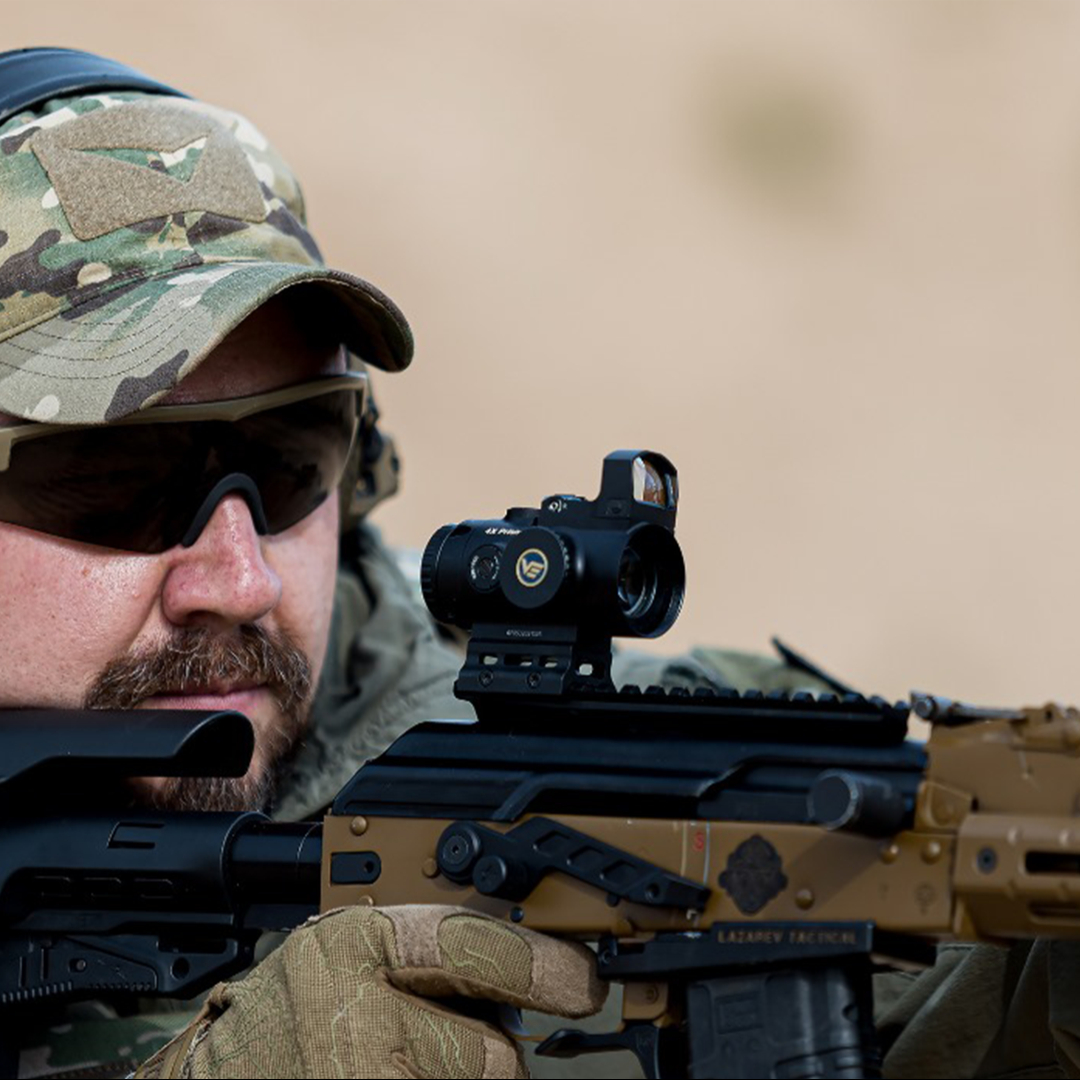
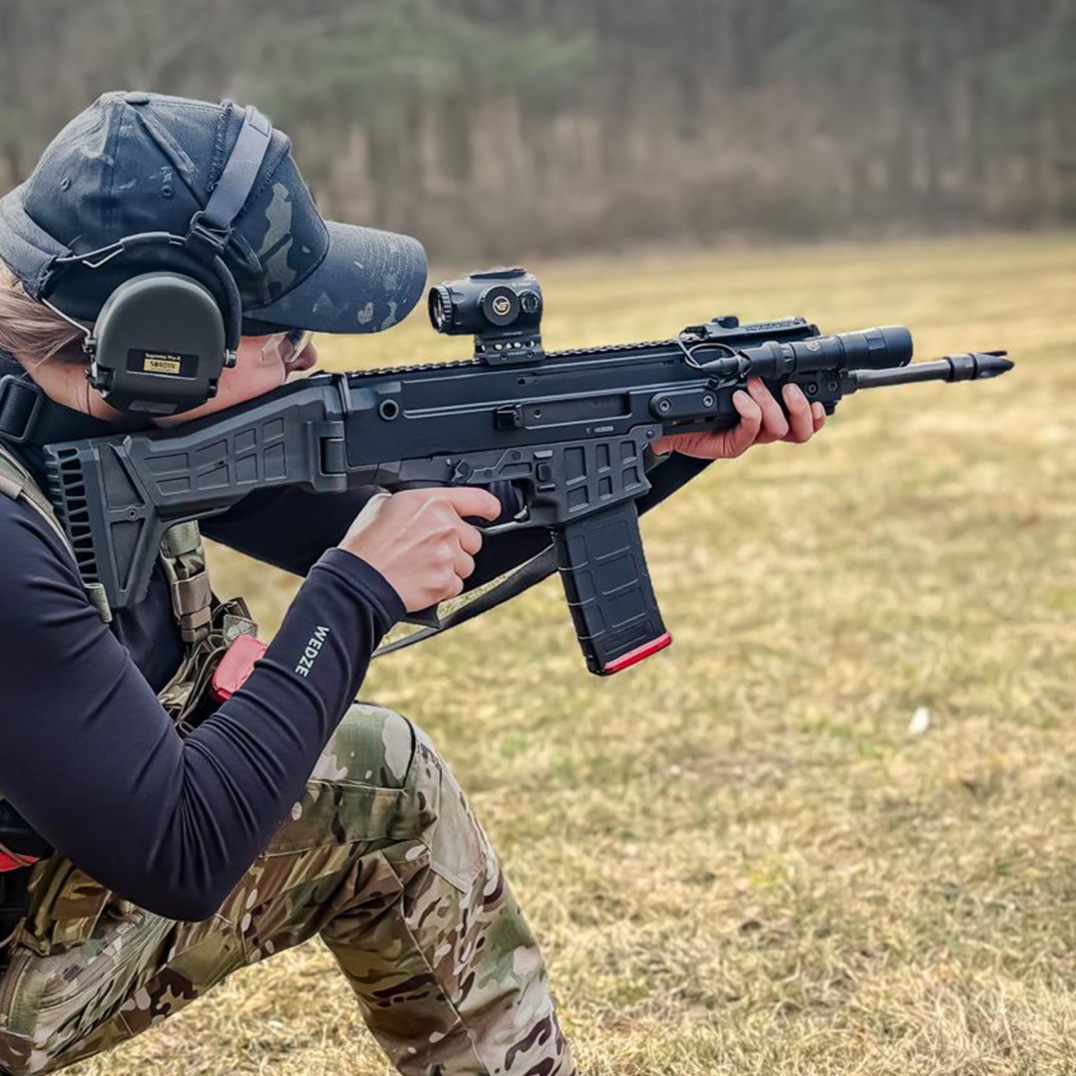
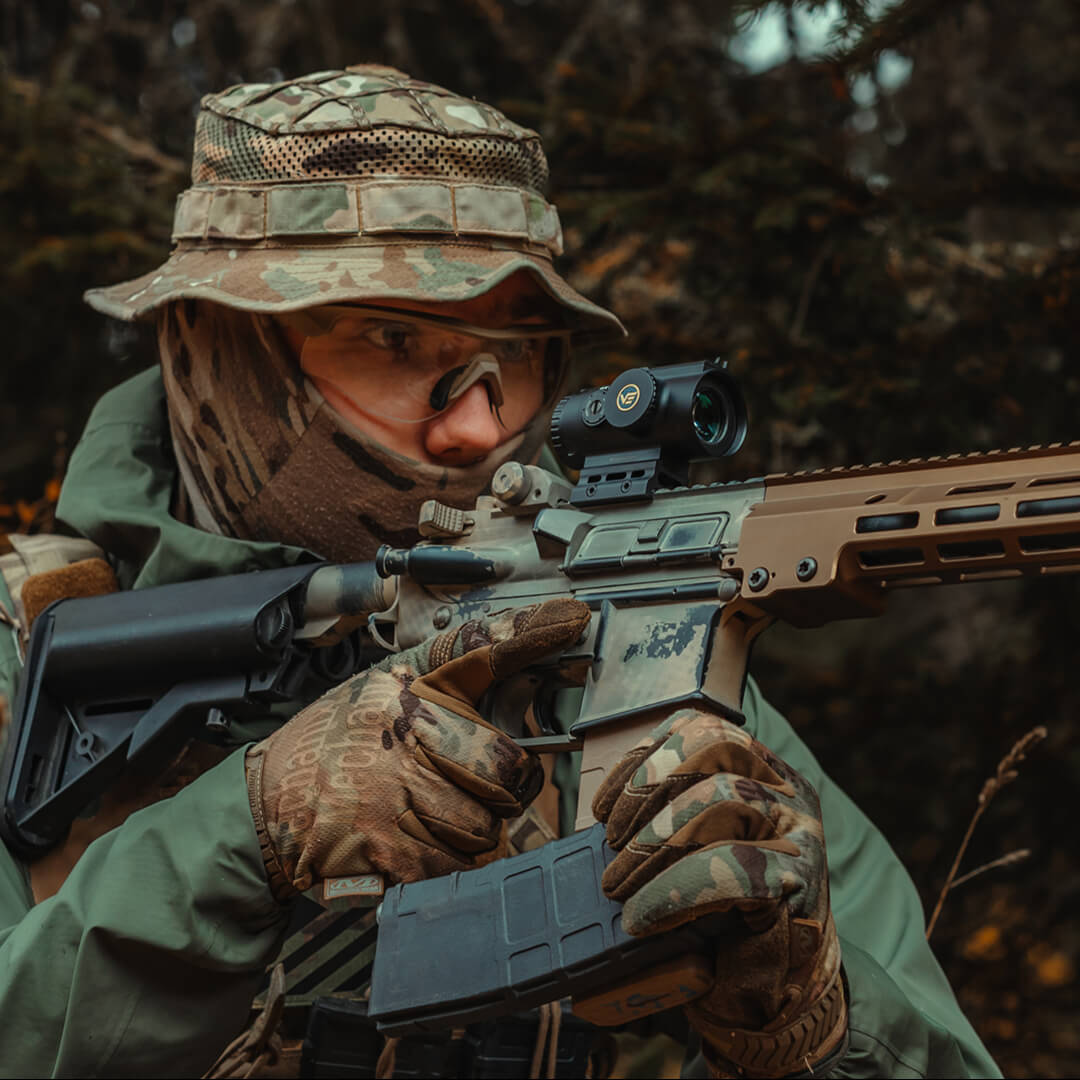
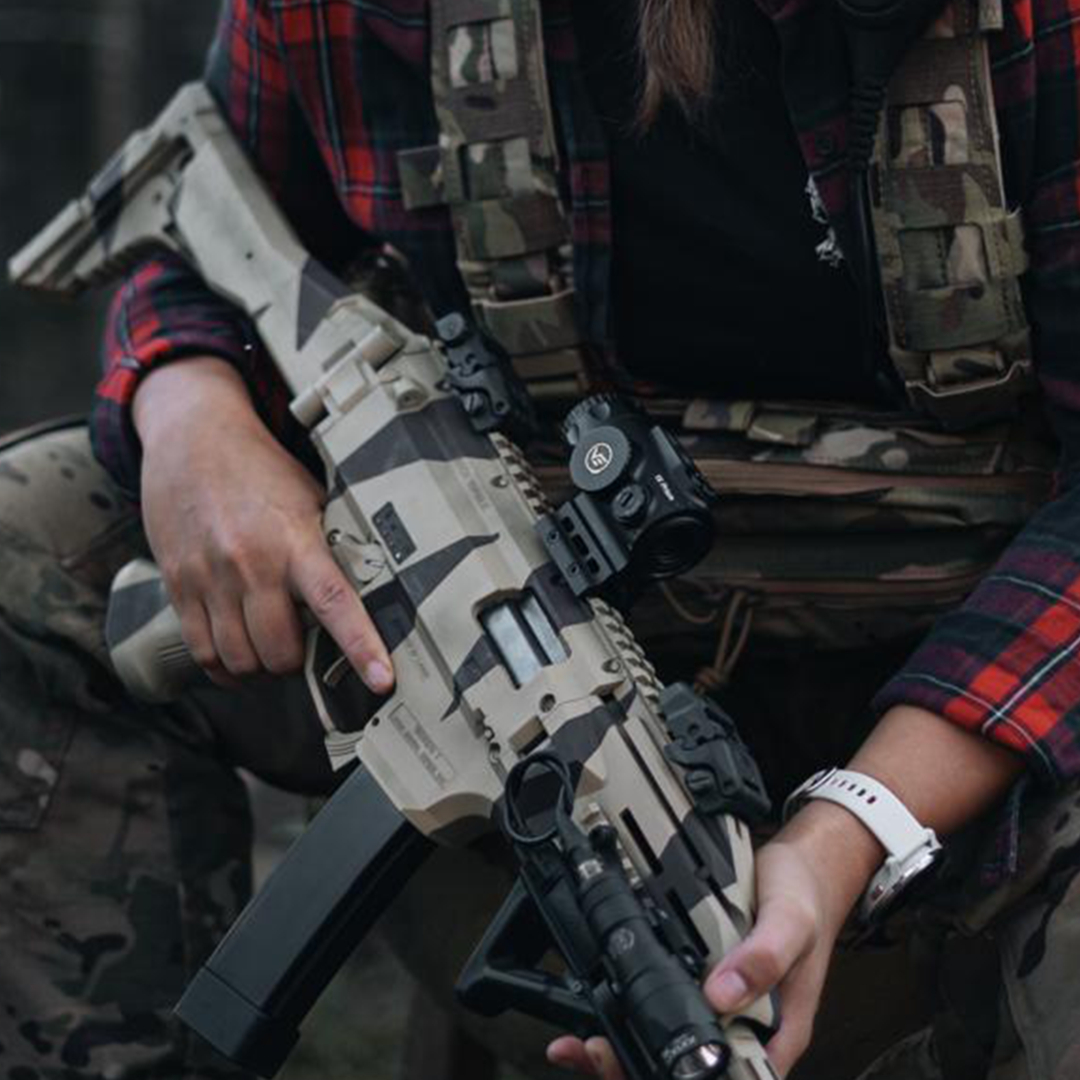
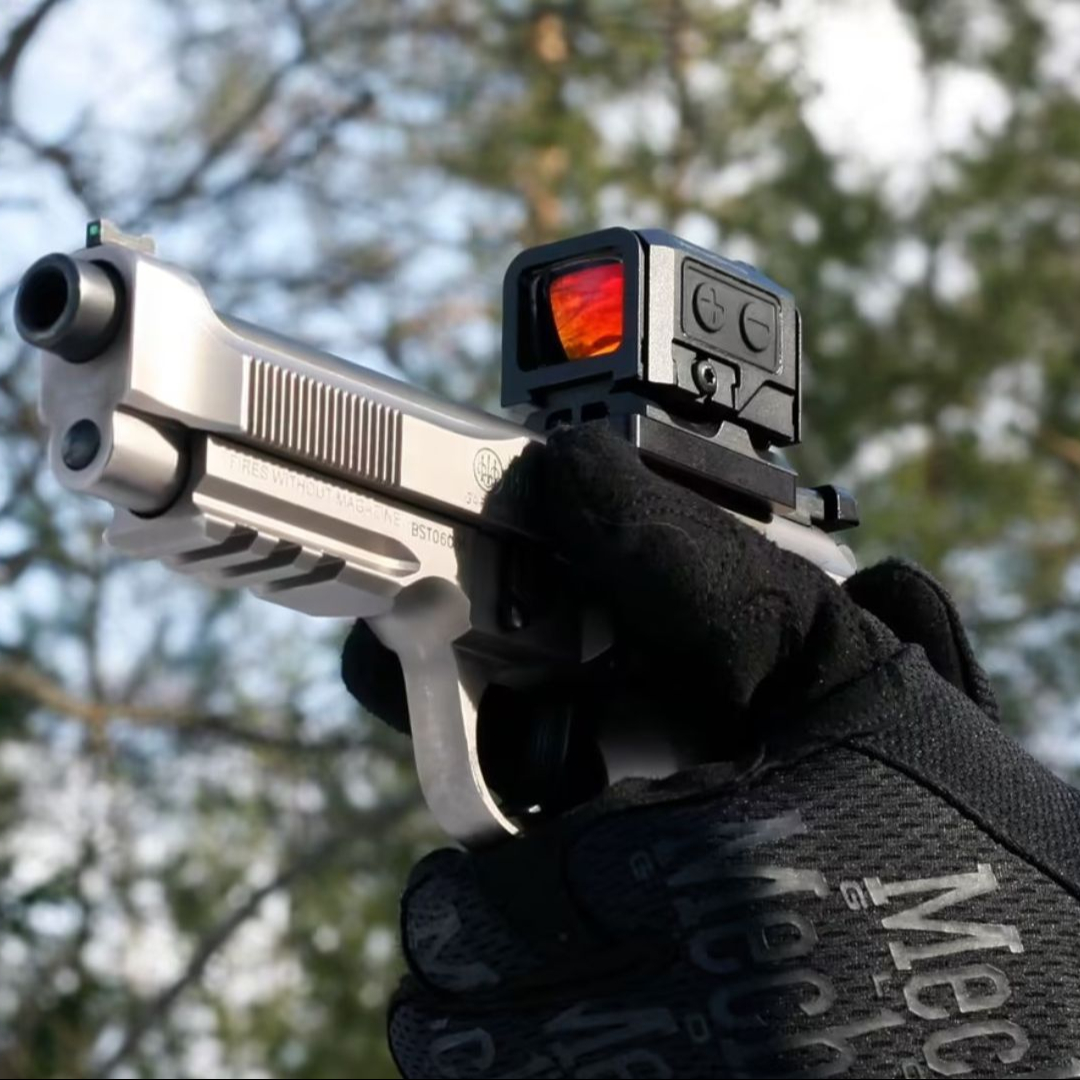
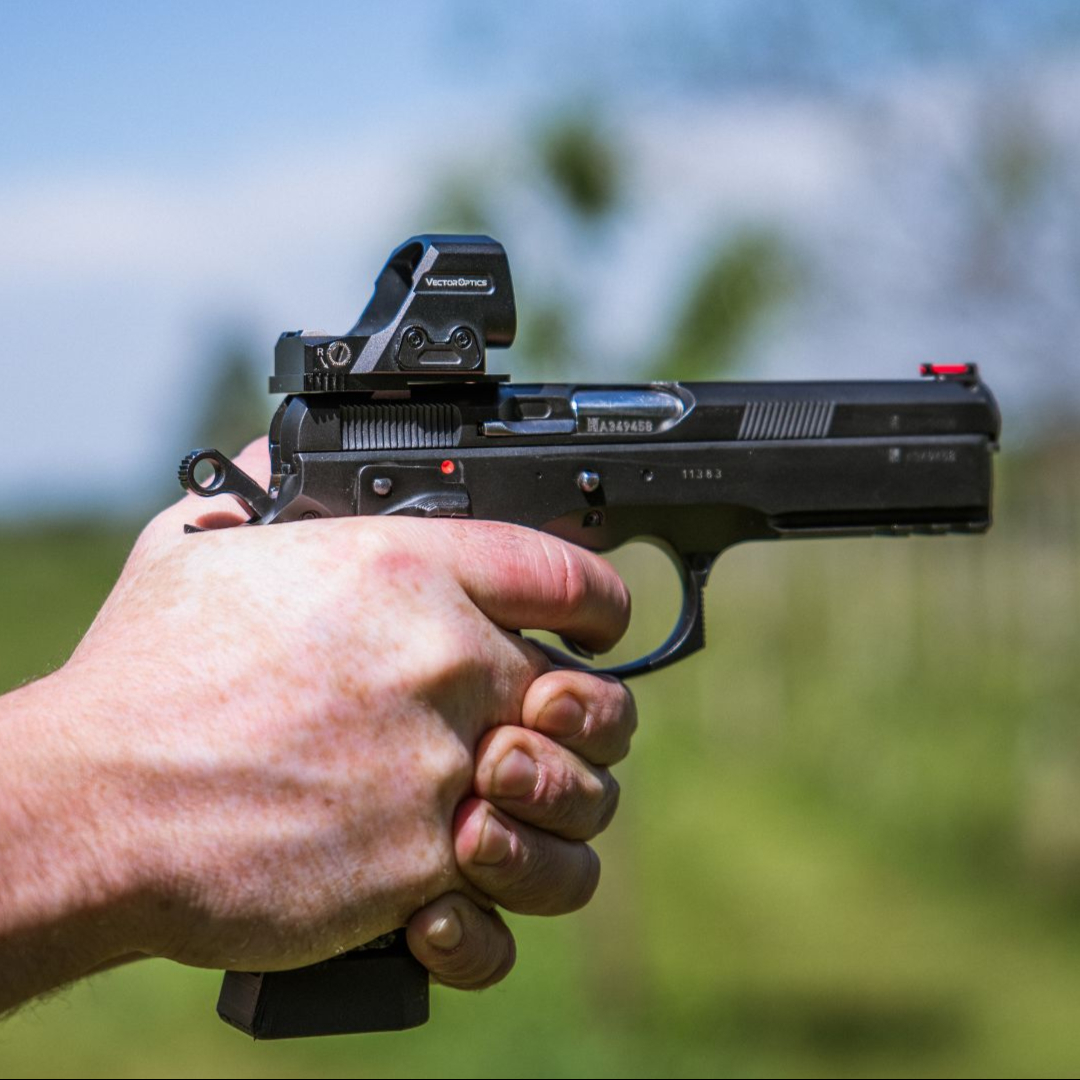
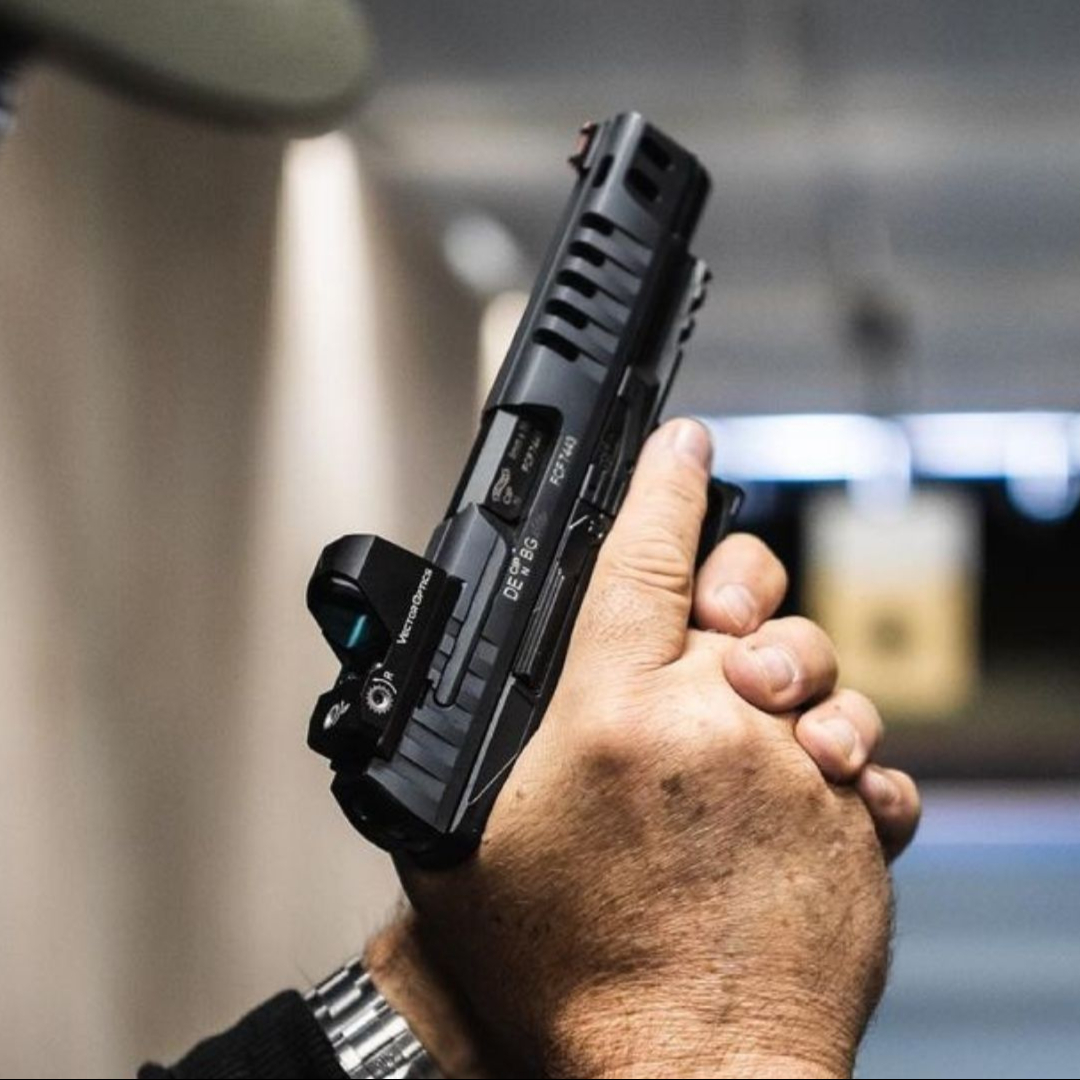
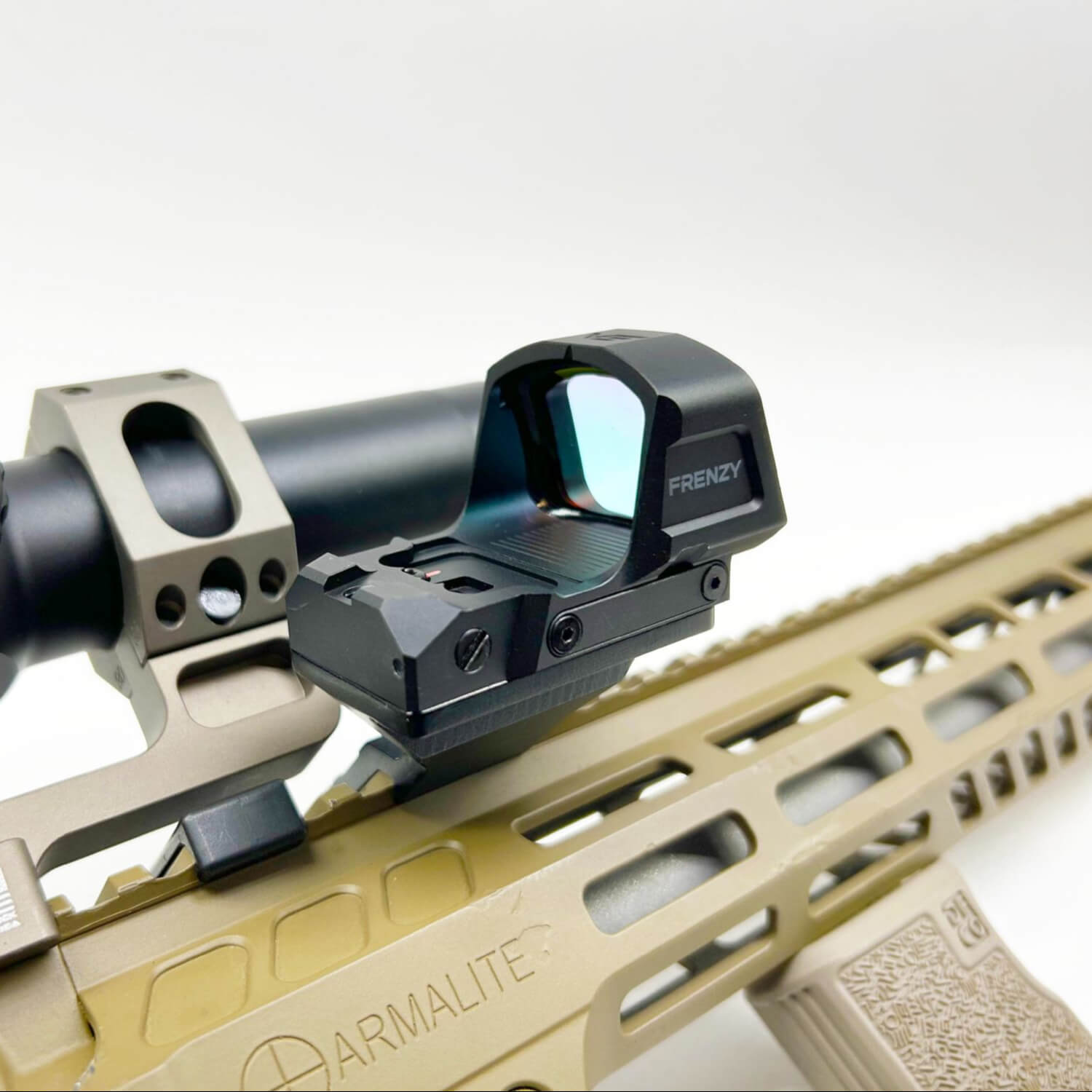
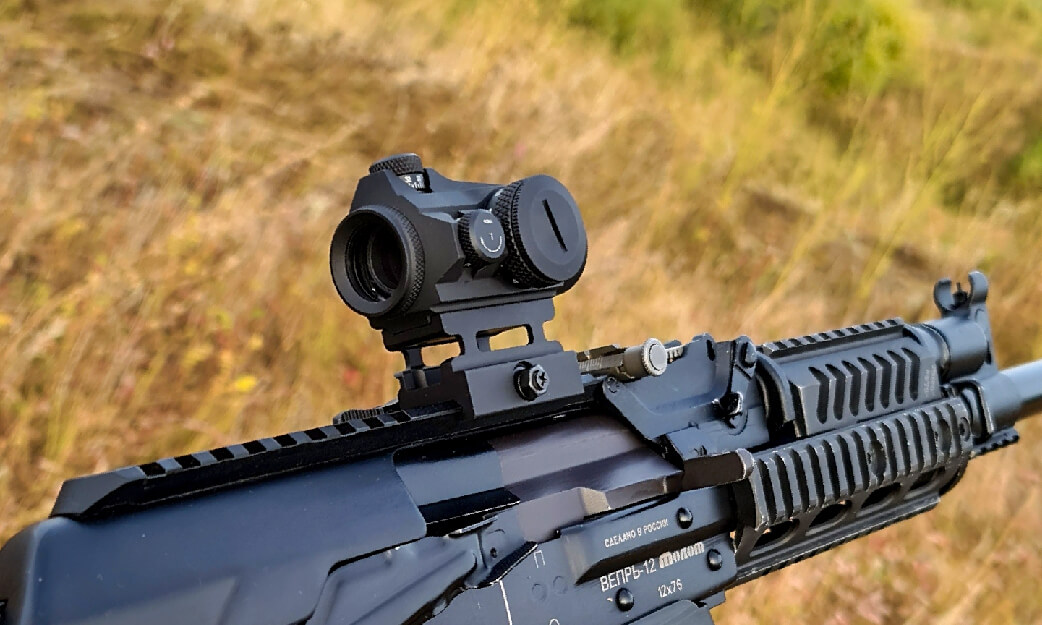
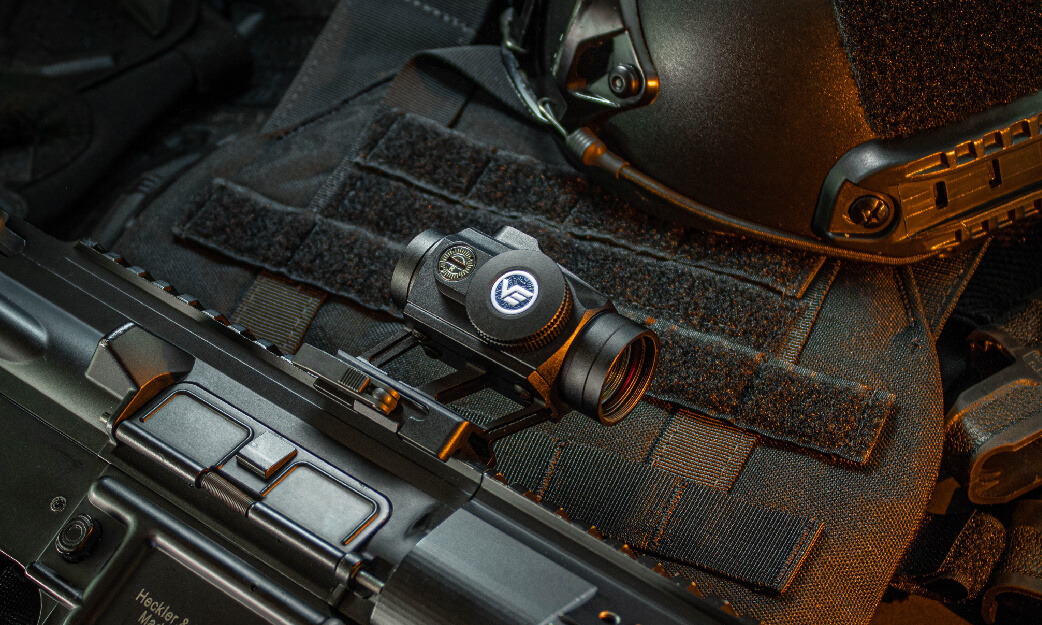
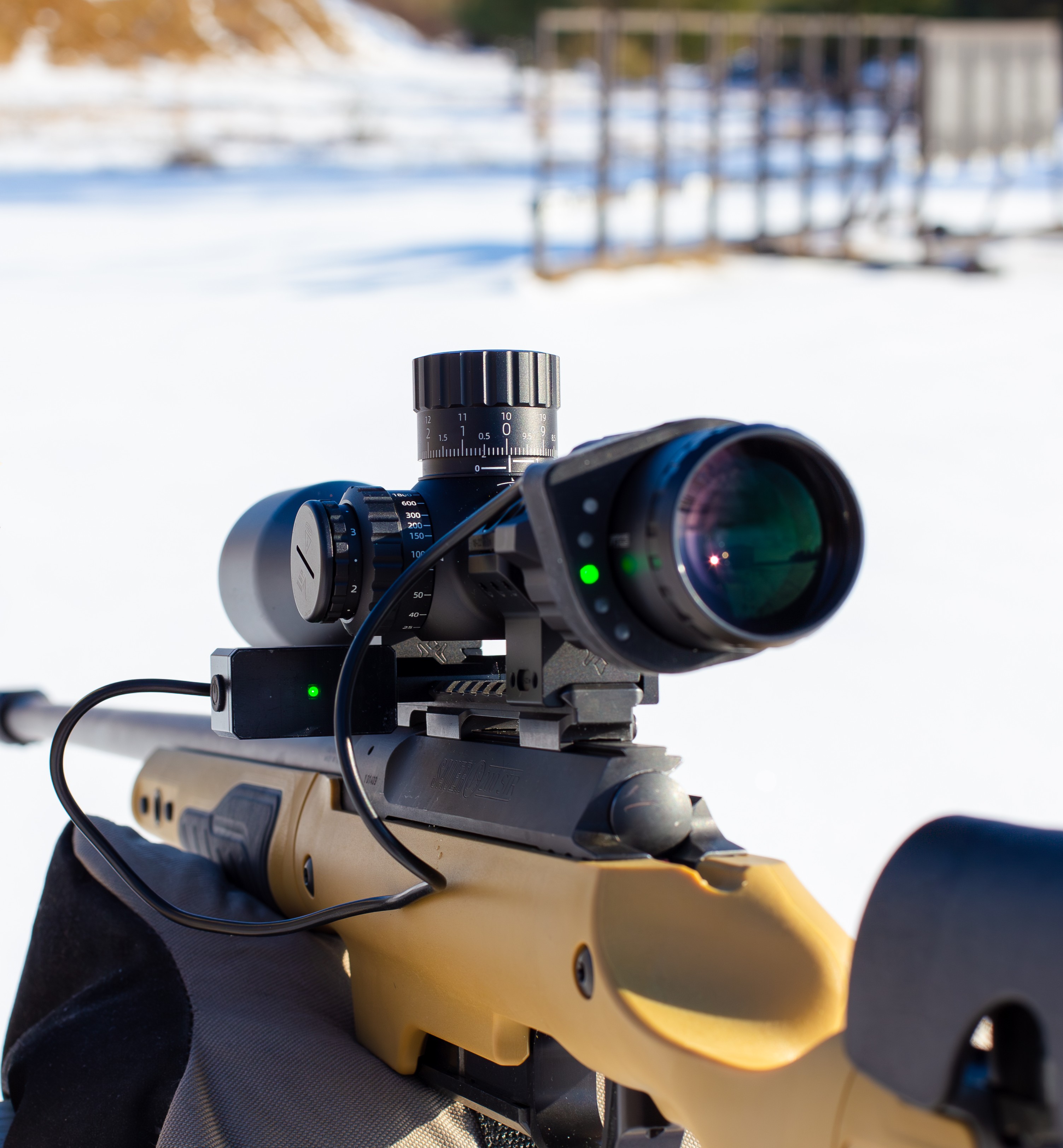
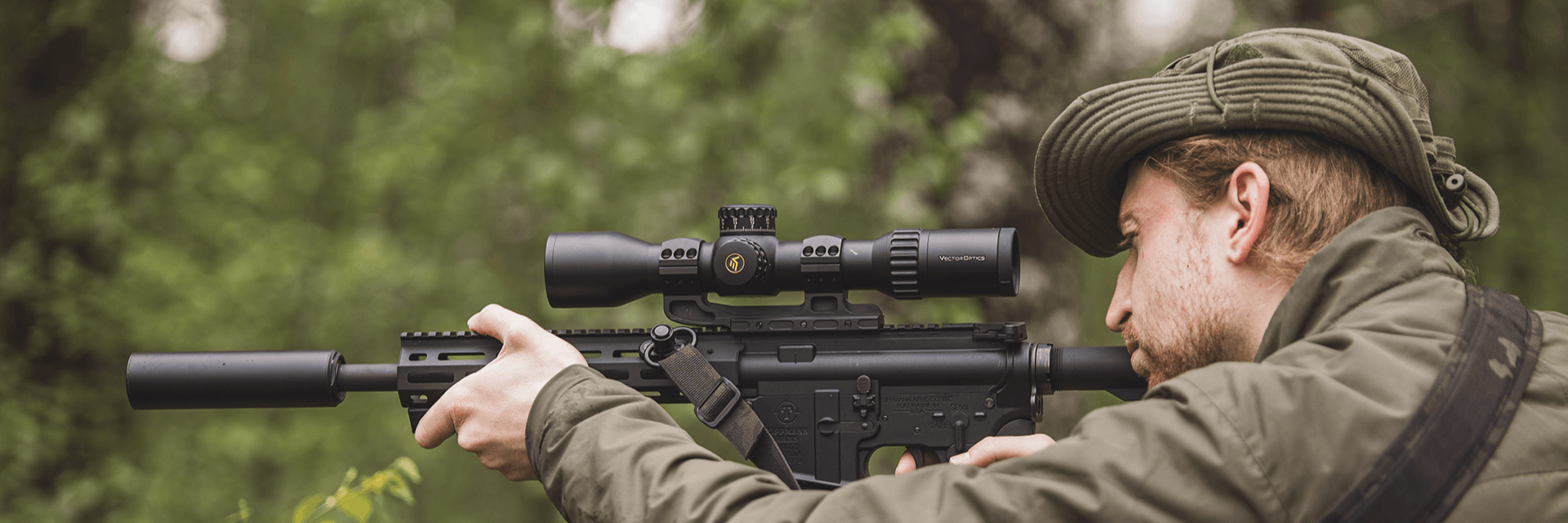
A prism scope is a compact fixed-magnification optic that uses an etched reticle system inside a prism instead of a traditional reflex lens system. As we discussed in our previous comparison, prism scopes outperform red dots in several ways, particularly for shooters with astigmatism. They combine the benefits of both traditional rifle scopes and red dot sights—offering a compact size, rugged durability, edge-to-edge image clarity, and a crisp, sharp reticle.
Prism scopes are highly versatile, making them suitable for various firearm platforms and a wide range of shooting scenarios.
1. How Do 1x, 3x, and 4x Prism Scopes Compare?
In this article, we will compare 1x, 3x, and 4x prism scopes, along with their ideal use cases and application scenarios.

2. When Should You Use a 1x Prism Scope?
We typically recommend using a 1x prism scope for shooting within 100 yards, and no more than 400 yards. Most reticle designs for 1x scopes are optimized for close-range engagements, particularly within 100 yards.
For home practice, distances beyond 100 yards are often impractical. A 1x prism scope is also a great choice for backyard varmint hunting, such as targeting coyotes and other small pests.

3. When Should You Choose a 3x or 4x Prism Scope?
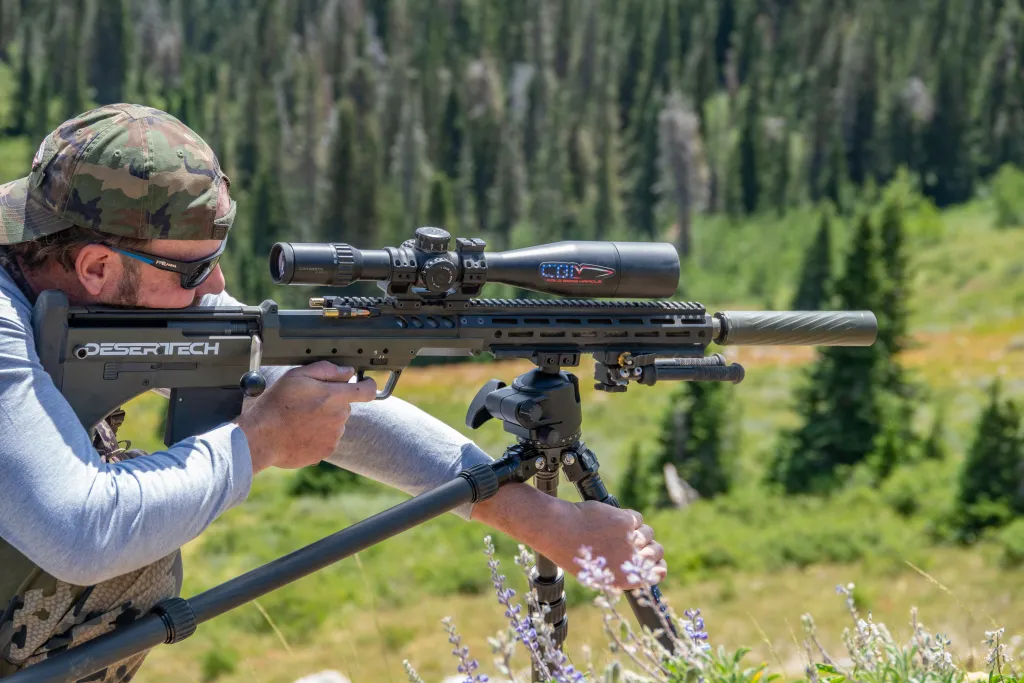
When it comes to 3x or 4x prism scopes, we recommend them for mid-range shooting and small game hunting.
Specifically, a 3x prism scope is one of the most popular fixed magnification optics for AR-15 platforms because it provides a balance between close-range speed and mid-range target identification.
A 4x prism scope is better suited for shooters who need more target identification capability at medium distances while still keeping a compact optic setup.
And here is a comparison table for your better understanding of the difference among 1x, 3x, 4x prism scope:
Magnification | Best for | Distance | Advantage |
1x Prism Scope | CQB, PCC, defensive shooting | 0-100 yards | Fast target acquisition |
3x Prism Scope | AR-15 general purpose | 100-300 yards | Best balance |
4x Prism Scope | Hunting, precision shooting | 200-400 yards | More target detail |
If you're interested in learning more about prism scopes in general, be sure to check out our previous blog post "Why Choose Prism Scope".
In this section, we'll introduce the reticle designs used in prism scopes and explain how to use them effectively.
4. What Is the VEPS-MBR Reticle?
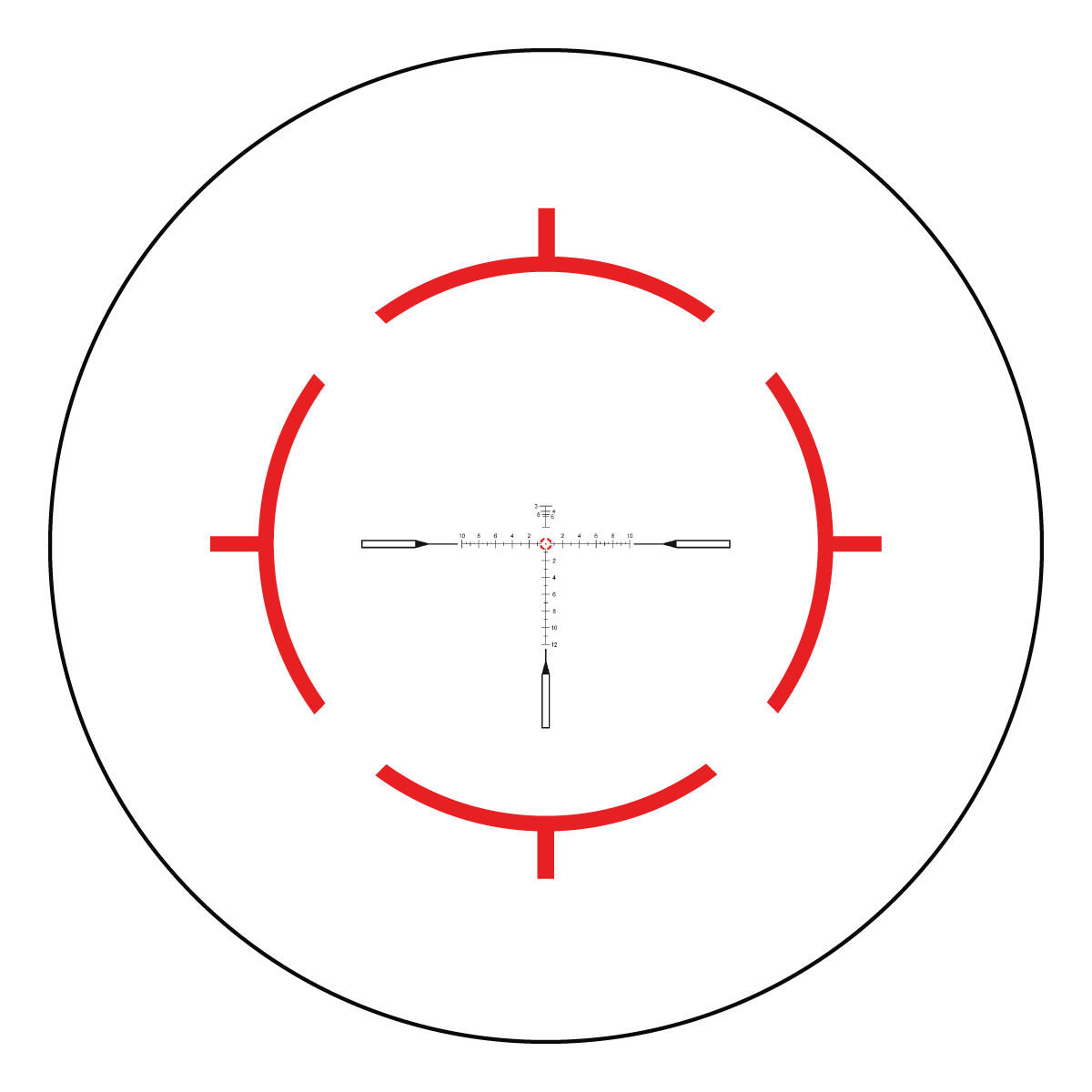
The reticle is specifically calibrated for 5.56x45mm / .223 Remington 55gr FMJ ammunition, zeroed at 50 yards. It features holdover marks out to 600 yards, enabling fast and accurate target acquisition at extended distances using the built-in BDC (Bullet Drop Compensation) system.
For rapid and precise target acquisition, refer to the user manual for detailed instructions on using the BDC (Bullet Drop Compensation) system. The reticle includes labeled aiming points—A, B, C, and D—corresponding to 300, 400, 500, and 600 yards respectively, and is calibrated for common calibers such as .223, .308, and .270.

Windage dots are included and are calibrated for a 5 mph crosswind, helping shooters make quick wind adjustments in real-time.
With a 1 MOA center dot, the reticle remains unobtrusive and allows for precise aiming—especially when targeting bullseyes on standard 5 cm diameter targets at distances up to 200 yards.
This reticle is well-suited for dynamic shooting scenarios, combining speed and precision. Understanding MOA (Minute of Angle) is essential for using the reticle effectively. For a detailed explanation, check out our previous blog post: What does MOA mean?

The inner diameter of the reticle ring is 18 MOA, which allows you to estimate target distance based on a standard 18-inch-wide silhouette target (approximately 45 cm in width) at 100 yards.
If the target's width fills the entire ring, the target is about 100 yards away. If half of the target’s width fills the ring, then the target is approximately 50 yards away.

5. Can You Use a Magnifier with a Prism Scope?
Yes, you can use a magnifier with some prism scopes, but compatibility depends on the prism scope design, eye relief, and mounting setup.
A magnifier is typically mounted behind a 1x prism scope (closer to the shooter) to provide additional magnification when needed. This setup allows users to switch between a fast, unmagnified view for close-range shooting and an enlarged view for longer-distance target identification. See this blog to learn more of prism and magnifier combo.
Compared with switching to a dedicated 3x or 4x prism scope, adding a magnifier to a 1x prism scope can be a flexible solution for shooters who want variable magnification without replacing their existing optic.
When using a magnifier behind a prism scope:
A 3x magnifier makes the target appear approximately three times larger.
A 5x magnifier makes the target appear approximately five times larger.
The etched reticle remains unchanged in size, while the target image is magnified.
However, not all prism scopes are ideal for magnifier setups. Users should consider factors such as eye relief, optical clarity, mounting height, and overall length before combining a prism scope with a magnifier.
For shooters who need a lightweight and compact setup, a dedicated 3x or 4x prism scope may still be a better option, while a 1x prism scope with a magnifier provides more flexibility for changing shooting distances.
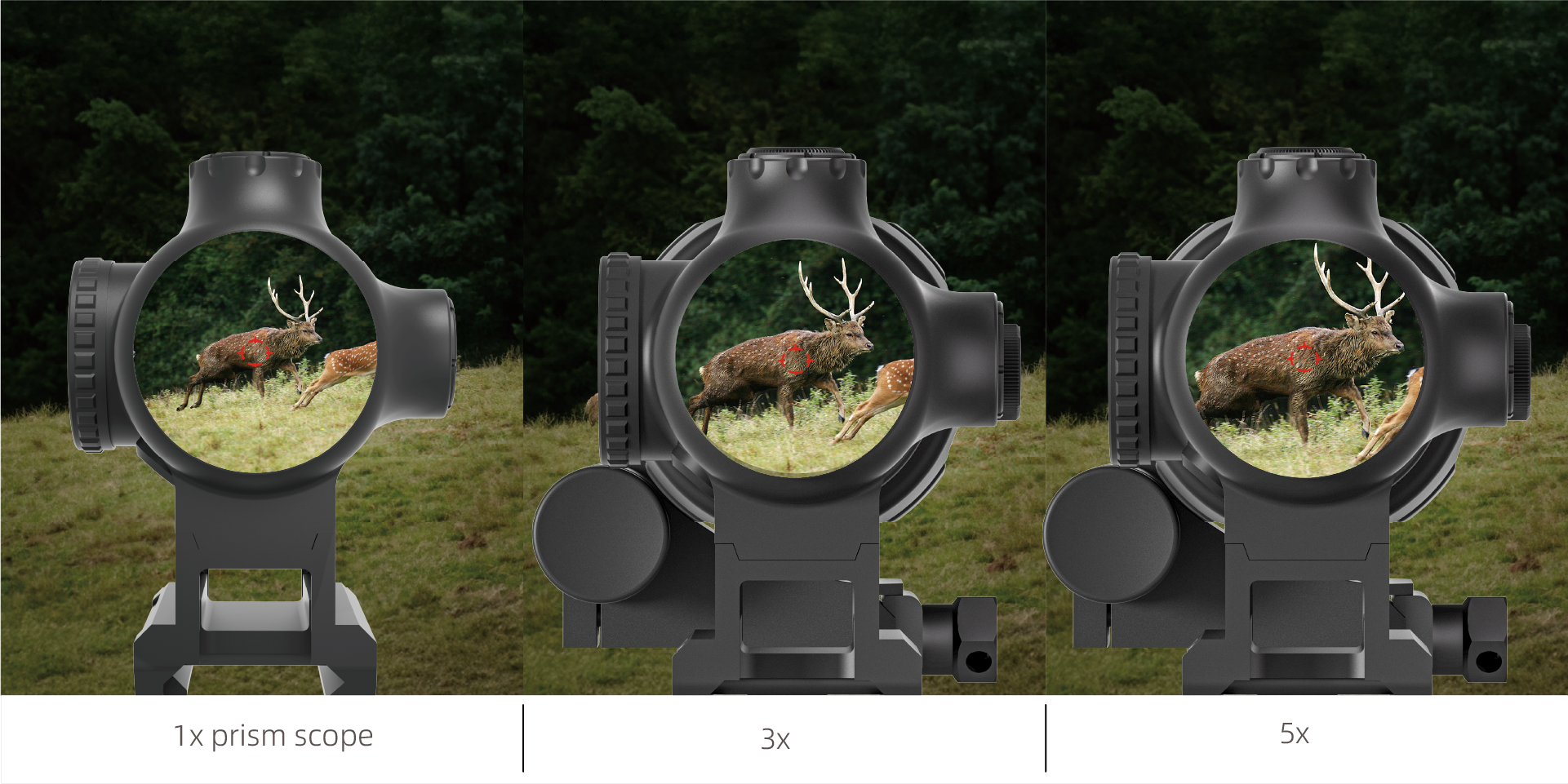
When setting up your prism scope with a magnifier, it’s important to consider the mount height. The center height of both the prism scope and magnifier should be perfectly aligned to ensure a clear and accurate sight picture.
To simplify this process, you can pair your Paragon prism scope with our Paragon magnifier, which is designed for seamless compatibility. We offer two different mount heights for the magnifier to match various prism scope configurations.
Currently, the Paragon magnifier is available in 3x and 5x options (Paragon 3x18 Mini Magnifier SCMF-33 & Paragon 5x30 Mini Magnifier SCMF-34), tailored specifically for use with Paragon prism scopes.
You can still use the center dot for aiming as usual. However, if you want to use the reticle for range estimation while using a magnifier, you’ll need to account for the added magnification.
For example, if you're using a 3x magnifier placed behind the prism scope (closer to your eye), the target image is magnified 3 times, but the reticle size remains unchanged. To correctly estimate range in this setup, you’ll need to divide the apparent measurement by 3. This adjustment ensures accurate distance evaluation using the reticle.
In sum, 1x prism scope is well-suited for close-range shooting (within 100 yards), home defense, or backyard varmint hunting. For mid-range applications and small game hunting, 3x and 4x prism scopes provide enhanced accuracy and longer reach. A 1x prism scope paired with a magnifier offers a budget-friendly solution for you to play with more powers.
FAQ
Q1. Is a 1x prism scope suitable for hunting applications?
Yes, a 1x prism scope can work well for close-range hunting where fast target acquisition matters more than magnification. It is especially useful in wooded areas or brush where engagement distances are short and quick shots are common. However, for mid-range or open-field hunting, higher magnification prism scopes or traditional scopes are usually more practical because they provide better target detail and identification at distance.
Q2. Will adding a magnifier affect field of view?
Yes, adding a magnifier reduces your field of view because it zooms in on the center image. This makes the target appear larger but also limits peripheral vision, which can reduce situational awareness compared to using a standalone 1x prism scope. As a result, shooters may find it slightly slower to track moving targets or transition between multiple targets when a magnifier is in use.
Q3. Can I put a magnifier on a prism scope?
Yes, most 1x prism scopes can work with a magnifier as long as the optical height and alignment are compatible. Proper alignment is important to avoid distortion or eye box issues, so matching mount height is key. While it is possible, some shooters still prefer using a dedicated red dot with magnifier instead, since it usually offers a more forgiving eye relief and wider compatibility.
Q4. Is a 1x prism scope better than a red dot?
It depends on your shooting needs. A 1x prism scope offers an etched reticle that remains visible without illumination and can be a better option for shooters with astigmatism. A red dot sight provides a simpler aiming experience with unlimited eye relief and faster target acquisition for close-range shooting. If you want to learn more, please click here.
Q5. Is a 3x prism scope enough for 300 yards?
Yes. A 3x prism scope can be effective at 300 yards, especially for AR-15 and general-purpose shooting. It provides a good balance between target identification, magnification, and a wide field of view, while a higher magnification optic may be better for longer-range precision shooting.
Q6. Is a Prism Scope better than an LPVO?
It depends on your shooting needs. A prism scope is typically lighter, more compact, and offers a simple fixed magnification setup with an etched reticle, making it ideal for shooters who prioritize speed and reliability. An LPVO (Low Power Variable Optic) provides adjustable magnification, making it more versatile for users who need both close-range and longer-distance capability.
For general-purpose AR-15 setups, a 1x or 3x prism scope is a great choice for fast target acquisition and simplicity, while an LPVO is better suited for shooters who need flexible magnification across different distances. If you want to know more about how to choose between prism scope and LPVO, read this blog.