Concealed carry is about building a safe, comfortable, and effective everyday defense setup. From choosing the right handgun to understanding optics, holsters, and carry positions, every detail matters. This guide covers the essentials to help you make informed decisions for real-world carry.
1. What is Concealed Carry?
Concealed carry refers to the practice of carrying a concealed carry handgun on your person in a way that is not visible to others. For most law abiding citizens, this means to carry their chosen firearm in an inside the waistband holster with a shirt or other garment overtop.
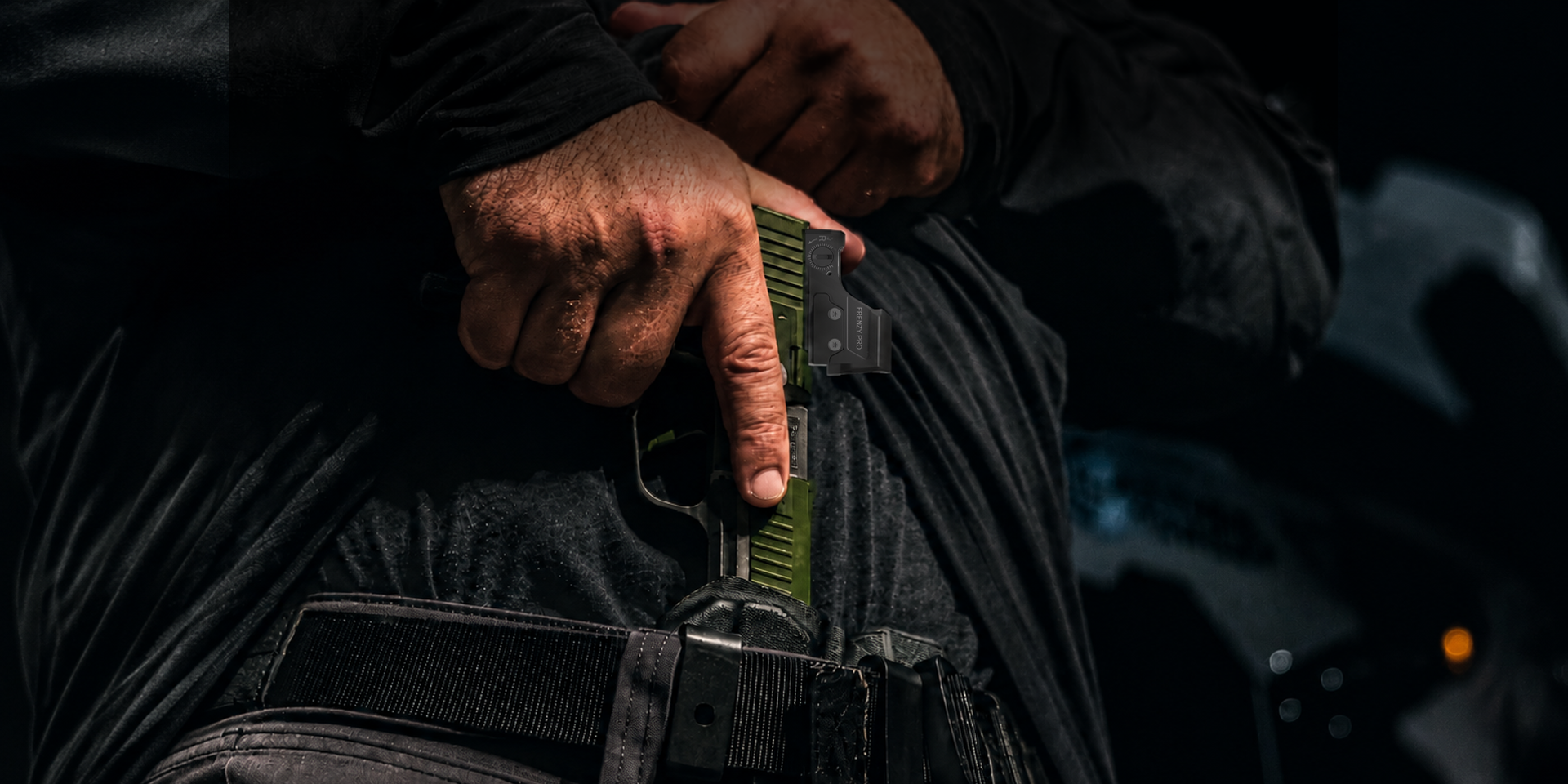
To legally carry a concealed firearm in many regions, you typically need a concealed carry permit, which confirms that you have met local training and legal requirements.
People choose concealed carry for personal defense, everyday convenience and preparedness. Popular choices include compact and subcompact pistols often considered among the best concealed carry guns, such as the Glock 19, SIG Sauer P365, Glock 43, and Smith & Wesson M&P Shield.
2. Why More Concealed Carry Pistols Are Moving to Red Dots?
Traditionally, pistols relied on iron sights, which require shooters to align the rear sight, front sight, and target before taking a shot.
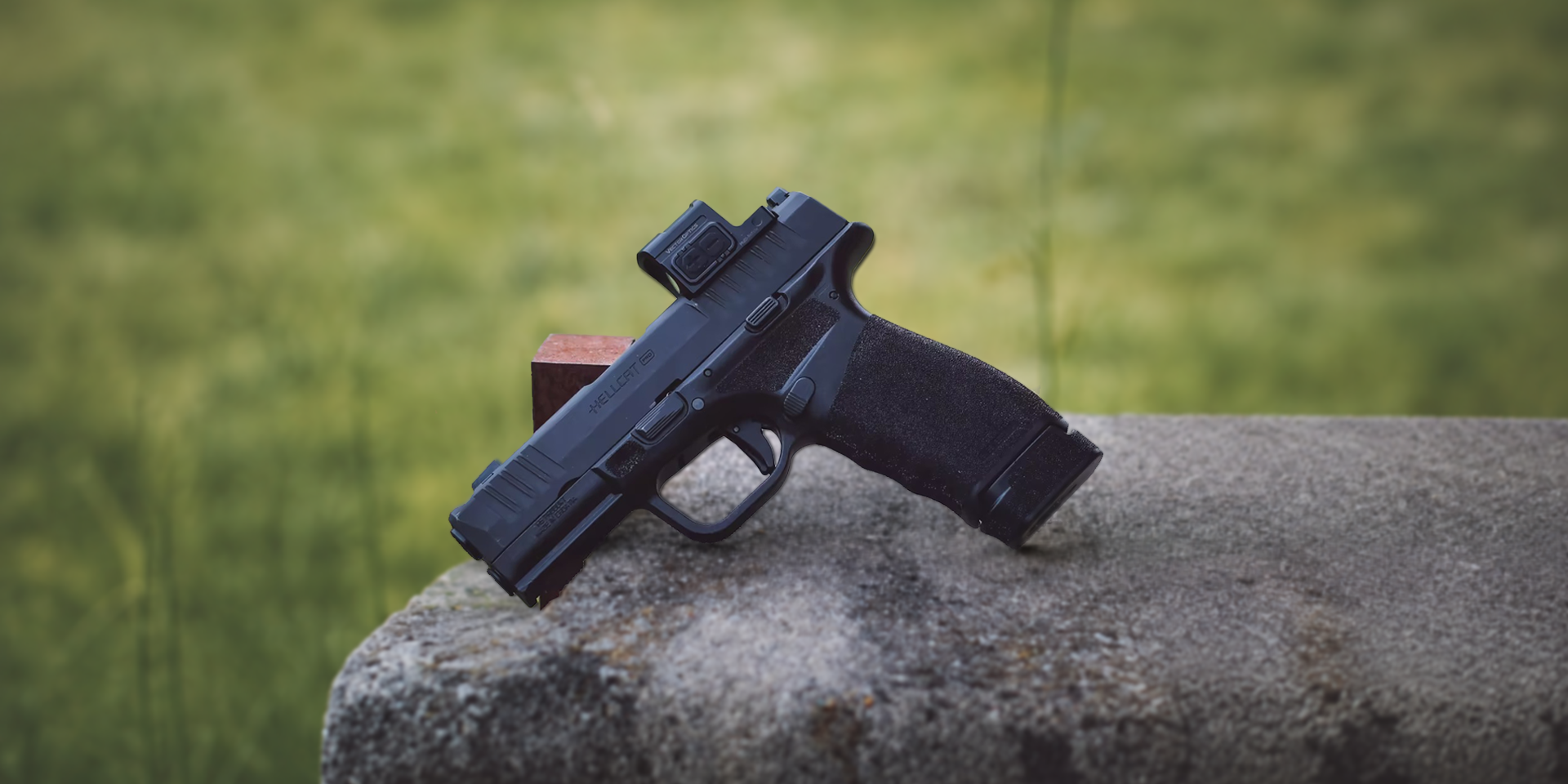
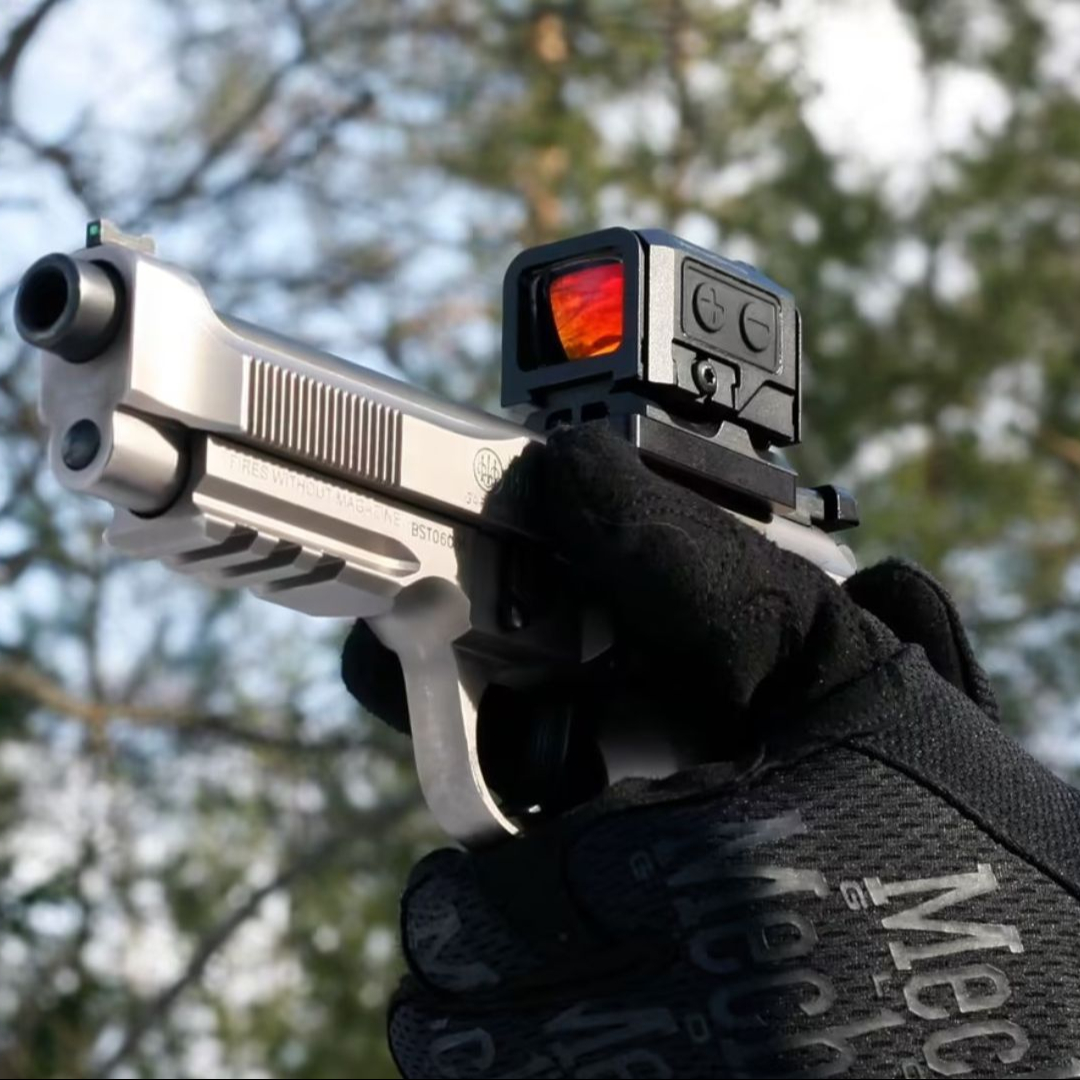
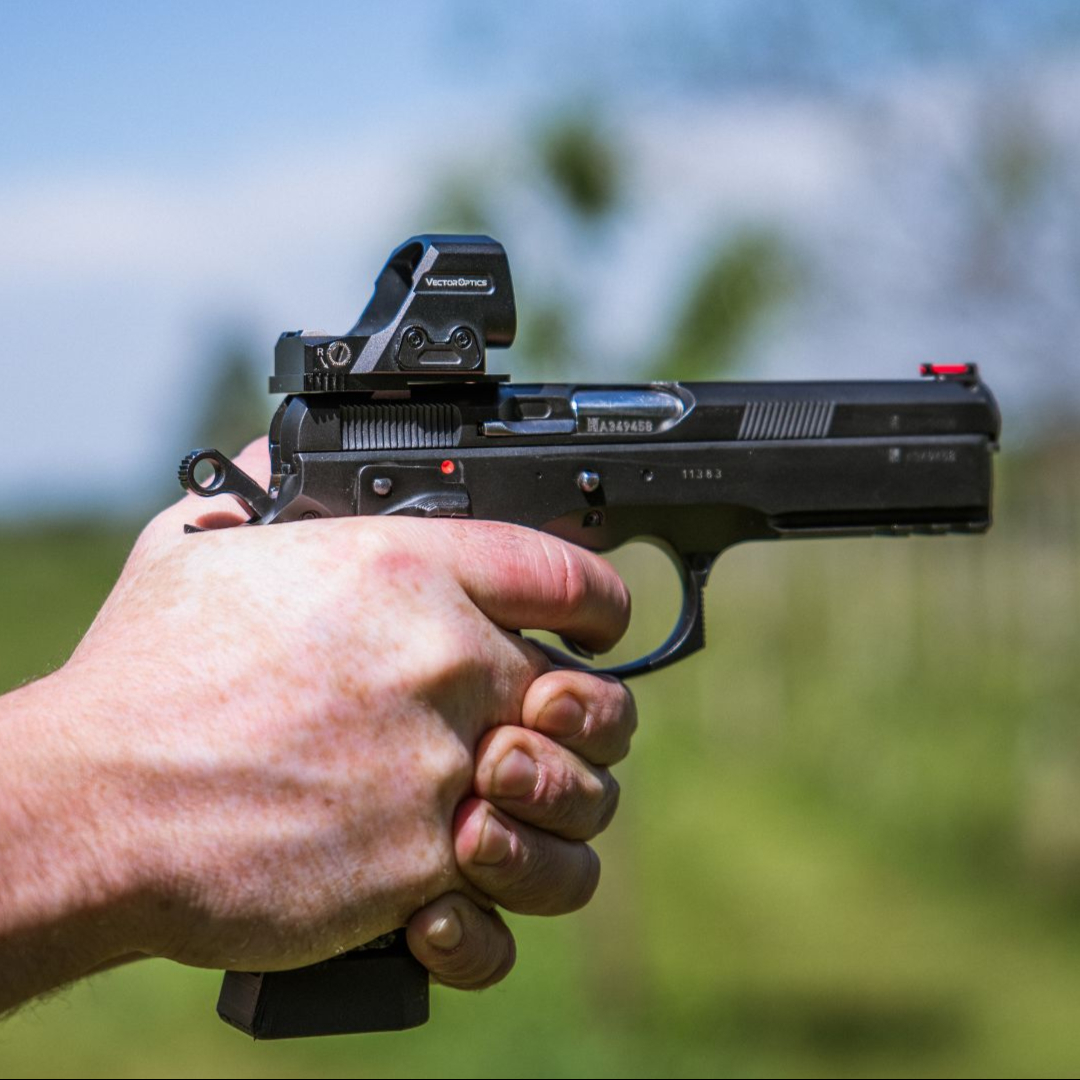
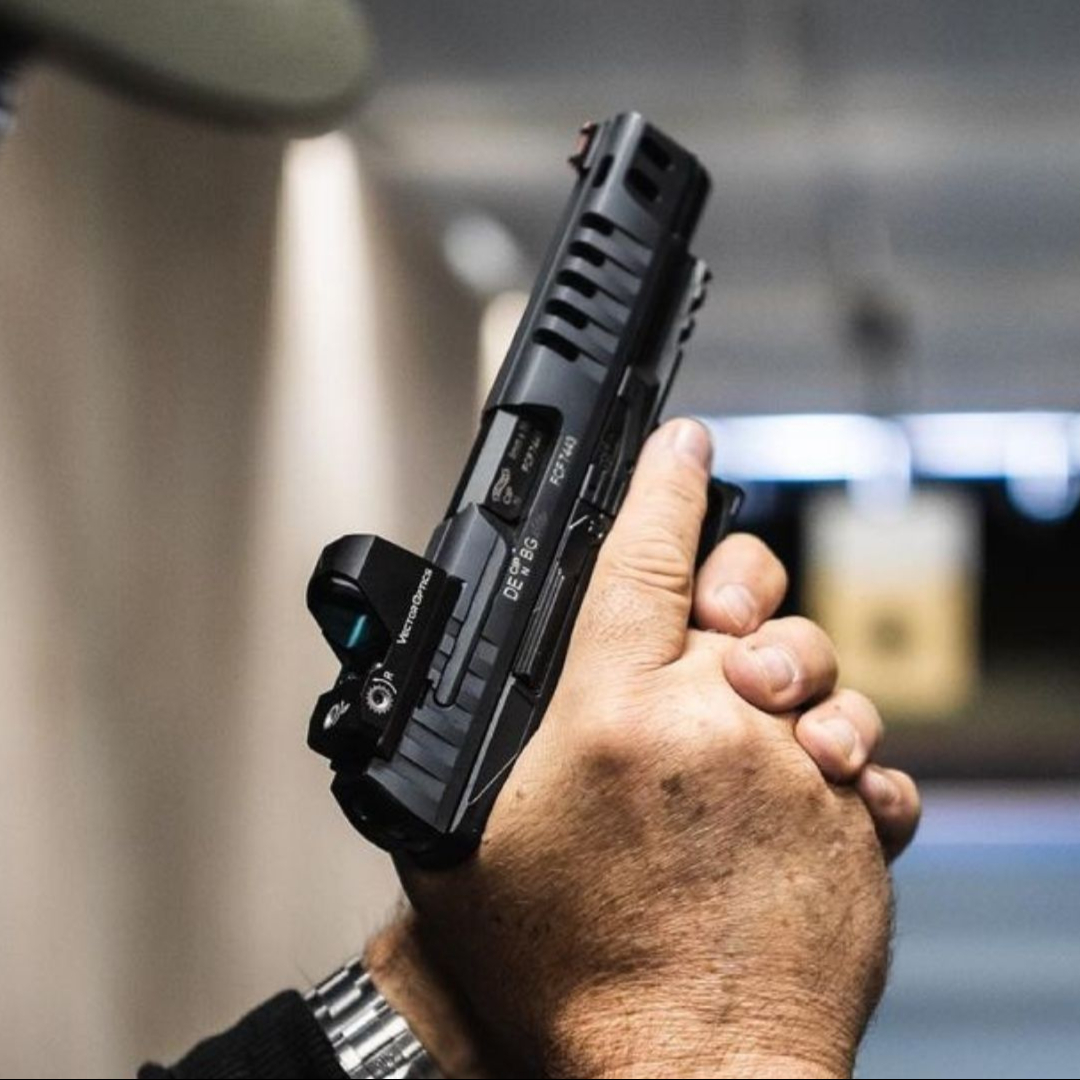
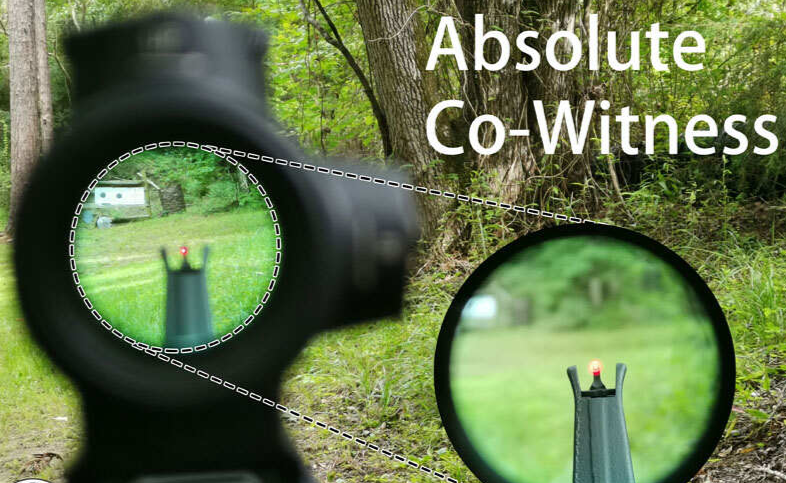
Today, many shooters prefer a concealed carry red dot (pistol optic), which simplifies the aiming process with a single aiming point. By making both-eyes-open shooting easier, a red dot helps users maintain target focus, acquire sights faster, and stay more aware of their surroundings in defensive situations.
3. How to Choose a Concealed Carry Red Dot?
Choosing the best concealed carry red dot depends on your firearm, use case, and personal preference. Here are the most important factors:
3.1 Dot Size (MOA)
3.1.1 2–3 MOA (Micro Dot)
● Precision shooting
● The most versatile reticle size
● Slower than larger dots for some shooters
3.1.2 6 MOA or larger
● Faster to pick up
● Better optimized for close distance shooting
● Slightly less precise at distance
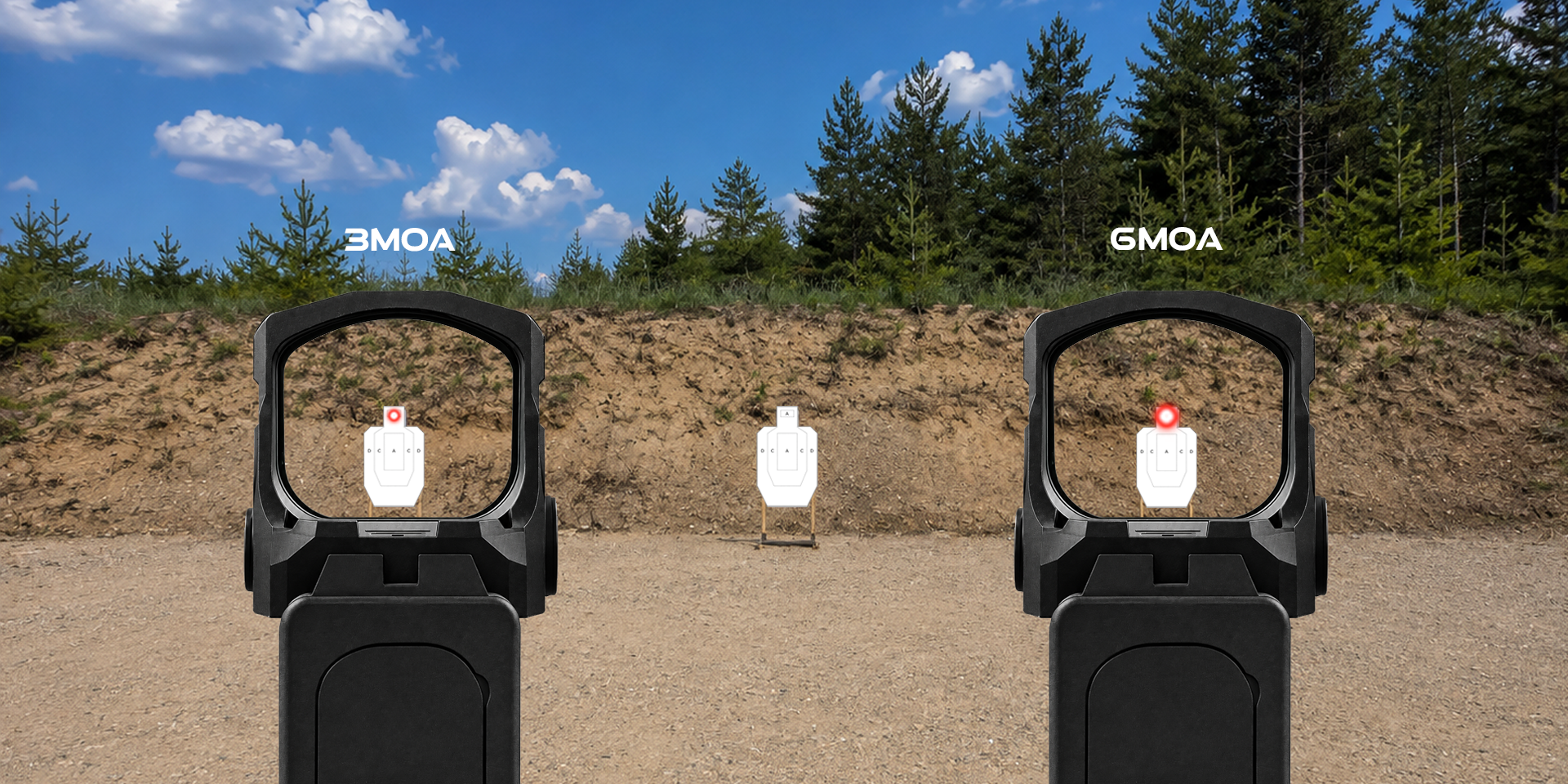
Want to compare dots, circles, crosshairs, and multi-reticle systems? Read our Red Dot Reticle Types Explained for a detailed breakdown.
For most users, a 2–3 MOA dot is the best balance for concealed carry optics. However, shooters with astigmatism may find that a small dot appears like a starburst, comet, or blurry cluster. For some, a larger 6 MOA dot is easier to recognize than a distorted 2 MOA dot, although individual results can vary.
Brightness also affects the perceived dot size. Turning up a 2–3 MOA dot can create a slight bloom, making it appear larger and easier to acquire. A 6 MOA dot, however, cannot be made smaller. This flexibility makes 3 MOA a versatile choice for concealed carry optics.
3.2 Window Size: Micro vs Standard vs Large Optics
When choosing a red dot for concealed carry, window size is not only about how easy the dot is to find. It also affects how the pistol carries, how well it conceals, and whether the setup fits your holster.
A larger window can make dot acquisition faster and more forgiving, especially during range practice or competition-style shooting. However, for everyday concealed carry, a bigger optic is not always better.
Large-window pistol optics may extend wider than the slide, increase overall height, create more printing under clothing, and interfere with some fully enclosed or tight-fitting concealed carry holsters. For daily carry, these trade-offs matter.
This is why concealed carry optics usually prioritize a compact, low-profile design. The goal is to keep the pistol easy to conceal, comfortable to carry, and fast enough to acquire under practical defensive distances.
3.2.1 Micro / Compact Optics
Micro and compact optics are usually the best fit for everyday concealed carry pistols.
They help reduce bulk, minimize printing, and work better with slim carry guns such as the SIG Sauer P365, Glock 43X, Glock 48 MOS, Springfield Hellcat, and similar compact platforms.
Benefits:
● Minimal printing
● Direct mount capabilities
● Simplistic design for the end user
● Motion sensor features
Trade-off: Smaller sight picture
Recommended Compact Red Dot Sights for Concealed Carry:
● Frenzy FA 17x20 Red Dot Sight Aspheric Lens EDC (SCRD-68)
● Frenzy FA 17x20 Red Dot Sight MRT Aspheric Lens EDC (SCRD-M68)
● Frenzy FA 17x20 GMR Green Dot Sight EDC (SCRD-GM68)
● Frenzy FA 17x21 GenII Red Dot Sight (SCRD-73)
3.2.2 Standard-Size Optics
Standard-size pistol optics offer a larger viewing window for a clearer sight picture while still remaining practical for many carry setups.
They can make the dot easier to pick up than ultra-micro optics, but they must still be evaluated carefully for slide width, optic height, and holster compatibility.
Best for:
● Compact duty/carry pistols (such as Glock 19-size pistols)
● Balancing target acquisition with minimal printing
● Multi-purpose weapon systems
Trade-off:
May create more printing than micro optics.
Recommended Standard-Size Red Dot Sights for Concealed Carry:
● Frenzy FLEX 19x28 GenII Red Dot Sight (SCRD-64)
● Frenzy FLEX 19x26 SMR GenII Solar Power Multi-Reticle Red Dot Sight (SCRD-SM64)
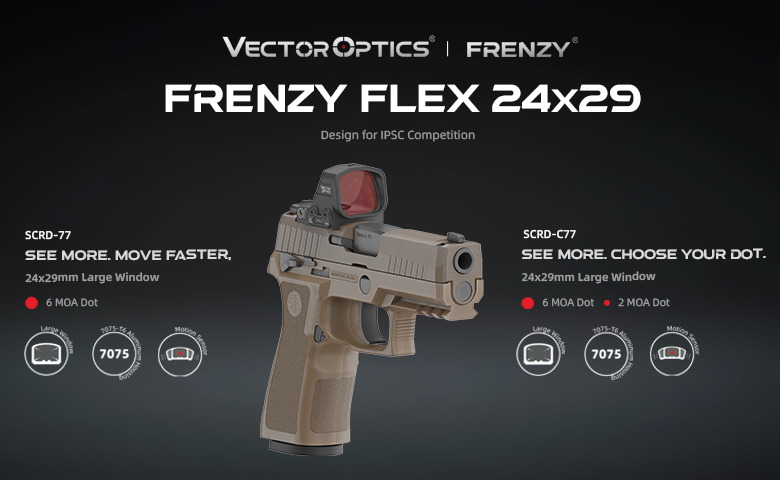
3.2.3 Competition / Large-Window Optics
Large-window optics are excellent for fast dot acquisition, recoil tracking, and competition-style shooting.
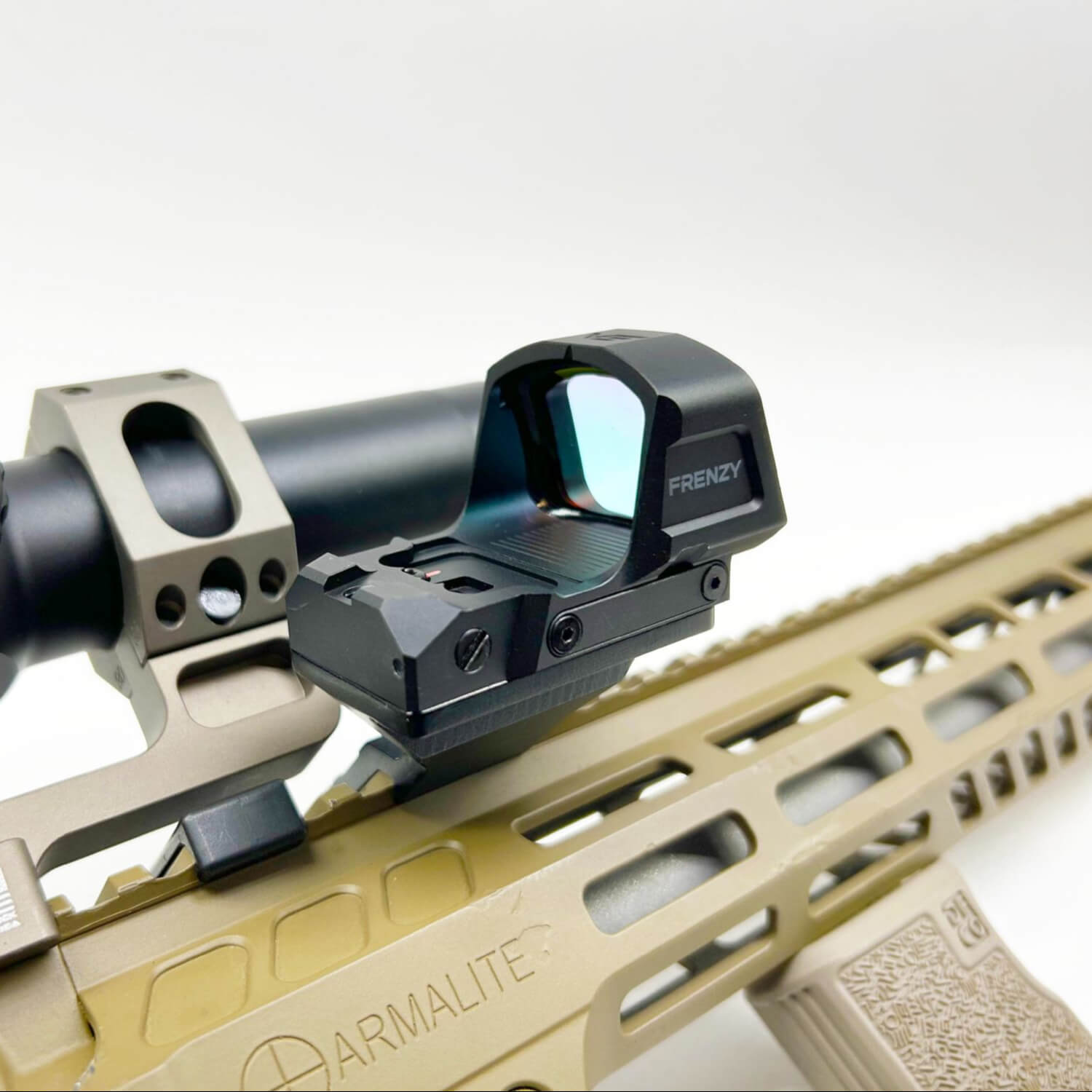
However, they are usually not the first choice for daily concealed carry. Their wider body and taller lens profile may extend beyond the slide, increase snagging risk, print more clearly under clothing, and fail to fit some enclosed or tight concealment holsters.
For this reason, large-window optics are generally better suited for:
● Competition
● Range training
● Home defense pistols
● Full-size pistols
● Open carry or duty-style setups
Trade-off:
Faster dot pickup, but reduced concealability and more holster limitations.
Key idea:
● Micro / Compact = concealment first
● Standard / Full-size = speed and usability first
● Competition/ Large Window = best for range
For concealed carry, the best red dot is not always the largest window. It is the optic that balances visibility, slide fit, holster compatibility, and daily comfort.
3.3 Durability and Glass Quality
A good concealed carry optic must withstand:
● Recoil
● Drops and impacts
● Daily carry wear
High-quality glass improves clarity, especially in bright sunlight or low light, and is essential for any serious concealed carry guns setup.
3.4 Battery Life and Reliability
Modern optics are designed for long-term use with features that improve reliability and convenience:
● Long battery life, often measured in years
● Motion sensor feature that extend runtime
● Side-loading battery trays for easier replacement without re-zeroing
● Solar backup power for additional reliability in suitable lighting conditions
● Shockproof and waterproof construction for dependable everyday carry performance
These small details matter for everyday reliability in a concealed carry holster setup.
Some of the most trusted concealed carry optics include the Trijicon RMR Type 2, known for its exceptional durability, the Holosun 507K X2, favored for its compact size and feature-rich design, and the EOTech EFLX, appreciated for its large viewing window and intuitive sight picture.
If you're looking for an alternative, the Vector Optics Frenzy FA 17x20 EDC (SCRD-68) is also well suited for concealed carry. Its compact, low-profile, 26g (0.92oz) design helps reduce printing and snagging, while the 3 MOA dot offers a good balance of speed and precision. Combined with motion-sensor technology, an MGT footprint (Compatible with RMSc), a side-loading battery, and an IP67 waterproof rating, it delivers many of the features concealed carriers look for in an everyday-carry optic.
4. Final Thoughts
Concealed carry is not just about choosing a firearm—it’s about building a complete system.
From selecting the best concealed carry gun, to choosing a reliable concealed carry holster, to deciding whether to run a concealed carry with red dot setup, every decision affects performance.
For many shooters today, a modern optic is no longer an upgrade—it is becoming the standard. A well-chosen concealed carry red dot can improve speed, confidence, and accuracy in real defensive situations.
FAQ
Q1. How To Get Your Concealed Carry Permit?
The process varies by state, but it typically involves meeting eligibility requirements, completing any required firearms training, submitting an application, and passing a background check before approval. Some states also allow permitless carry, so always check your local laws. Learn more: USCCA'S guide to getting a concealed carry permit or use their Reciprocity App to check state recognition updates.
Q2. Is a red dot good for concealed carry?
Yes, with proper training. It can improve target focus, speed, and consistency.
Q3. What MOA dot is best for concealed carry?
2–3 MOA offers balance; 6 MOA is faster at close distance.
Q4. Is a smaller optic better for concealed carry?
Smaller optics reduce bulk and printing, but larger windows can make dot acquisition easier.
Q5. Do I need an optic-ready holster?
Yes, a red dot-equipped pistol requires an optic-compatible holster.
Q6. Is the Frenzy FA 17×20 EDC suitable for concealed carry?
Yes, its compact size, low-profile body, 3 MOA dot, motion sensor, RMSc-compatible footprint, and IP67 rating make it suitable for everyday carry setups.