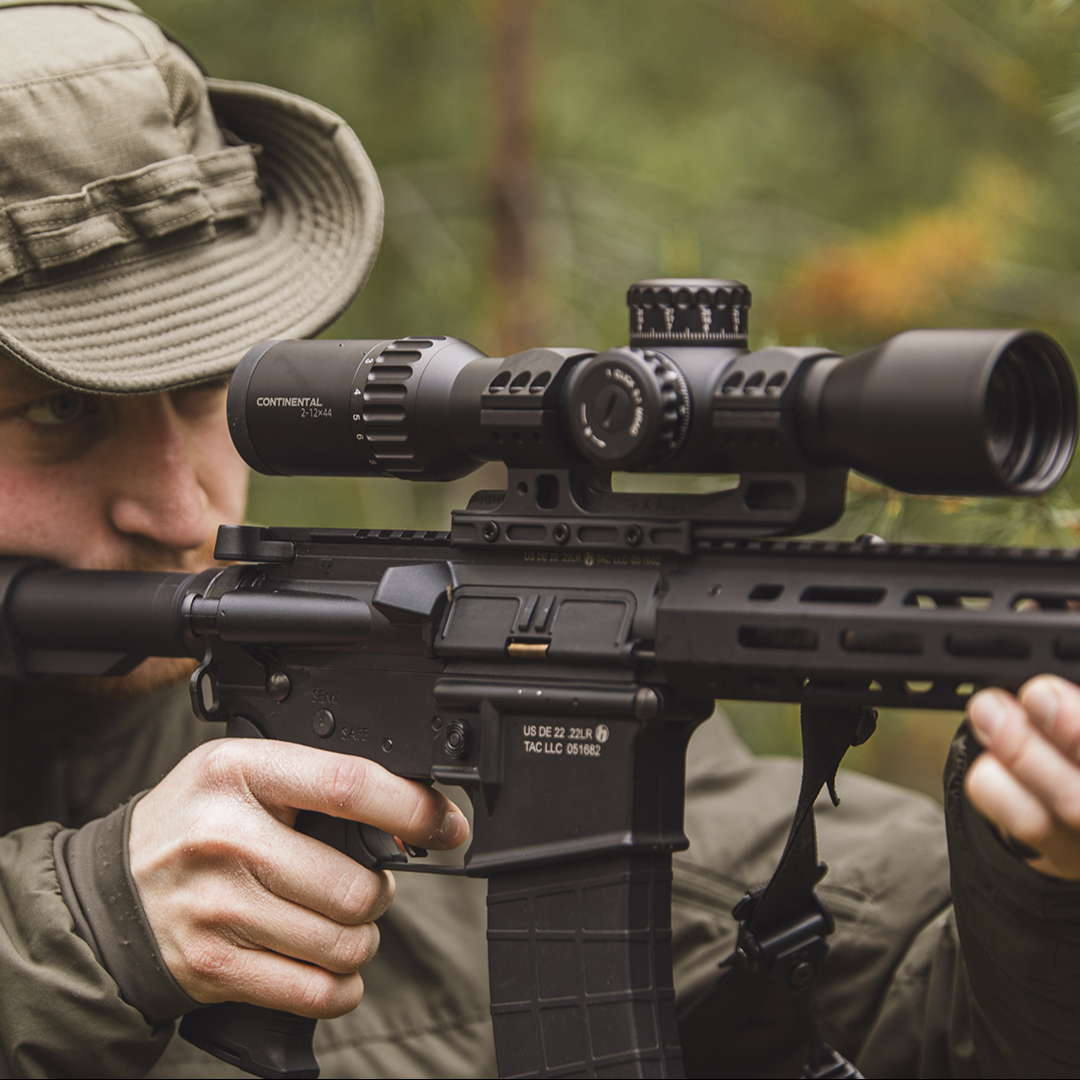
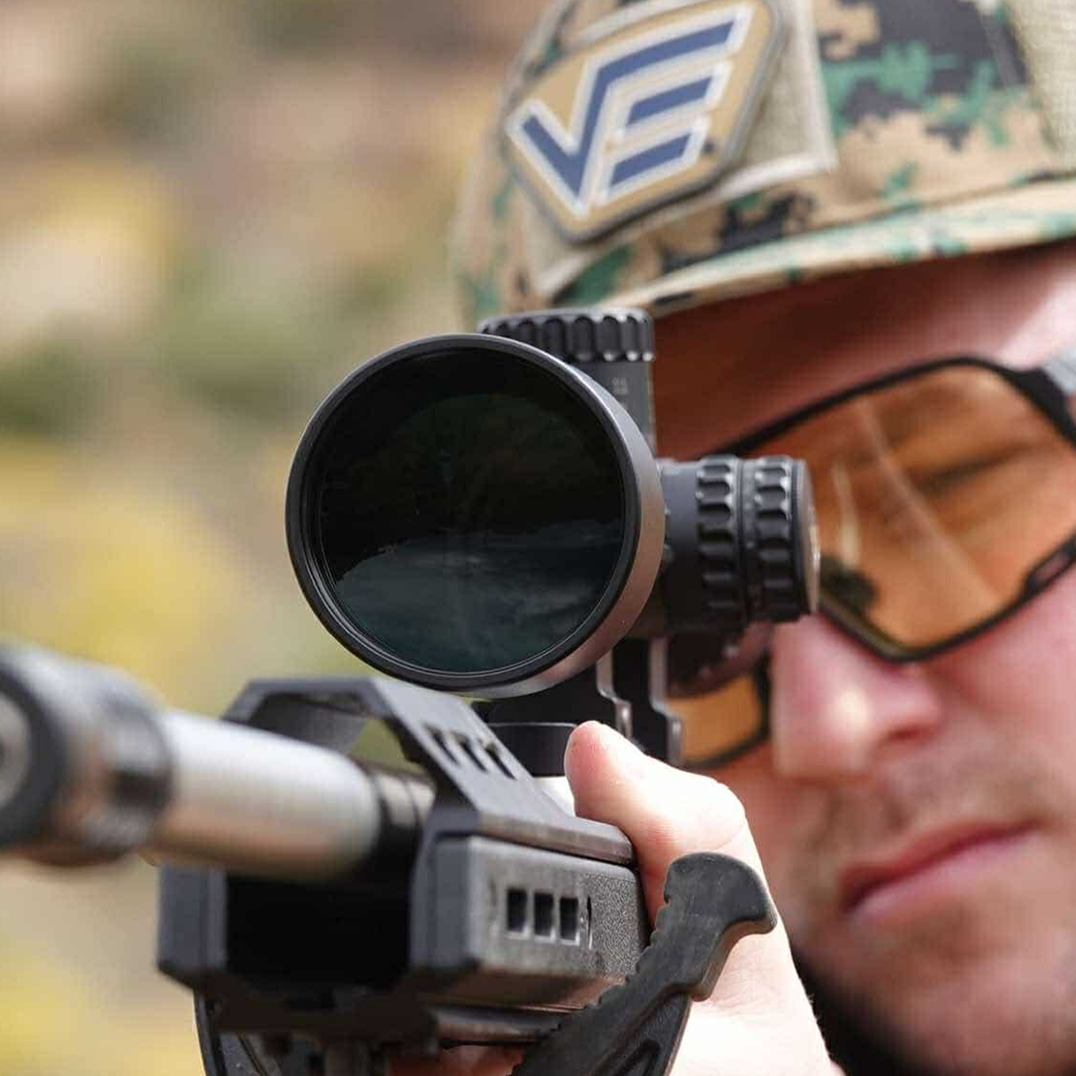
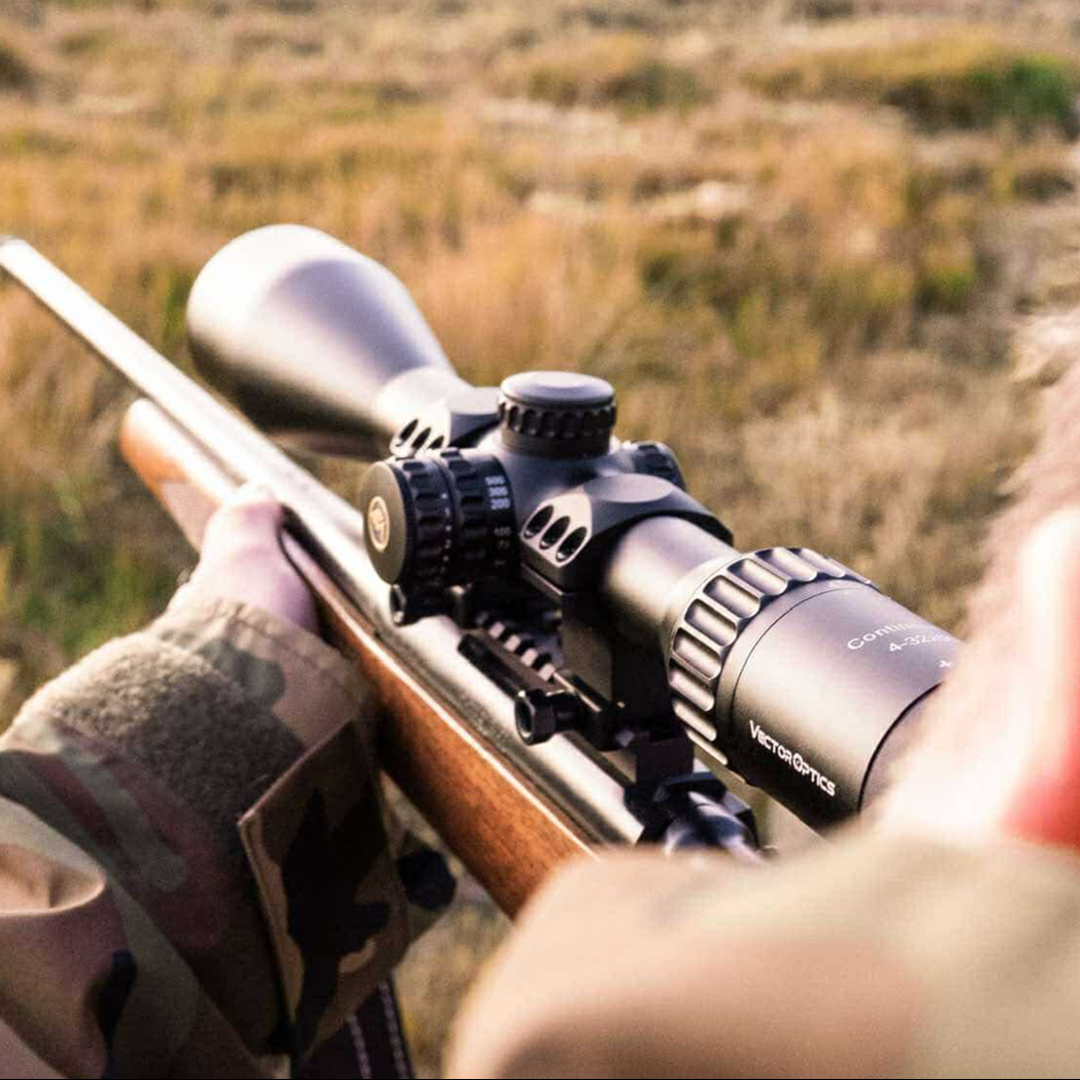
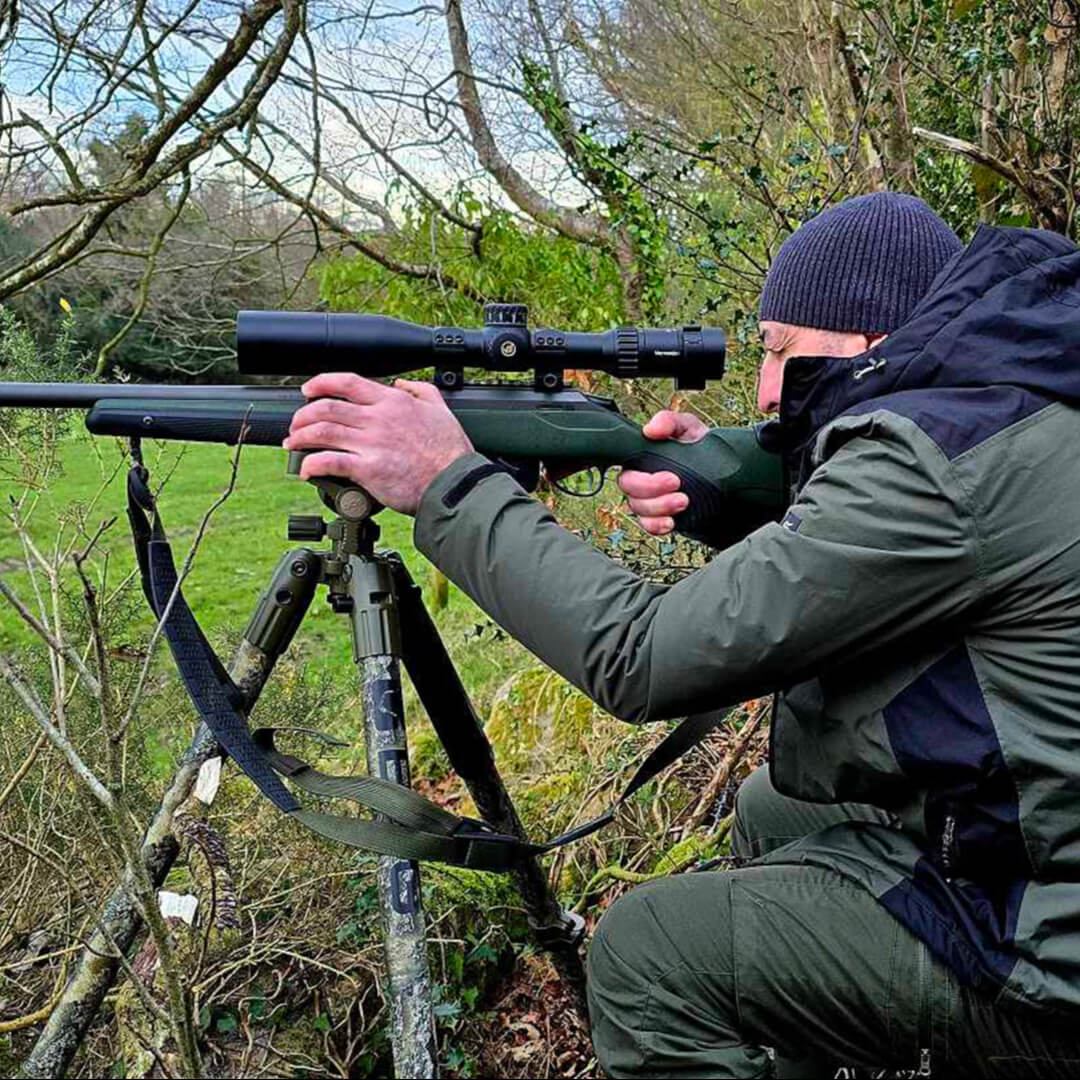
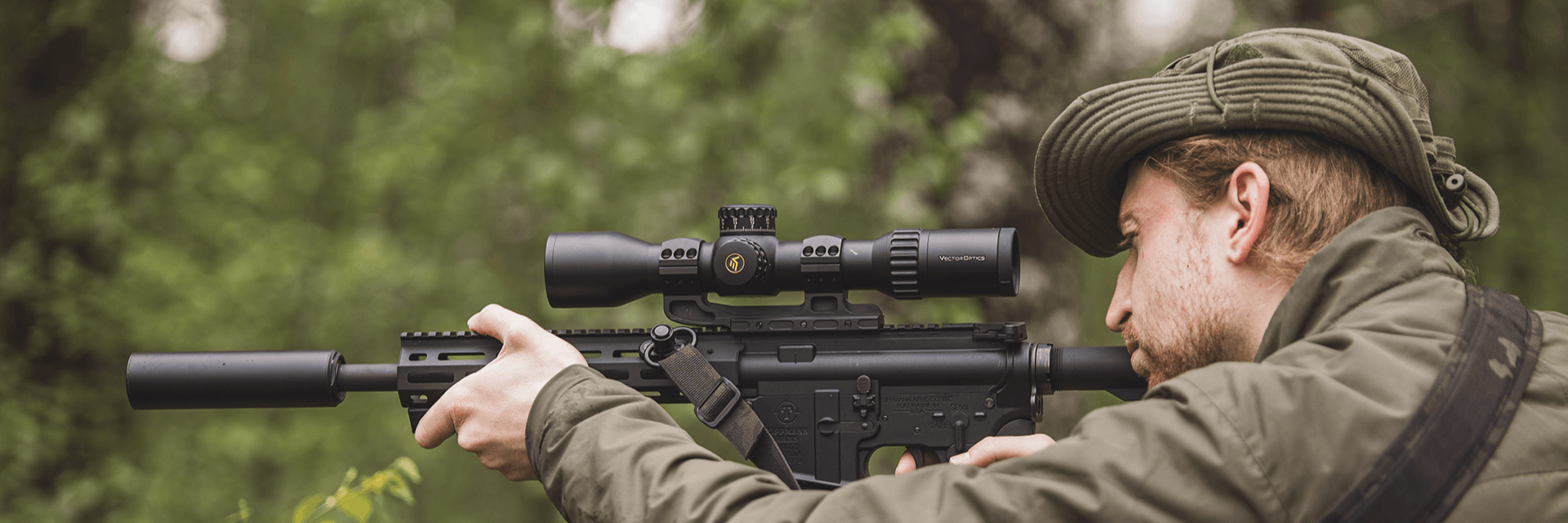
This is a review of Tauron 5-40x56 ED FFP Rifle Scope (SCFF-35) from Pm Alex.
Introduction
I've been using the Tauron 5-40x56 ED FFP for a little over a month now, mounted on a bolt-action rifle in a magnum caliber. During this time, I've tested it at the range, out in the field, and in varying light and temperature conditions. These are my impressions after that period — the good and the areas that could use some improvement.
First Impressions and Mounting
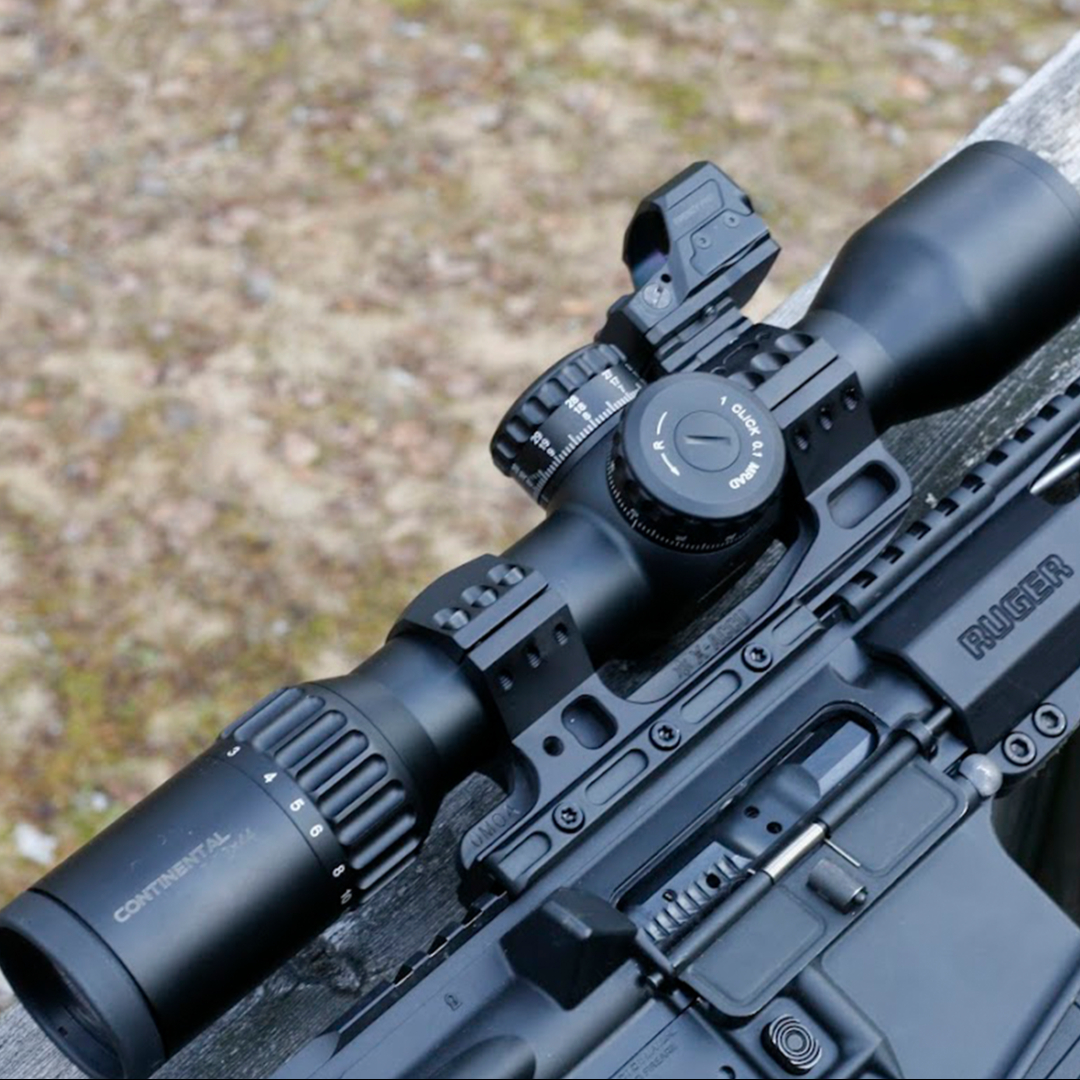
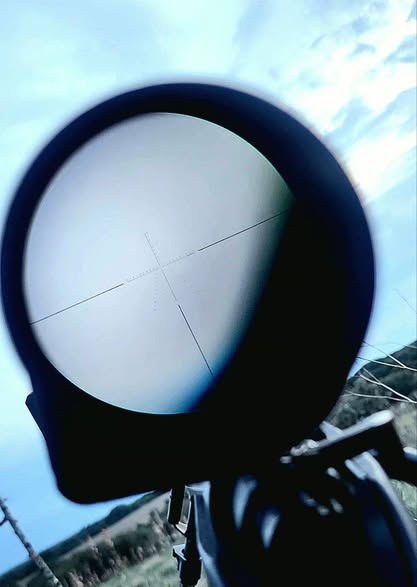
Taking it out of the box, the first thing that caught my attention was that it's not as big as you'd expect from a scope with this kind of magnification range. In fact, placed next to my Continental 5-30x56 SFP, the Tauron is slightly more compact. The design follows the same line as the previous Tauron models I've tested — well packaged and properly protected.
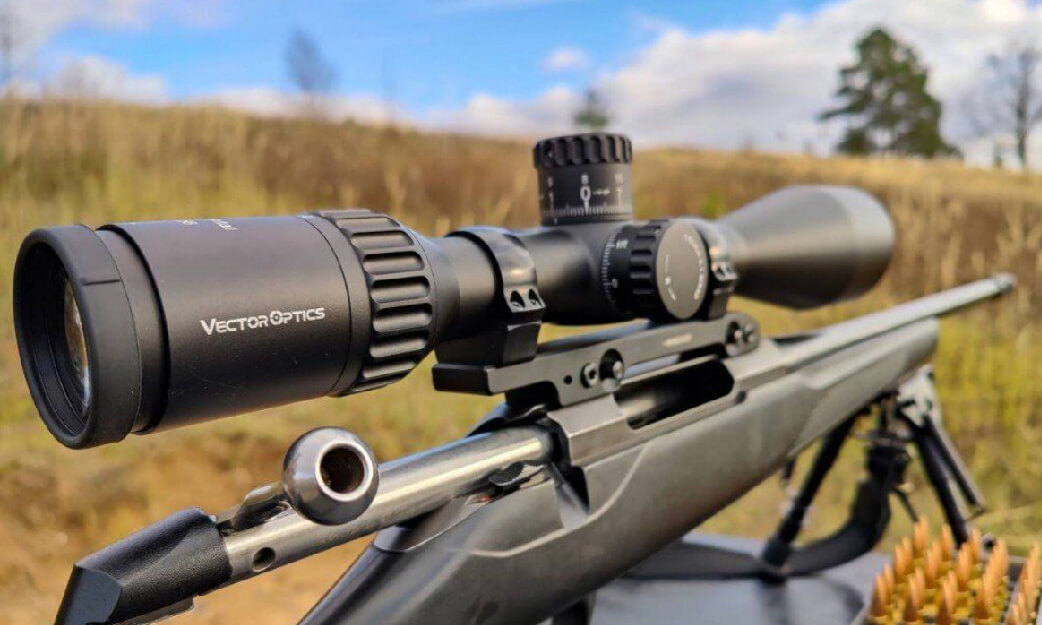
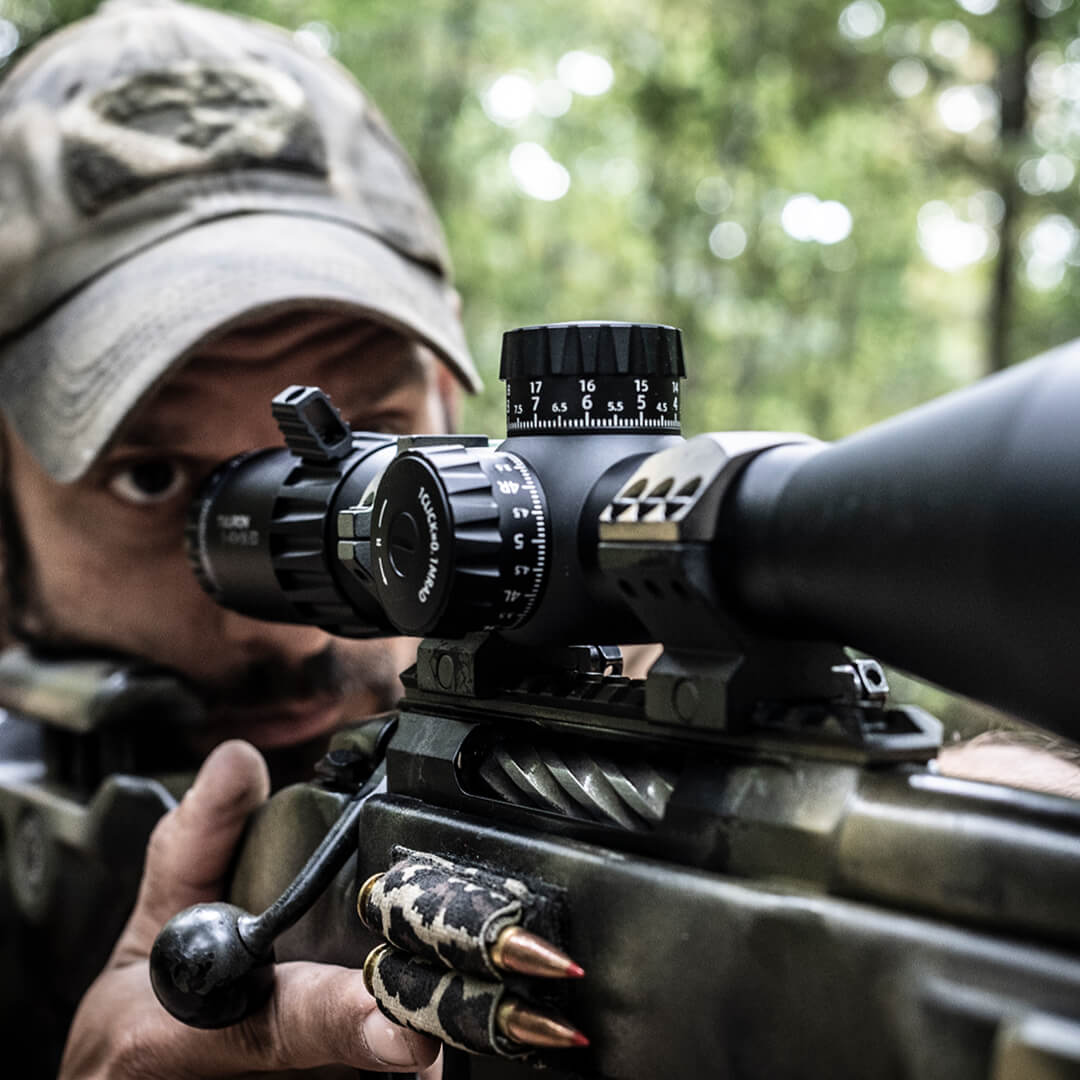
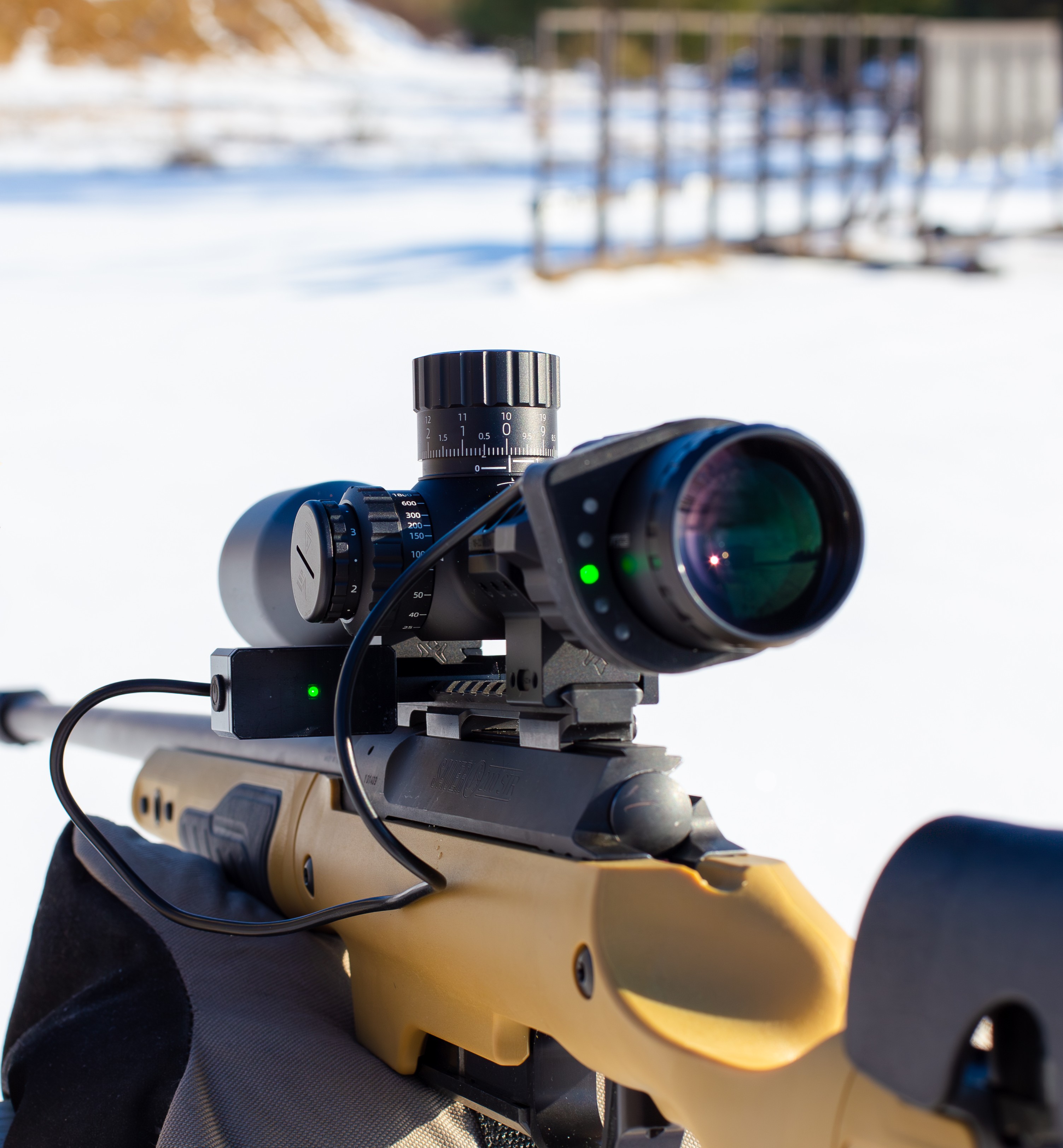
The included accessories are the usual ones: a plastic tool for the turrets, an Allen key for the zero stop, a sunshade, opaque rubber lens covers, and medium-height rings with torque specifications marked. Personally, I mounted a set of low X-Accu 34 mm rings, also from Vector Optics, because I prefer to keep the scope as close to the barrel as possible. The magnification throw lever, which screws directly into the mag ring, deserves an early mention: it's hollow, so you can still see the turret markings, takes up very little space, and doesn't interfere with a low mounting setup. A well thought-out detail.
Optical Quality
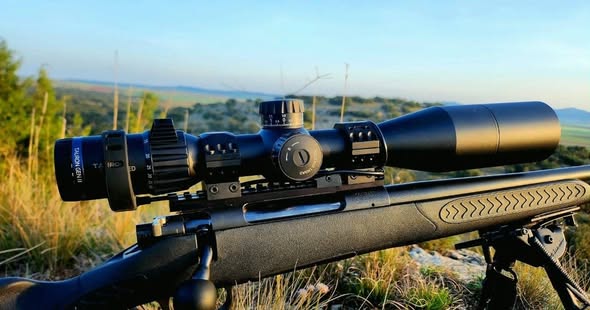
This is where the leap from the Tauron 6-24x50 I previously tested is most noticeable. The ED glass on this model delivers a clearer image with more vivid colors, especially as the light starts to fade. At dawn and dusk, it performs very closely to my Continental 5-30x56 SFP, which until now has been my personal benchmark.
In good light, the image is sharp and well contrasted. Above around 32x magnification, there is some visible degradation — something that, to be fair, happens with practically any scope when pushed to the upper limit of its magnification range. It's not a flaw specific to this model, but it's worth being aware of.
The parallax adjustment generally works well, though beyond the 500-yard mark indicated on the turret, I feel it could be fine-tuned a little more. That said, even in mirage conditions due to heat (a summer afternoon, sun facing me, and no sunshade — my bad), the parallax held up properly.
Turrets and Adjustments
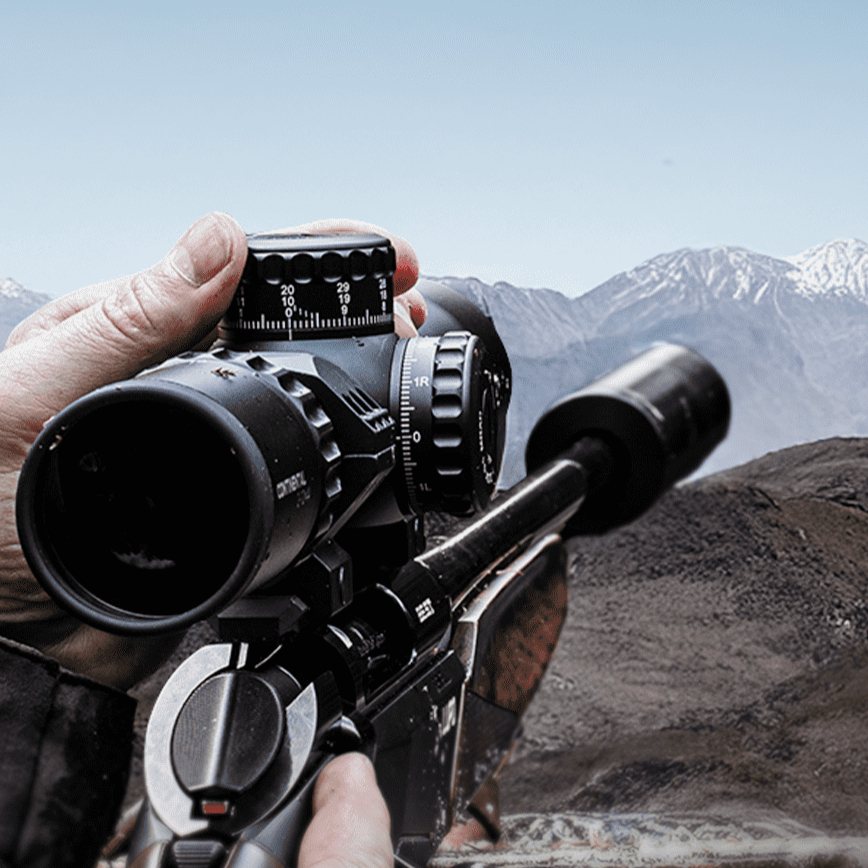
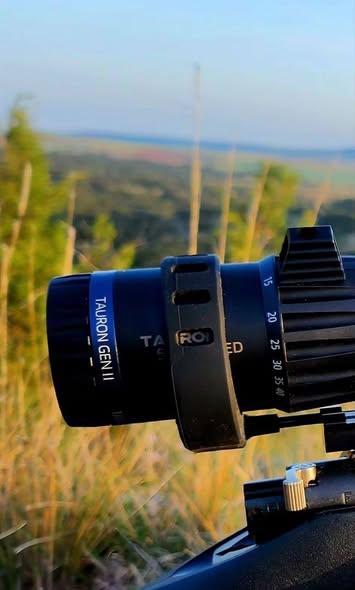
The turrets feature locking mechanisms for both elevation and windage — always a welcome feature to prevent accidental shifts. The total travel is 25 MIL, which is more than enough for a magnum caliber, and plenty for any reasonably flat-shooting cartridge as well.
The clicks are crisp, though with hearing protection on and out in the open, I'd like them to be a touch louder. Not something unique to this scope, but definitely something a shooter who regularly uses ear protection will notice.
The zero stop is user-configurable. You can leave it free or lock it down, depending on your preference. However, it needs to be tightened firmly and positioned correctly; otherwise, when the turret returns to zero, it doesn't quite deliver that clean "locked in" feel. Once properly set, the return to zero is reliable. I checked repeatability with an optical collimator and found no issues.
Important note: this model does not have a revolution indicator, unlike the Tauron 6-24x50 which does. For a scope with 25 MIL of travel, clearly aimed at long-range shooting, I believe this is a feature that should absolutely be there. It's one of those things you don't miss — until the day you take a shot with the turret on the wrong revolution.
Personally, I would have preferred the elevation turret to be a bit taller or wider for an even better grip. That said, it's still easy to operate, even with thin gloves on.
Parallax and Illumination Knobs
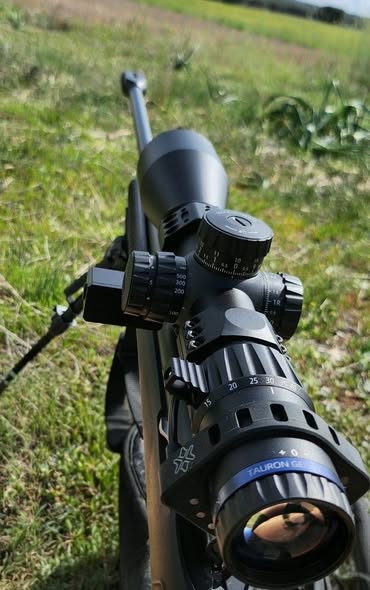
The parallax knob started out a bit stiff, but after a couple of sessions it has smoothed out nicely. It now moves with good fluidity.
The illumination dial, on the other hand, is a different story. It's noticeably stiffer than the parallax knob, and given its small size, it can be tricky to operate smoothly. Compared to the one on the Continental, for instance, it feels less refined. It's not something that prevents you from using the scope, but it's definitely an area that could be improved.
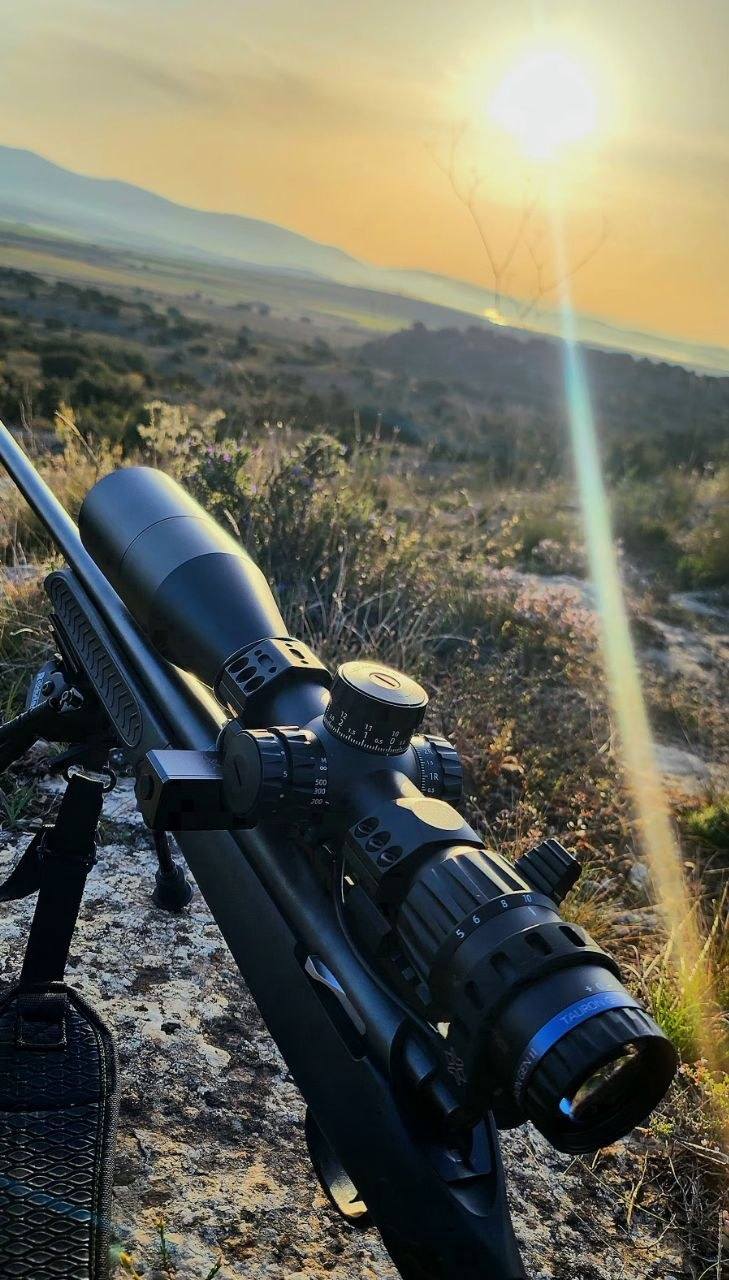
Reticle and Field Use
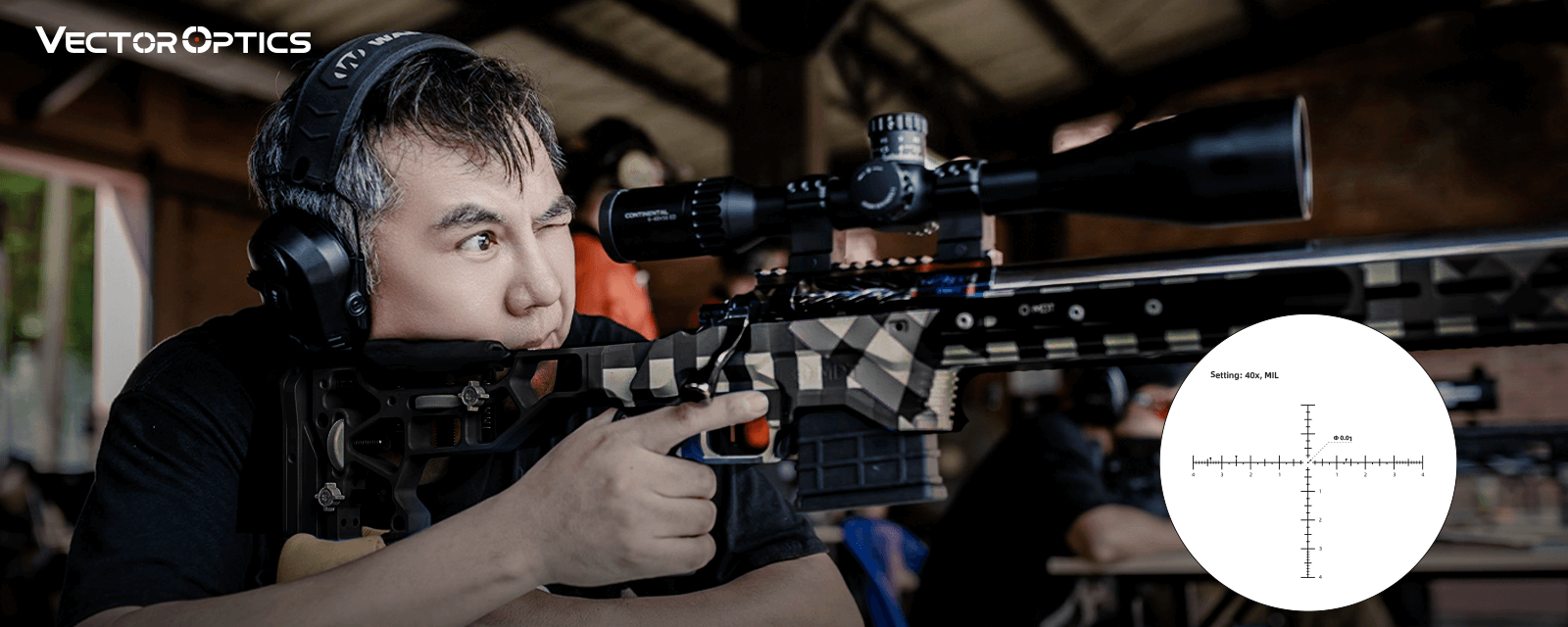
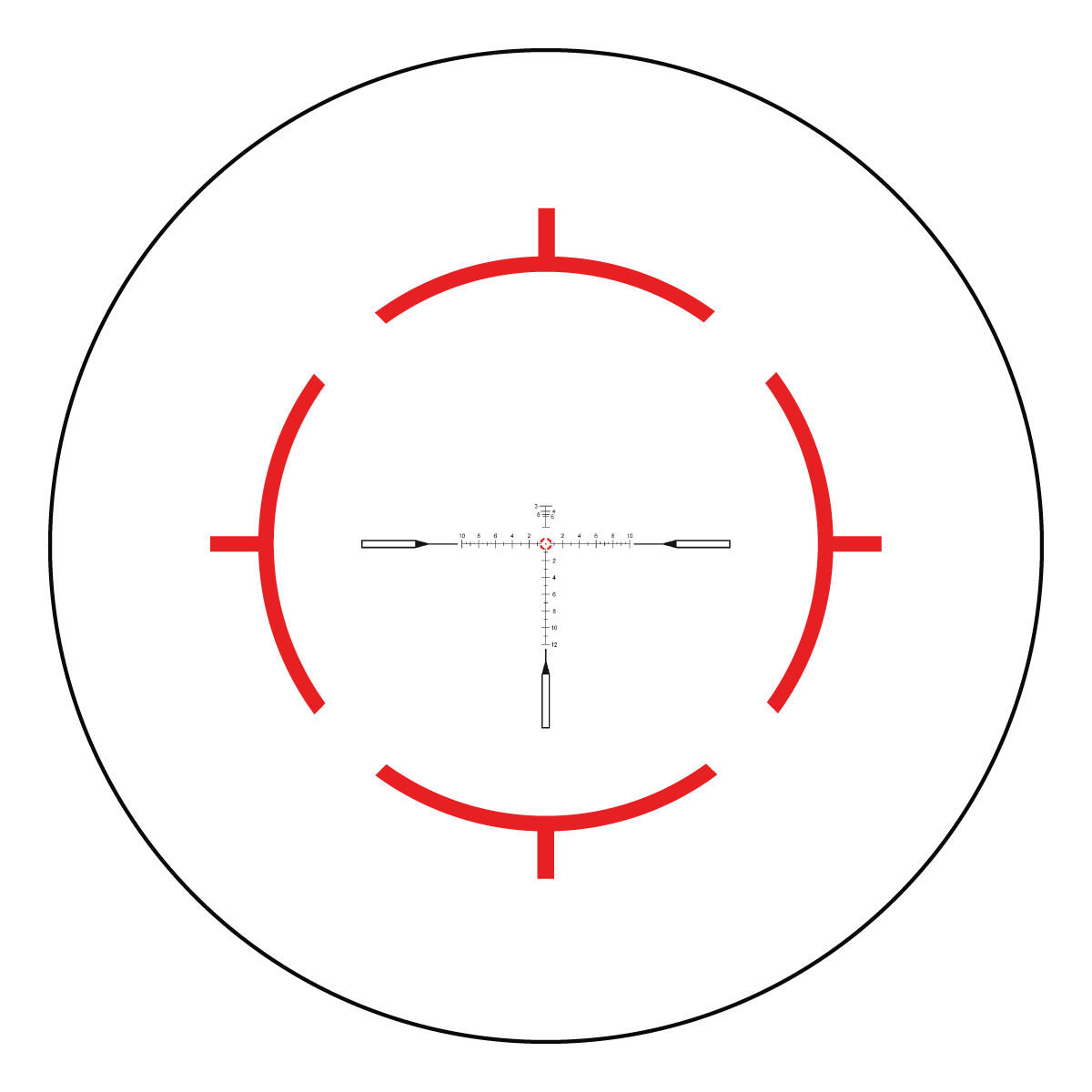
The reticle is a Christmas tree-style design, in first focal plane. Personally, I find this layout very useful: it provides plenty of information without making the sight picture feel cluttered. The central dot is 0.03 MIL, a size I find well judged, and in hunting situations, it doesn't get in the way or obscure the target.
At the range, the reticle illumination can actually be distracting depending on the color of the target; in the end, I've mostly ended up using it without illumination. At maximum magnification (between roughly x30 and x40), the reticle can appear somewhat thick when the target is relatively close. It's a minor thing, but it can be noticeable.
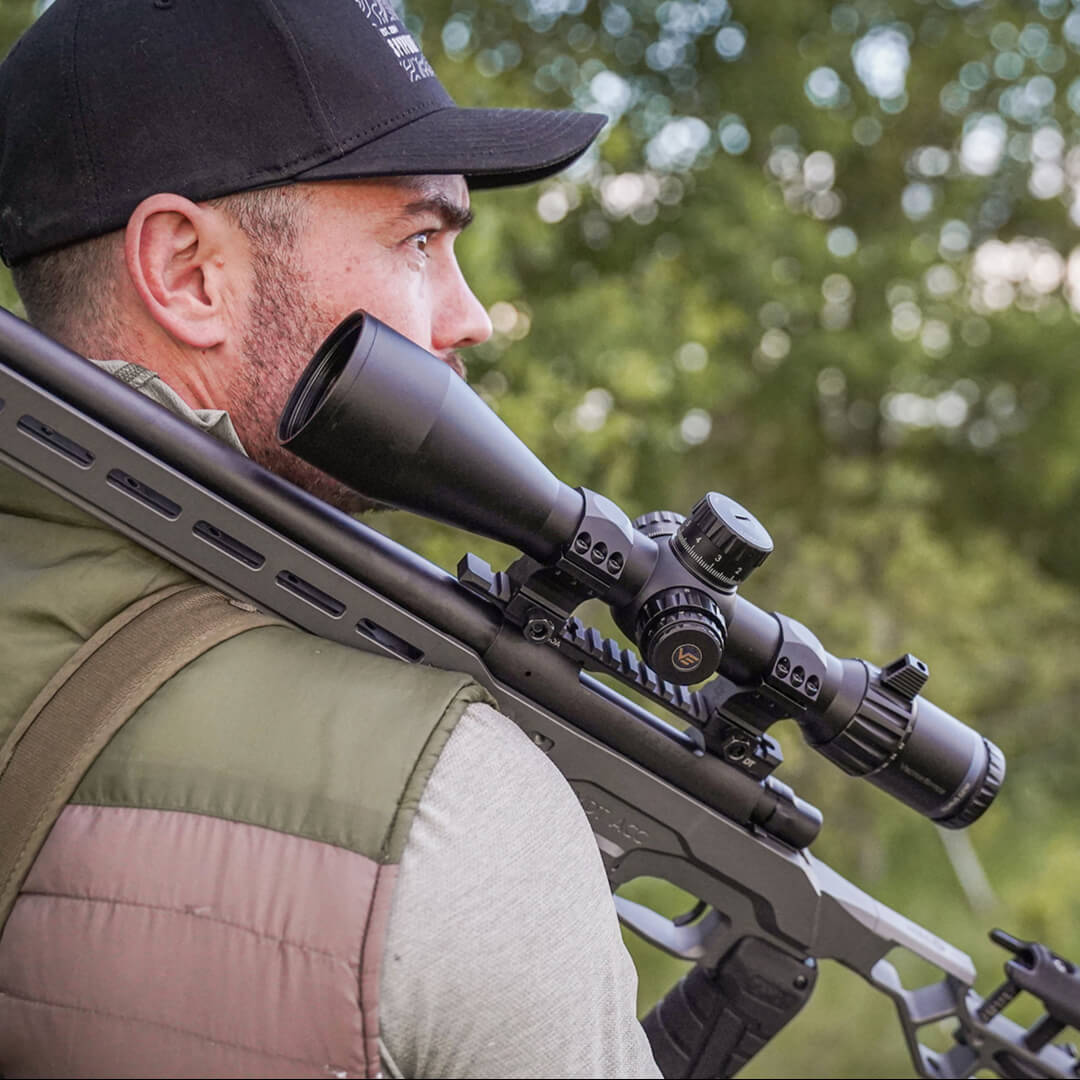
On stalk hunting trips, the scope performed as I expected. The magnification range starting at 5x makes it more versatile than its smaller sibling, the 6-24x50. However, I wouldn't recommend it for driven hunts where distances are short and targets move fast — getting on target quickly in those situations can be tricky.
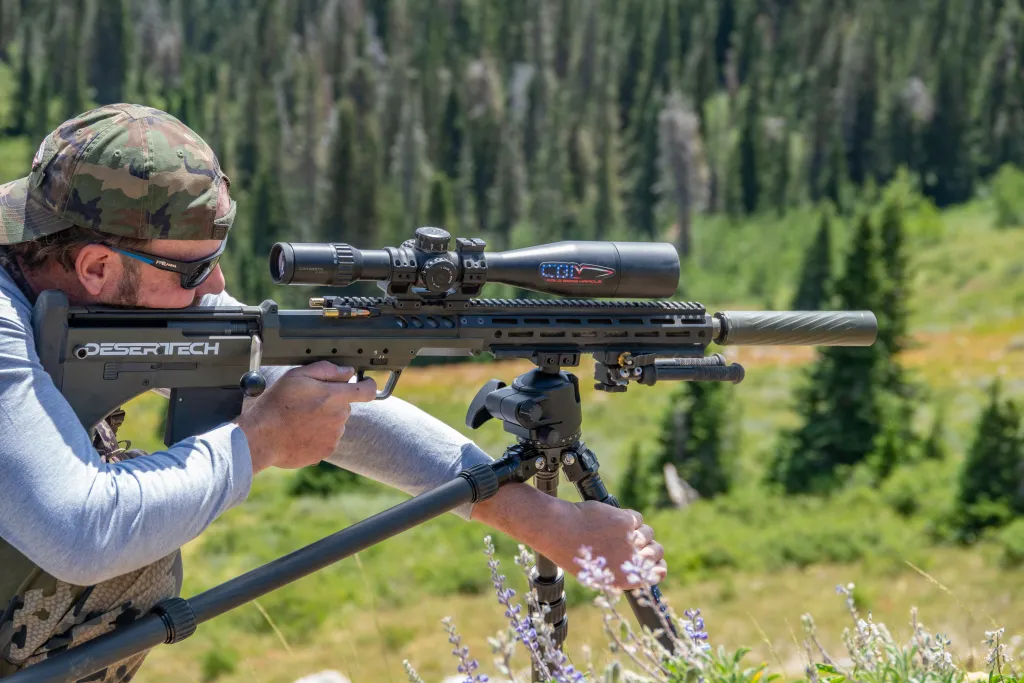
Where I see it truly in its element is precision shooting at medium to long range, whether recreational or competitive, like PRS. The 34 mm tube and 56 mm objective lens allow for excellent light transmission, and combined with the ED glass, its low-light performance is one of its strongest points.
What Type of Hunting and Distances Do I See It Fit For?
With its wide magnification range (5x-40x), it can be used as an observation scope to locate potential game and assess the quality of a trophy, avoiding the need to carry extra equipment like cameras or spotting scopes and saving unnecessary weight.
With these magnifications, it's perfectly capable of varmint hunting for relatively small animals such as foxes. Maximum distances are a very personal matter for each shooter and the cartridge they use, but at around 400 meters, a fox appears more than acceptably sized in the sight picture.
For medium-sized big game, such as roe deer, the scope is more than capable of taking an animal at around 700 meters. In fact, my goal this year is to take one beyond that distance. If I don't succeed, it will clearly be my fault, not the scope's.
For larger game, like wild boar or red deer, the effective distance can be even greater without any issue.
If what you're after is something more focused on recreational shooting and being able to reach out to long range, this scope will help you achieve it. Ultimately, the limit is set by each individual shooter.
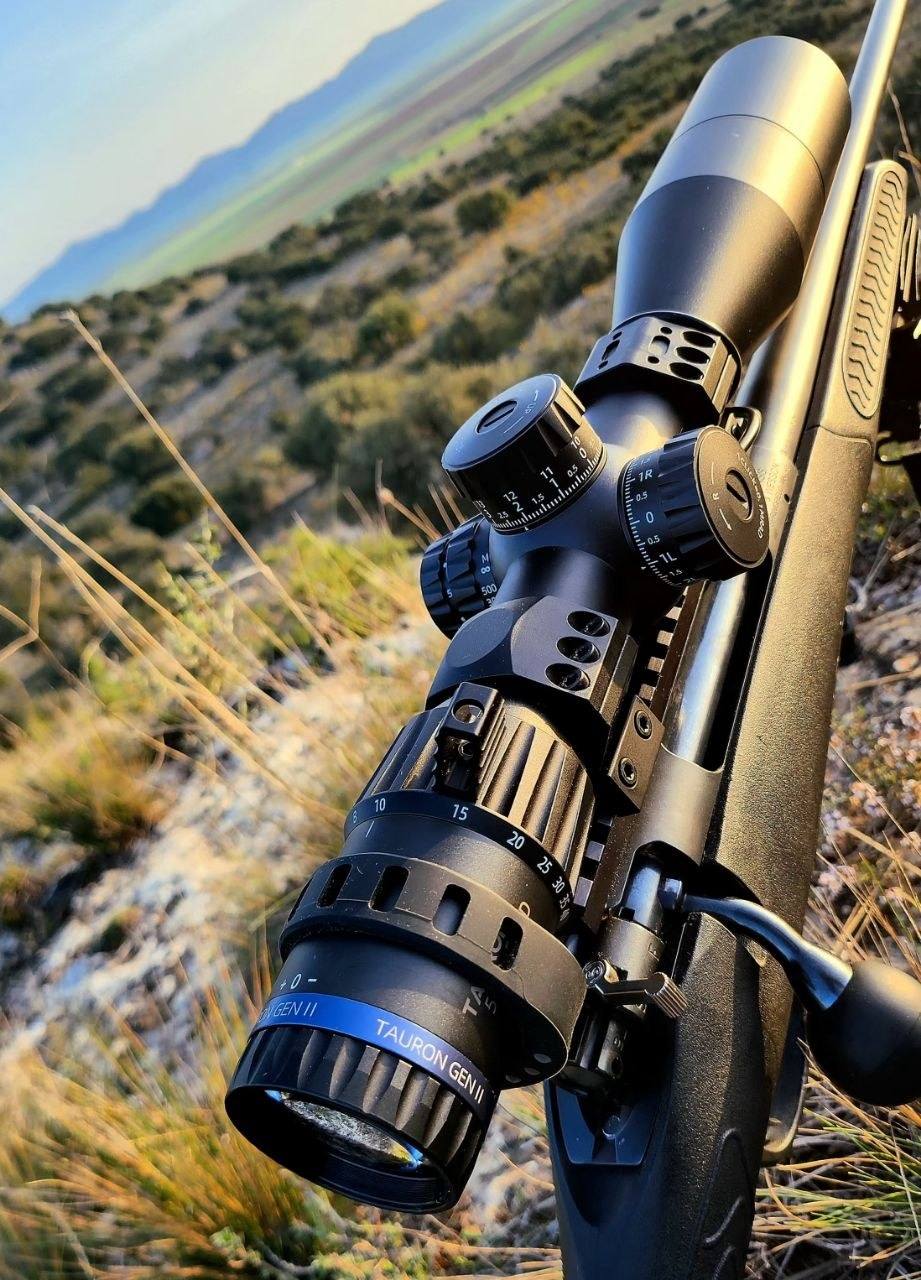
Details That Add Up, and Details to Improve
The magnification throw lever deserves its own mention. It's small, screws into place, is hollow (so you can still see the turret markings), and doesn't interfere with a low mount setup. A well-designed touch.
The included lens covers are opaque rubber, removable. They do the job, but they fit a bit tight when the sunshade is attached. Personally, I prefer the flip-up covers from the Continental line: I find them more practical (especially for hunting, where you can leave them on and flip them open just before taking the shot), and they feel more durable. It's a shame they're not compatible between models.
The eyepiece lacks the rubberized finish found on the Continental. With 95 mm of eye relief, it's comfortable, but that softer, tactile feel is something you notice — and here, it's missing.
Conclusion
The Tauron 5-40x56 ED FFP is a scope that delivers very high optical performance, especially in low light, and handles well in stalk hunting and long-range precision shooting scenarios. It's not an all-rounder for every type of hunting (driven hunts are not its thing), but where it's comfortable, it performs with confidence.
It has well thought-out details, like the throw lever and the turret travel, and others that could use a bit of refinement: the missing revolution indicator, the stiff illumination dial, and some more practical lens covers.
If I had to sum it up in one line: where other scopes start to fade, this Tauron just keeps seeing. And when the sun drops or an animal steps out at the end of the day, that's worth a lot.
If you are interested in original review, please click here to view all.