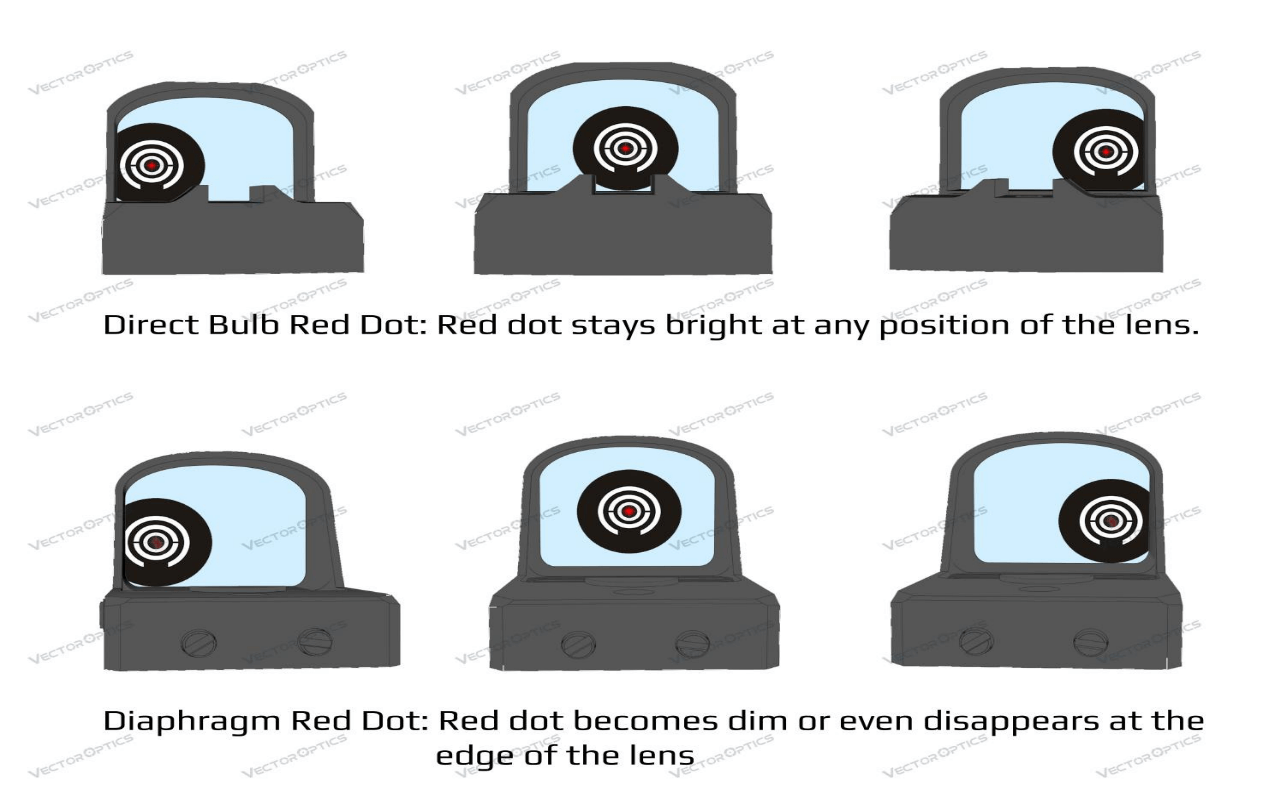















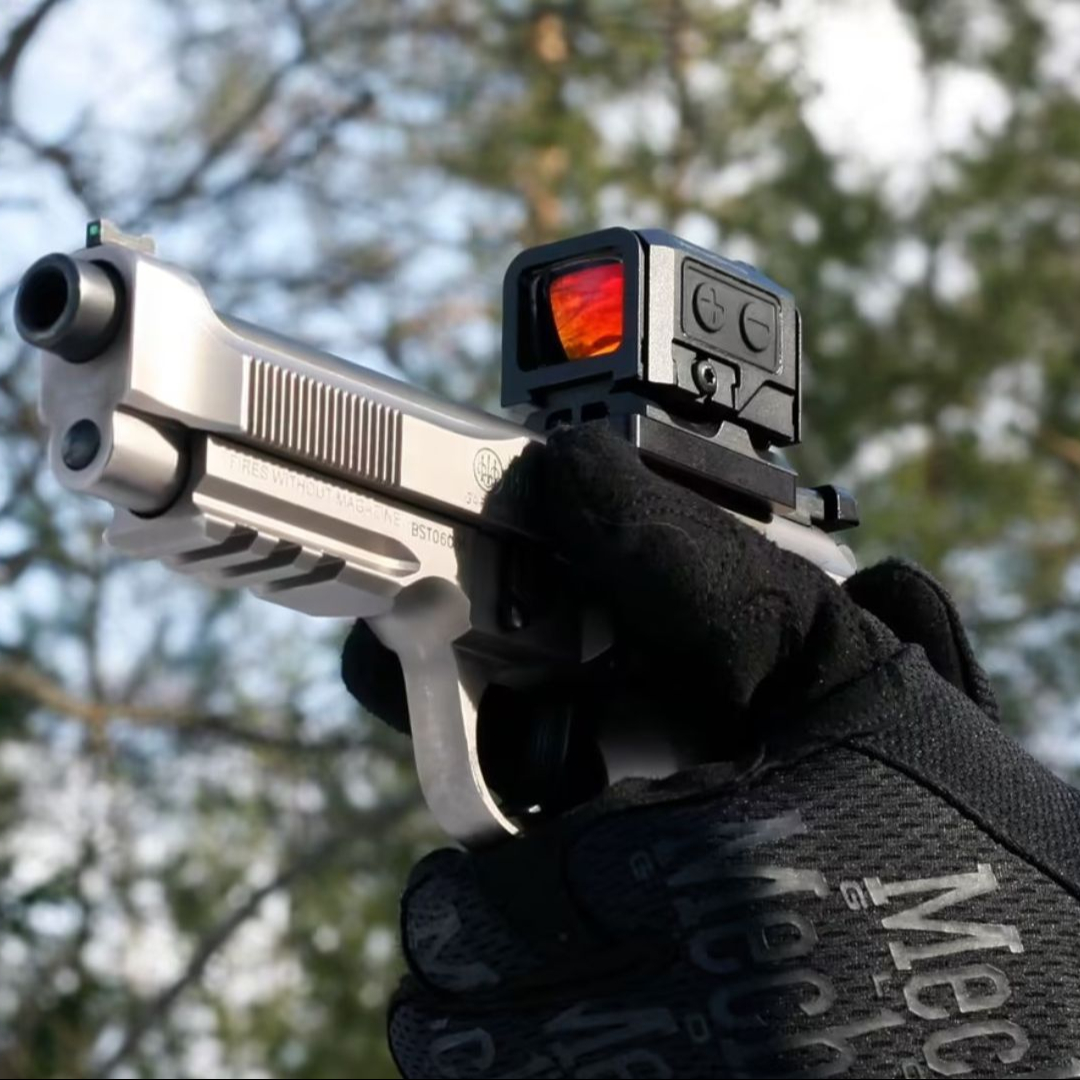

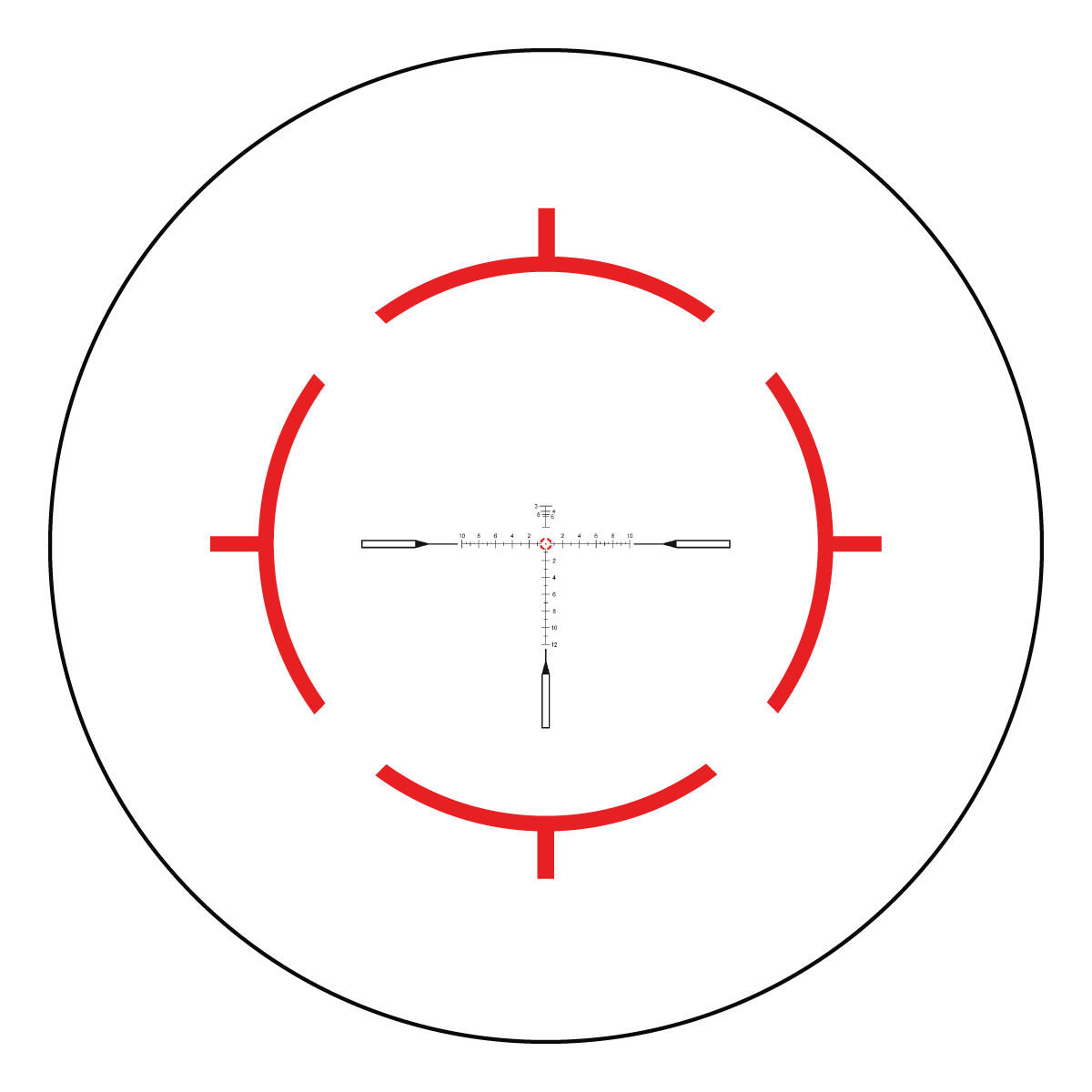
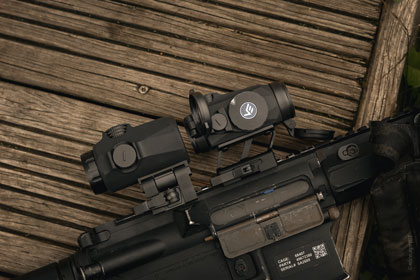
Since the light source of the diaphragm red dot is diffuse, the brightness of the red dot projected onto the lens through the small hole is various on different position of the lens and usually strongest in the center of the lens, and when aiming at the target through the edge of the lens, it becomes dim or even disappears.

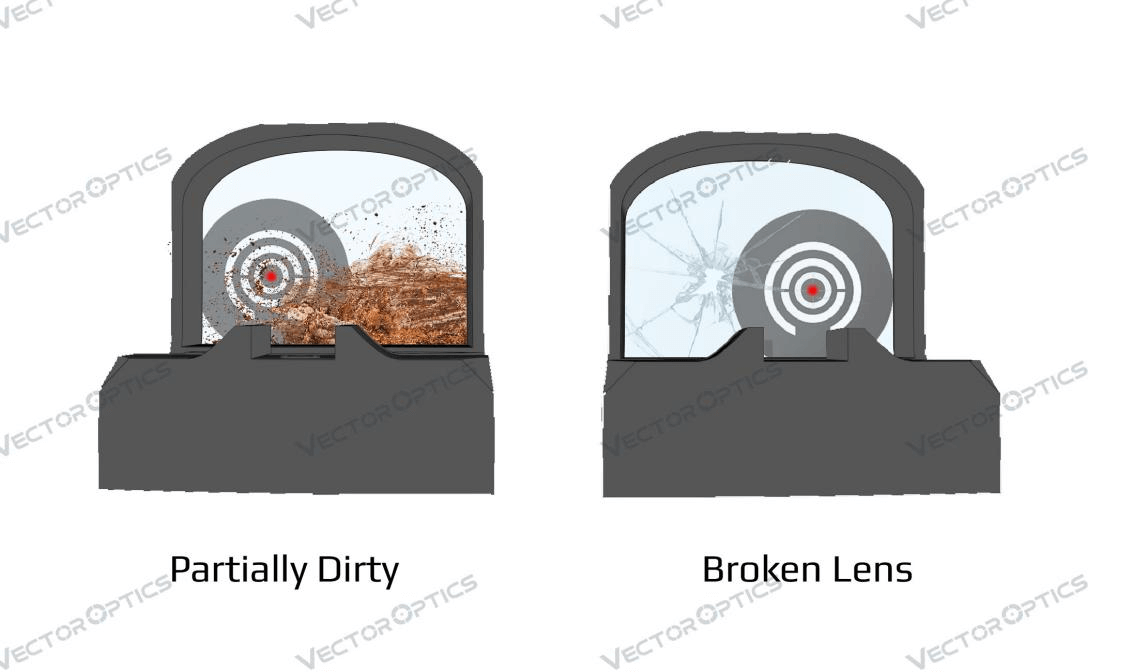
The brightness of the red dot of the direct light source is maintained at its strongest regardless of the position on the lens, minimizing the limitation of the use of the red dot. When the lens is partially broken or covered by mud stains, you can use the intact part to aim; in extreme weather such as snow and sand, the red dot always remains strong and bright to ensure the shooting experience; for rapid shooting, you can also aim at the target through the edge of the lens instead of using the center dot.

According to the light source, reflect sight can be divided into direct bulb red dot and diaphragm red dot. Diaphragm is the traditional red dot light source technology, while the direct bulb technology is more advanced.
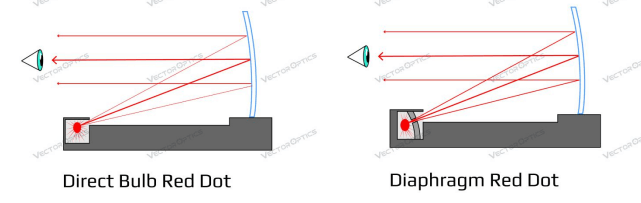
Both of them have a built-in light source in the red dot, the built-in light source of the direct red dot is a very small lamp bead, by projecting the light source directly on the lens to form the red dot, the size of the lamp bead determines the size of the red dot on the lens.
In contrast, the built-in light source of the diaphragm type red dot is large and scattered, and the size of the red dot is controlled by covering the light source with a film with a small hole, which we call the diaphragm. The larger the hole in the diaphragm, the larger the size of the red dot, and vice versa, the smaller.


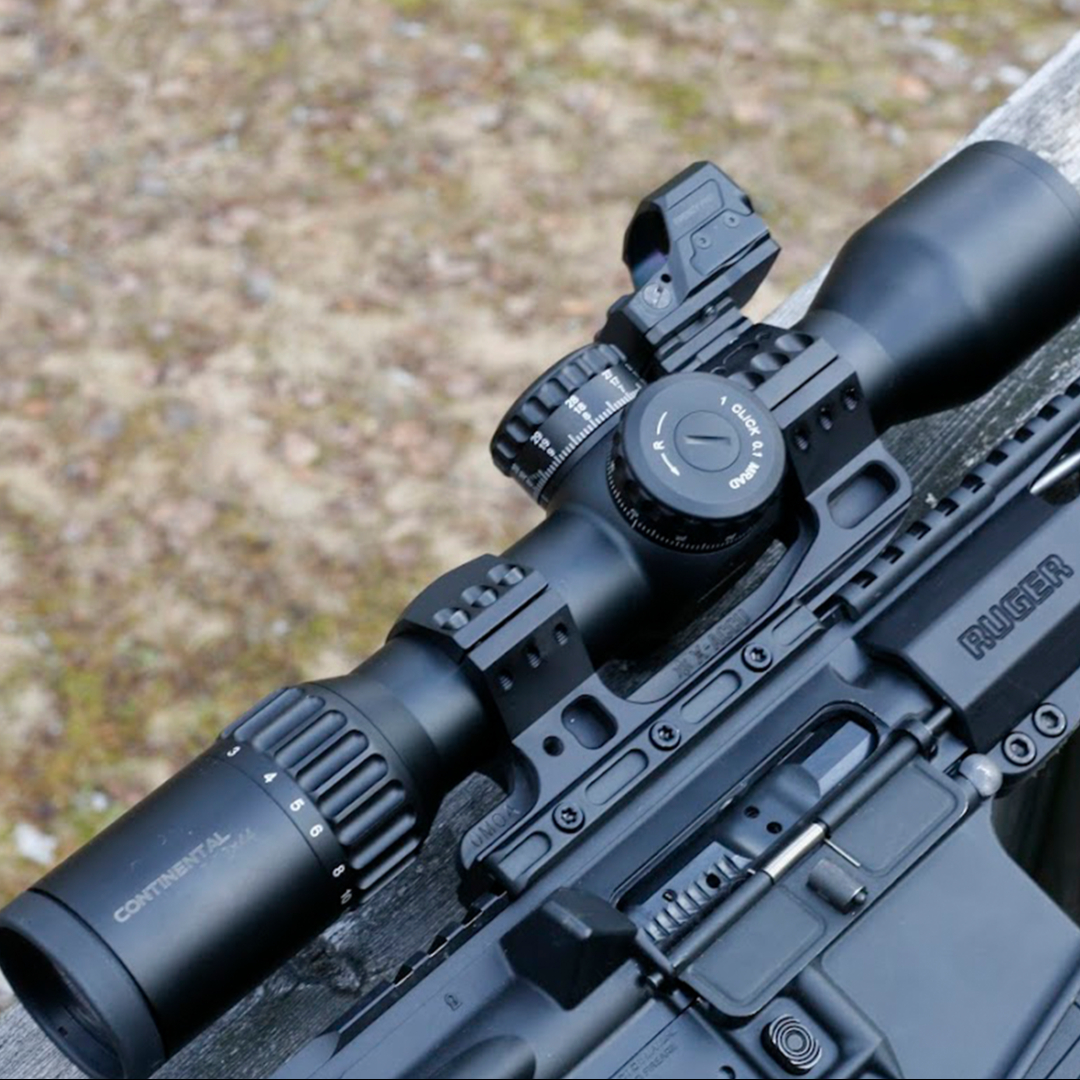
First, before I get started, I’d like to lecture you some basic knowledge on LPVO and Red Dot Sights. As we know, LPVO stands for Low Power Variable Optics, it has gained more and more popularity in optical world thanks to its versatility. The magnification of LPVO ranges from 1x to 10x or even higher, allowing shooters to shoot the target precisely at a long distance. However, LPVO optics are a lot heavier and larger compared with red dot sights and prism scopes, their durability is also inferior to the other two types of scopes.
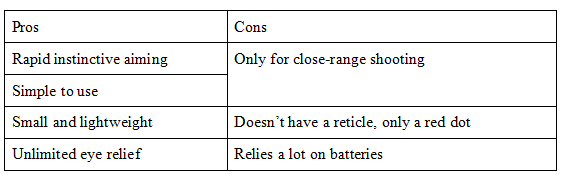
A red dot sight, in simple terms, is a type of sight using an illuminated red dot to aim the target. This is very different to LPVO and Prism sights, as it doesn’t have a proper reticle, just a small red dot in the field of view, which is also a fatal defect of red dot sights, no battery, no sight! Other than that, it’s small and light, can fit almost any kind of firearms, super easy to use! And its 1x magnification means broader field of view, making it perfect for close-range shooting.
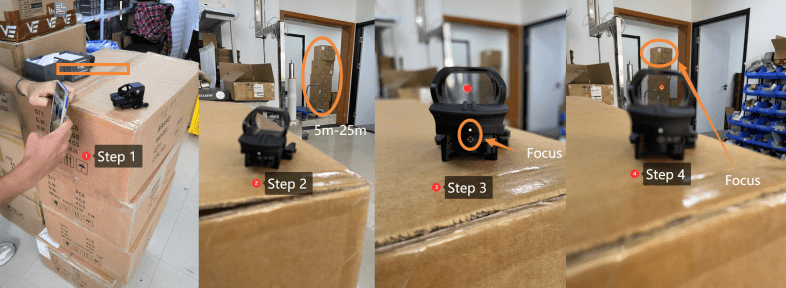
Step 1 : Put the camera in front of the Red Dot with 15-20cm
Step 2 : Find a “target” around 5 meters to 25 meters far away from you.
Step 3 : Focus the camera on the Reticle Changing Options, then take a photo
Step 4 : Focus the camera on the “Target” , then take a photo.

It's always 2 screws I guess? SCRD-40.
Hi friend, some of our basic models do not have motion sensor function. To use the motion activation you need to leave the optic on and set it down and it will go to sleep after a while then reactivate when moved. It's going to be on if it's moving even only a little bit.
Hi, TEK footprint is compatible with Docter footprint.